



America’s Big Birthday Bust
AI-assisted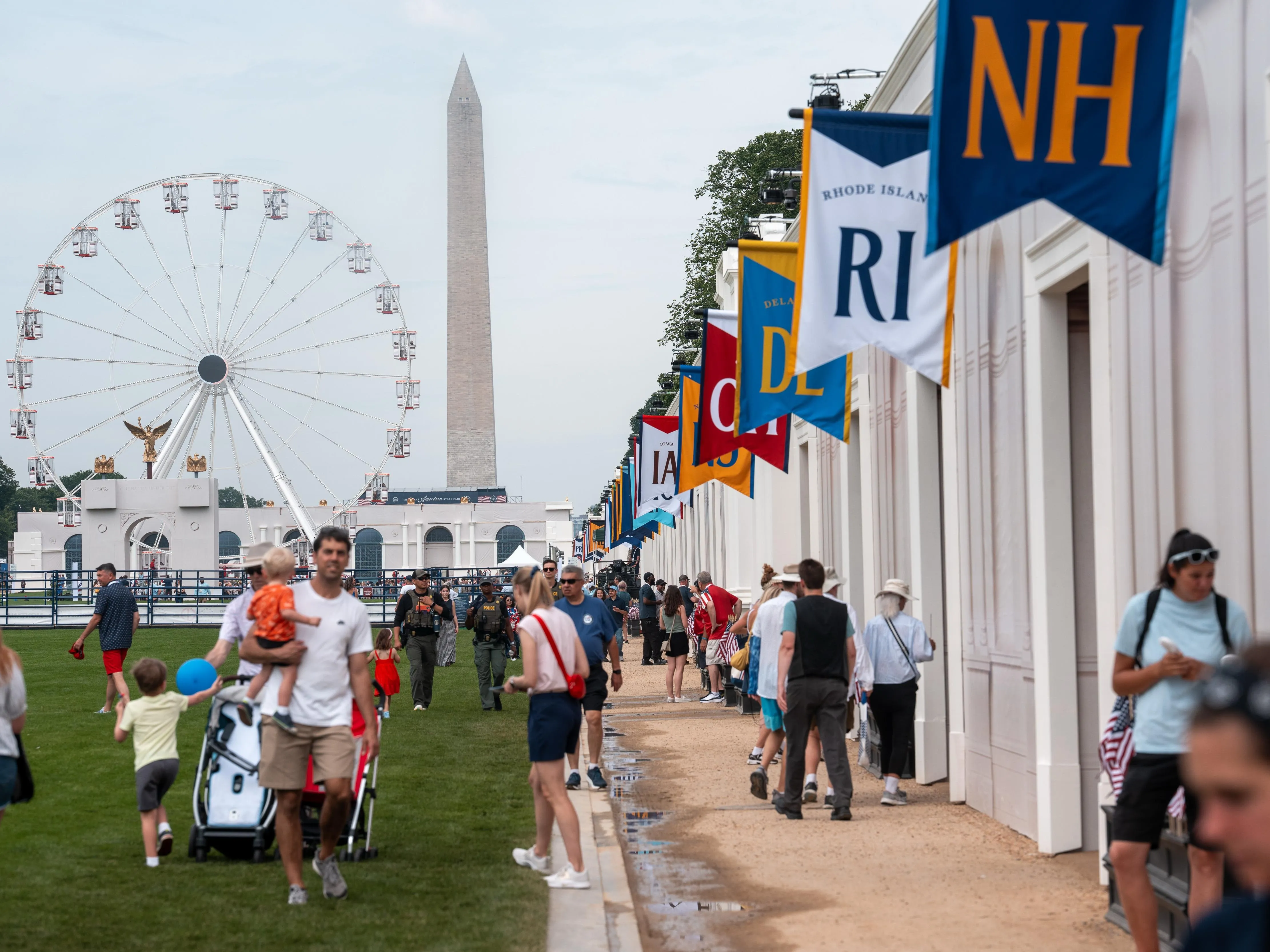
Opinion & Analysis
Freedom 250: How America’s Once-in-a-Lifetime Birthday Celebration Became an Abject Failure
America only turns 250 once. The Great American State Fair was supposed to be a historic national celebration. Instead, it became a case study in political overreach, uneven execution and a once-in-a-generation opportunity badly squandered.
Editor’s note: This opinion article is based on verified reporting and official records available through July 5, 2026. The Great American State Fair is scheduled to continue through July 10, so final attendance figures and a complete financial accounting are not yet available. AI was used to research the details for the content of this article.
America only turns 250 once.
That simple fact should have made the nation’s semiquincentennial one of the easiest public celebrations in modern history to get right.
The ingredients were already there: the National Mall, the Smithsonian museums, the Declaration of Independence, fifty states, five territories, the District of Columbia, generations of veterans, artists, inventors, immigrants, Indigenous communities, civil-rights leaders, working families and 250 years of history—glorious, painful, complicated and unmistakably American.
Instead, the Great American State Fair and the broader Freedom 250 operation became a case study in how to take a once-in-a-lifetime opportunity for national unity and turn it into a bloated, politically charged and organizationally confused spectacle.
What makes the criticism especially difficult to dismiss is that it does not depend on partisan memes, online outrage or political spin.
It depends largely on the organizers’ own promises—and the documented reality that followed.
Freedom 250 officially promoted the Great American State Fair as a “world-class exposition and modern-day World’s Fair” featuring more than 150 exhibits, representation from all 56 states and territories, musical performances, cultural programming, family attractions, military displays and an “iconic Ferris wheel” on the National Mall.
The event was supposed to present America at its biggest, most creative and most united.
What followed was something very different.
Major performers withdrew before the event opened. Several states declined official participation. Early crowds were widely reported as sparse. Some spaces appeared empty or unfinished. Financial questions and political controversy grew around the organization. Dangerous heat forced closures and sent people to hospitals. Severe weather later triggered an evacuation. And what was supposed to be a unifying national birthday celebration repeatedly turned into yet another political battleground.
That is more than a disappointing rollout.
By the standards Freedom 250 set for itself, it was an abject failure.
The Failure Began Before the Gates Even Opened
A successful national celebration normally begins by building excitement.
Freedom 250 began by losing performers.
Before the fair opened, several announced artists withdrew, including Bret Michaels, the Commodores and Martina McBride. McBride said she had been presented with an opportunity to perform at what she believed was a nonpartisan event, only to later conclude that the situation had been presented to her in a misleading way.
Other performers also raised concerns about being pulled into an event that was becoming increasingly political.
That should have been an enormous warning sign.
When artists begin publicly saying they were misled about the nature of a supposedly unifying national celebration, the problem is no longer simply “politics.” It becomes a question of credibility.
The response only made matters worse.
President Donald Trump publicly suggested canceling the concert series and replacing it with a giant MAGA rally. He dismissed the departing performers and proposed that he himself become the main attraction.
The eventual June 24 kickoff became exactly what many critics feared: a campaign-style event centered around the president rather than a broad national celebration centered around the country.
America had spent ten years approaching its 250th birthday. Before the fair even opened, the biggest story was already about Donald Trump replacing musicians with Donald Trump.
That moment exposed the central weakness of the entire project.
Freedom 250 could not resist making America’s birthday about the president who happened to be in office when it arrived.
Read the Associated Press reporting on the performer withdrawals
A “World’s Fair” That Arrived Looking Half-Finished
The promotional language surrounding the Great American State Fair was enormous.
The physical reality, according to independent reporting, often was not.
Associated Press reporting from the opening days described a dinosaur rib cage, a giant sandcastle, two rocking chairs sitting in an unstaffed booth and a number of empty spaces.
Early crowds arrived in small numbers, and the 110-foot Ferris wheel was reportedly the fair’s only ride.
Visitors interviewed by reporters often said they liked the idea behind the event. But even some attendees described it as an opportunity that had not reached its potential.
Reuters also reported sparse crowds during the fair’s first couple of days.
That was a particularly poor look for an event that had fenced off large portions of the National Mall and marketed itself as something approaching a modern World’s Fair.
A week into the event, Washington-area outlet WTOP was still reporting that crowds were lighter than expected.
To be fair, attendance did increase sharply as the July 4 holiday weekend arrived. Later reports described much larger crowds, including entrance lines stretching several blocks. Smithsonian shops and restaurants also saw strong holiday traffic.
Those facts matter, and they should be acknowledged.
But they do not erase the larger problem.
A 16-day national exposition occupying some of the most famous public space on Earth should not have to rely on the inevitable arrival of July 4 tourists to rescue the attendance narrative.
A holiday surge in Washington is not, by itself, proof that the Great American State Fair succeeded. Large numbers of visitors already travel to the nation’s capital for Independence Day.
The real test was whether the fair itself could create sustained excitement worthy of the phrase “modern-day World’s Fair.”
For much of its first week, verified reporting suggests it did not.
Read NBC Washington’s reporting from inside the fair
Even the States Did Not Fully Buy Into the “All of America” Premise
The entire concept of the fair rested on one powerful idea: bring every part of America together in one place.
Yet seven states with Democratic governors declined to send official delegations.
Freedom 250 maintained that all 50 states would still be represented in some form. But symbolic representation is not the same as enthusiastic official participation from the entire country.
Oregon’s explanation was especially revealing.
A spokesperson for Gov. Tina Kotek said Oregon would not participate because of both the cost and growing concerns that the event was becoming more partisan than originally presented.
Other states also raised concerns about money.
NPR reporting found that some states estimated the cost of participation at around $100,000, while Maine officials said their estimate reached a half-million dollars or more—an expense the state did not consider feasible.
The unevenness could also be seen on the ground.
Some state pavilions were reportedly creative and popular. Arizona, for example, drew thousands of visitors per day to a more substantial exhibit.
Other displays, however, became symbols of the fair’s inconsistent execution, with reports describing sparse installations, empty spaces and exhibits that seemed far removed from the ambitious promise of a national World’s Fair.
That is not a minor design complaint.
When the entire selling point is “all of America in one place,” failing to secure enthusiastic official participation from a significant number of states is a serious failure of the concept itself.
The Event That Was Supposed to Unite America Became Too Political for America
Perhaps the clearest measure of Freedom 250’s failure did not come from Democratic politicians, liberal commentators or protesters.
It came from Americans across party lines.
A Reuters/Ipsos poll found that a majority of Americans believed the country’s 250th-anniversary celebrations had become too political.
That included three-quarters of Democrats—and half of Republicans.
Half of Republicans.
That number makes it difficult to dismiss criticism of the event as nothing more than partisan bitterness.
A national birthday celebration has gone badly off course when even half of the president’s own party is saying, in effect, “Could we please have a little less politics?”
Yet the July 4 centerpiece only deepened the problem.
Reuters reported that Trump’s Independence Day address took on the tone of a campaign speech, mixing patriotic themes with calls for new voting restrictions, warnings about “communists” and attacks on political enemies.
America’s 250th birthday should have been one of the rare moments when a president could look beyond his own political movement.
Instead, even the biggest night of the celebration became another venue for political grievance.
Freedom 250 repeatedly said it wanted to unite the country.
Its own results suggest the opposite.
Then Came the Heat, the Closures and the Evacuation
The weather was not Freedom 250’s fault.
That needs to be said clearly.
But how prepared a massive outdoor event is for predictable Washington summer conditions is a legitimate measure of planning and execution.
On July 3, temperatures in Washington reached 101 degrees, forcing the temporary closure of the Great American State Fair.
The National Park Service’s traditional Independence Day Parade was later canceled because of dangerous heat, with heat-index projections reaching as high as 115 degrees.
NBC4 Washington reported that 44 people were treated for heat-related illness at the fair and 11 were transported to hospitals.
The following day brought another disruption.
July 4 visitors waited for hours in triple-digit heat while navigating heightened security. Then approaching thunderstorms forced the evacuation of the National Mall, sending visitors into nearby museums and government buildings.
Trump’s speech was delayed by nearly two hours.
Again, storms happen.
Heat waves happen.
No reasonable criticism should pretend the organizers control the sky.
But Freedom 250 was not organizing a neighborhood picnic.
It was organizing what it promoted as a historic, once-in-250-years national gathering involving massive crowds, extensive security, military flyovers, a presidential address and an enormous fireworks display.
Resilience under predictable summer weather was part of the job.
Instead, the event was temporarily closed by heat, dozens of people required treatment, 11 were transported to hospitals and the signature Independence Day gathering was later evacuated because of storms.
Whatever the cause, that is an operational failure.
The Spectacle Eventually Arrived—but Spectacle Was Never the Real Test
To be fair, the July 4 celebration eventually delivered genuine spectacle.
The crowds grew.
Military flyovers took place.
The president eventually spoke.
The fireworks display involved an attempted record-breaking launch of approximately 850,000 fireworks.
Some visitors genuinely enjoyed themselves.
Families rode the Ferris wheel. Children saw animals. Visitors explored military demonstrations and state exhibits. The holiday weekend brought significantly stronger attendance, and nearby Smithsonian facilities benefited from the influx of visitors.
Those experiences were real.
They should not be erased simply because the event became politically controversial.
But fireworks are not the same thing as success.
A government can buy a larger fireworks show.
It can schedule more jets.
It can erect a bigger stage.
It can fence off more land.
It can install a taller Ferris wheel.
None of those things answers the central question:
Did Freedom 250 actually bring the country together for its 250th birthday?
The evidence says no.
It drove artists away.
It drove states away.
It led a majority of Americans polled to say the anniversary had become too political.
It produced early crowds widely reported as sparse.
It delivered an uneven collection of exhibits beneath promises of a modern World’s Fair.
And it repeatedly centered one politician in a celebration supposedly dedicated to 250 years of an entire nation.
A giant fireworks finale cannot repair a broken premise.
The Financial Questions Make the Failure Far More Serious
The most troubling part of the Freedom 250 story may not be the attendance.
It may be the money.
ABC News reported that federal grant records showed the Department of the Interior had funneled at least $68.3 million in taxpayer money to the National Park Foundation over the previous year for semiquincentennial-related events.
Freedom 250 operates as a subsidiary of that foundation.
That amount of public money, by itself, demands transparency.
But the story becomes more complicated because Freedom 250 emerged alongside another organization: America250, the bipartisan effort connected to the U.S. Semiquincentennial Commission created by Congress in 2016 and tasked for years with planning the anniversary.
The overlap has created confusion over who was running what, who was receiving public funds and where private donations were going.
A 55-page interim report by Democratic staff on the House Natural Resources Committee made serious allegations about that confusion.
According to the Associated Press, the report alleged that donors intending to support the bipartisan America250 effort were, in some cases, provided with banking information for the similarly named Freedom 250 instead.
The report raised the possibility of financial fraud.
Freedom 250 categorically denied the allegations and called the report a partisan smear.
That denial matters and must be included.
Allegations are not convictions. A congressional staff report is not a court verdict.
But the questions cannot simply be brushed aside.
The Associated Press also reported that Congress had allocated $150 million to the Interior Department for anniversary events. According to the Democratic report, America250 expected $100 million but had received only $25 million.
The same report characterized Freedom 250’s structure as a “financial black box.” Freedom 250 disputes the broader accusations against it.
A national celebration that requires reporters, lawmakers, donors and the public to untangle competing organizations with nearly identical names has already failed a basic test of good governance.
Americans should not need a flowchart to figure out who is running America’s birthday.
Read the Associated Press reporting on the financial allegations and Freedom 250’s denial
Freedom 250 Did Not Merely Organize Events. It Tried to Define America.
The deeper problem is ideological.
Freedom 250’s influence extended beyond the fairgrounds to projects including the “Freedom Trucks,” mobile museums designed to tell the story of the United States.
Reuters reported that the project used a $14 million federal grant combined with $10 million in private donations.
The exhibits included AI-generated presentations of historical figures and emphasized a religious interpretation of American history.
Critics, including historians and lawmakers, argued that the exhibits glossed over slavery and racial injustice while promoting a Christian-nationalist narrative.
This is where Freedom 250’s failure becomes bigger than poor event management.
The United States is not easy to explain.
That is the point.
Its history includes the Declaration of Independence and slavery.
Religious liberty and religious persecution.
Extraordinary innovation and brutal exploitation.
Immigration and exclusion.
Native nations and forced removal.
Civil-rights victories and generations of resistance to those victories.
America’s story is not less patriotic because it is complicated.
It is more meaningful because the country has repeatedly been forced to confront what its own ideals actually require.
A 250th anniversary worthy of the moment should have trusted Americans with that complexity.
Instead, Freedom 250 repeatedly faced criticism that it was transforming commemoration into ideological branding.
You cannot celebrate American freedom by sanding down American history until it becomes politically convenient.
The Greatest Failure Was the Opportunity That Was Lost
This is why the Great American State Fair and Freedom 250 deserve to be called an abject failure.
Not because every booth was bad.
Not because nobody attended.
Not because every event collapsed.
Not because the fireworks were unimpressive.
And not because the weather was hot.
The failure was much larger than any one of those things.
America had one chance to celebrate its 250th birthday for the first time.
One chance to create a moment that belonged equally to a Republican in Alabama, a Democrat in Oregon, an independent in Michigan and an American who wants absolutely nothing to do with politics.
One chance to remind a bitterly divided country that the United States existed before Donald Trump and will exist after him.
One chance to tell the whole national story—with its brilliance and brutality, its heroes and hypocrites, its triumphs and unfinished promises.
One chance to build something children attending in 2026 might still remember when the country turns 300.
Instead, the country got competing organizations, artist withdrawals, political rallies, state boycotts, empty spaces, sparse early crowds, funding questions, allegations of donor confusion, campaign rhetoric, ideological history lessons, heat-related hospitalizations, shutdowns and evacuations.
Yes, the holiday crowds eventually came.
Yes, people had fun.
Yes, the fireworks were enormous.
But a national celebration is not judged only by how brightly the explosives light the sky.
It is judged by what remains after the smoke clears.
After the smoke cleared over Washington, the clearest image left by Freedom 250 was not a nation united for its birthday. It was an extraordinary opportunity squandered by the inability to distinguish patriotism from partisanship, celebration from self-promotion and American history from political marketing.
The Great American State Fair was supposed to show the world the best of America.
Instead, Freedom 250 ended up demonstrating one of Washington’s oldest traditions:
Take something that belongs to everyone, politicize it, oversell it, spend a fortune on it—and then declare victory no matter what actually happened.
That may be many things.
But it is not a successful 250th birthday celebration.
And it certainly is not a modern World’s Fair.
Source Note
This article draws on the official Freedom 250 event description and reporting from Reuters, the Associated Press, ABC News, NBC4 Washington, WTOP and congressional materials. Allegations concerning fundraising and financial misconduct are identified as allegations, and Freedom 250’s denial is included. The fair remains scheduled through July 10, 2026, so a final assessment of attendance and spending will require complete post-event data.

- Art
- Business
- Causes
- Crafts
- Community
- Dance
- Drinks
- Εκπαίδευση
- Fashion
- Editorial
- Film
- Fitness
- Food
- Παιχνίδια
- Gardening
- Health
- Κεντρική Σελίδα
- LGBTQ+ News
- Literature
- Music
- News
- Nature
- Networking
- Oddities
- άλλο
- Opinion
- Party
- Politics
- Religion
- Science
- Press Releases
- Shopping
- Sports
- Theater
- Technology
- Wellness

 English
 Arabic
 French
 Spanish
 Portuguese
 Deutsch
 Turkish
 Dutch
Dutch
 Italiano
 Russian
 Romaian
 Portuguese (Brazil)