

Age Verification Laws and Social Media in the United States: What’s Changing and Why It Matters
For most of the internet’s history, signing up for social media has been simple: type in a name, an email address, and a birthday — and you’re in. Whether that birthday was real or not was largely left to the user’s honesty.
That era is ending.
Across the United States, lawmakers are pushing new age verification and parental consent laws aimed at protecting children and teens online. Supporters say these rules are long overdue in a world where social media shapes mental health, identity, and behavior. Critics warn they could undermine privacy, free speech, and even the open nature of the internet itself.
So what are these laws, where are they coming from, and what do they mean for families, platforms, and everyday users?
Let’s break it down.
What Are Age Verification Laws?
Age verification laws require online platforms — especially social media and app stores — to take steps to confirm a user’s age before allowing access or creating an account.
Instead of just asking, “What’s your birthday?”, platforms may be required to:
- Verify identity through government-issued ID
- Use third-party age verification services
- Obtain parental consent for minors
- Restrict certain features for younger users
The goal is straightforward: keep children away from harmful content and experiences online.
But how to do that — without creating bigger problems — is where the debate begins.
Why Lawmakers Are Focusing on Social Media
Concerns driving these laws include:
- Rising anxiety, depression, and addiction linked to heavy social media use
- Algorithm-driven content that can amplify harmful material
- Collection of personal data from minors
- Exposure to predators, harassment, and explicit content
Many parents and policymakers believe platforms haven’t done enough to protect young users on their own — so government is stepping in.
The Current Legal Landscape: A Patchwork of Rules
There is no single nationwide age verification law for social media in the U.S. today. Instead, the system looks like this:
Federal Level
The main federal law is the Children’s Online Privacy Protection Act (COPPA), which limits how companies collect data from children under 13 and requires parental consent. However, COPPA does not mandate strong age verification — it mostly governs what happens after a child is identified.
New proposals in Congress aim to ban very young users from social media, limit algorithmic feeds for teens, and require parental permission for minor accounts — but none have yet created a unified national system.
State Level
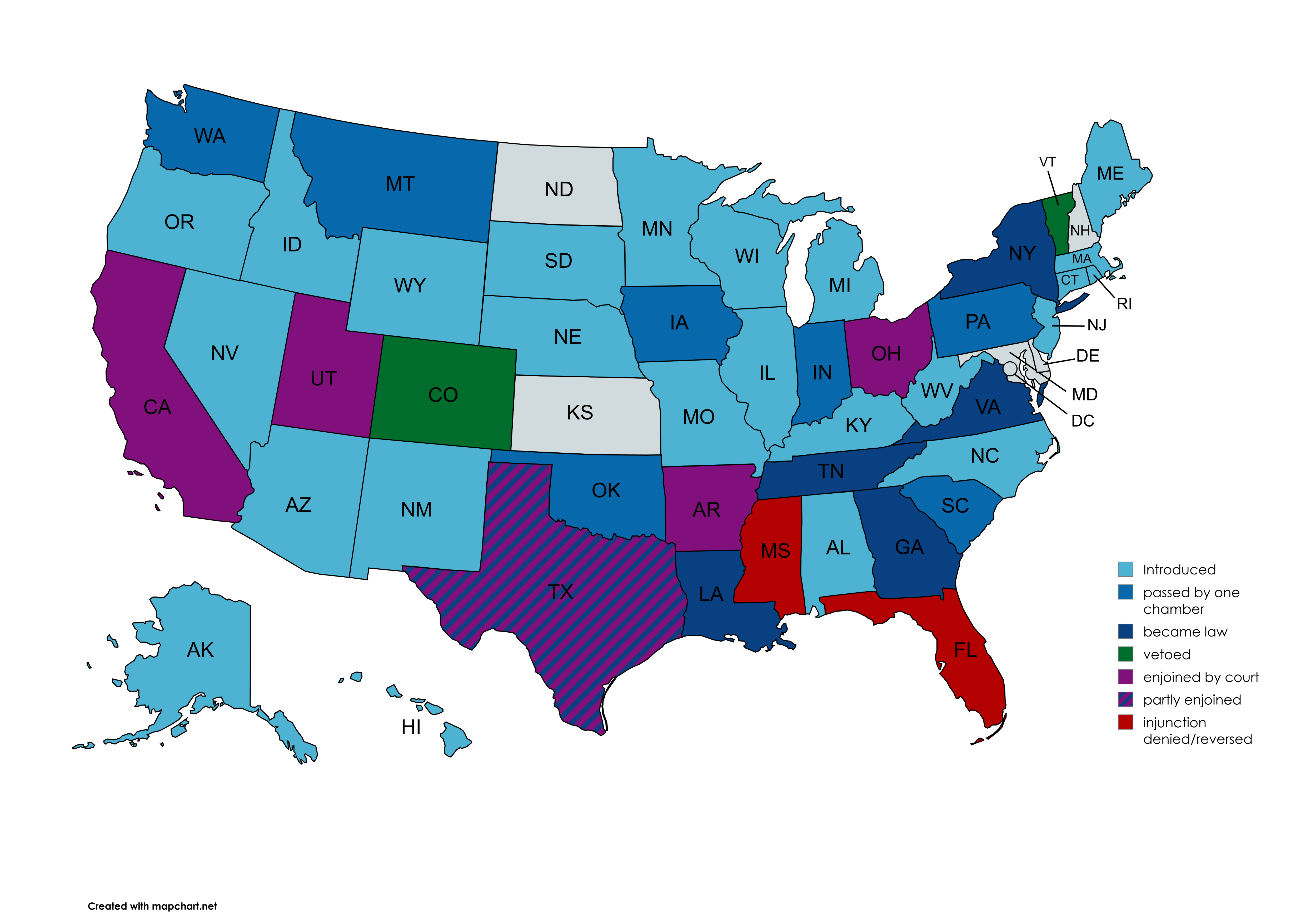
States are moving faster — and differently. Some have passed or proposed laws that:
- Require age verification for all users
- Mandate parental consent for minors
- Limit screen time for teens
- Shift verification responsibility to app stores
Several of these laws are already facing court challenges, often blocked by judges over concerns about constitutionality.
The result is a growing patchwork of rules that vary widely depending on where you live.
Why These Laws Are So Controversial
Privacy Risks
To verify age accurately, platforms may need sensitive data like government IDs, facial scans, or personal records. Critics argue this creates massive databases of information that could be hacked or misused.
Free Speech Concerns
Courts have questioned whether forcing users to prove their age before accessing speech online violates the First Amendment, especially for lawful content.
Effectiveness
Age checks can often be bypassed with fake birthdays, VPNs, or shared credentials, leading skeptics to ask whether these laws really protect kids or just add friction.
Equity Issues
Not every family has easy access to government IDs or digital tools, meaning strict verification could unintentionally lock some users out.
What This Means for Social Media Platforms
For companies, these laws bring major challenges:
- Costly compliance to build and maintain verification systems
- Conflicting state rules creating legal complexity
- User experience friction during sign-up
- Potential business impact where youth audiences drive engagement
Some platforms have even chosen to limit or withdraw service in certain states rather than comply with aggressive laws.
What It Means for Parents and Teens
For families, age verification laws will likely mean more parental approval requests, fewer features for younger users, extra steps during account creation, and more conversations at home about online habits.
Practical Tips for Navigating Age Verification
For Parents
- Know your state’s rules: Check your state government or attorney general’s website.
- Use parental tools: Enable supervised accounts, time limits, and content filters.
- Be careful with IDs: Share documents only with legitimate platforms and read privacy policies.
- Talk before you track: Open conversations build more trust than silent monitoring.
- Set expectations: Explain why bypassing rules can lead to safety risks or bans.
For Teens
- Be honest about your age: It affects features and account protection.
- Guard personal info: Never share ID photos, addresses, or login codes.
- Check privacy settings: Control who can see and message you.
- Speak up: Report harassment or anything that feels wrong.
- Know your voice matters: Restrictions don’t erase your right to express yourself.
For Everyone
- Use strong, unique passwords
- Enable two-factor authentication
- Keep devices updated
- Watch for fake “verification” scams
- Log out on shared devices
Where This Is All Heading
Age verification laws reflect a bigger question: How do we protect kids online without breaking the internet in the process?
Expect more court battles, more state experimentation, and continued debate over privacy versus safety.
Final Thoughts
Age verification laws won’t magically fix the challenges of growing up online. But they are forcing an overdue conversation about responsibility — for platforms, policymakers, and families.
In the end, the strongest protection for young users won’t just come from laws or software. It will come from open conversations, digital literacy, and trust between parents and teens.
No verification system is smarter than a family that’s paying attention.






 English
 Arabic
 French
 Spanish
 Deutsch
 Turkish
 Dutch
Dutch
 Italiano
 Russian
 Romaian
 Portuguese (Brazil)
 Greek
Greek