



WWW.LGBTQNATION.COM
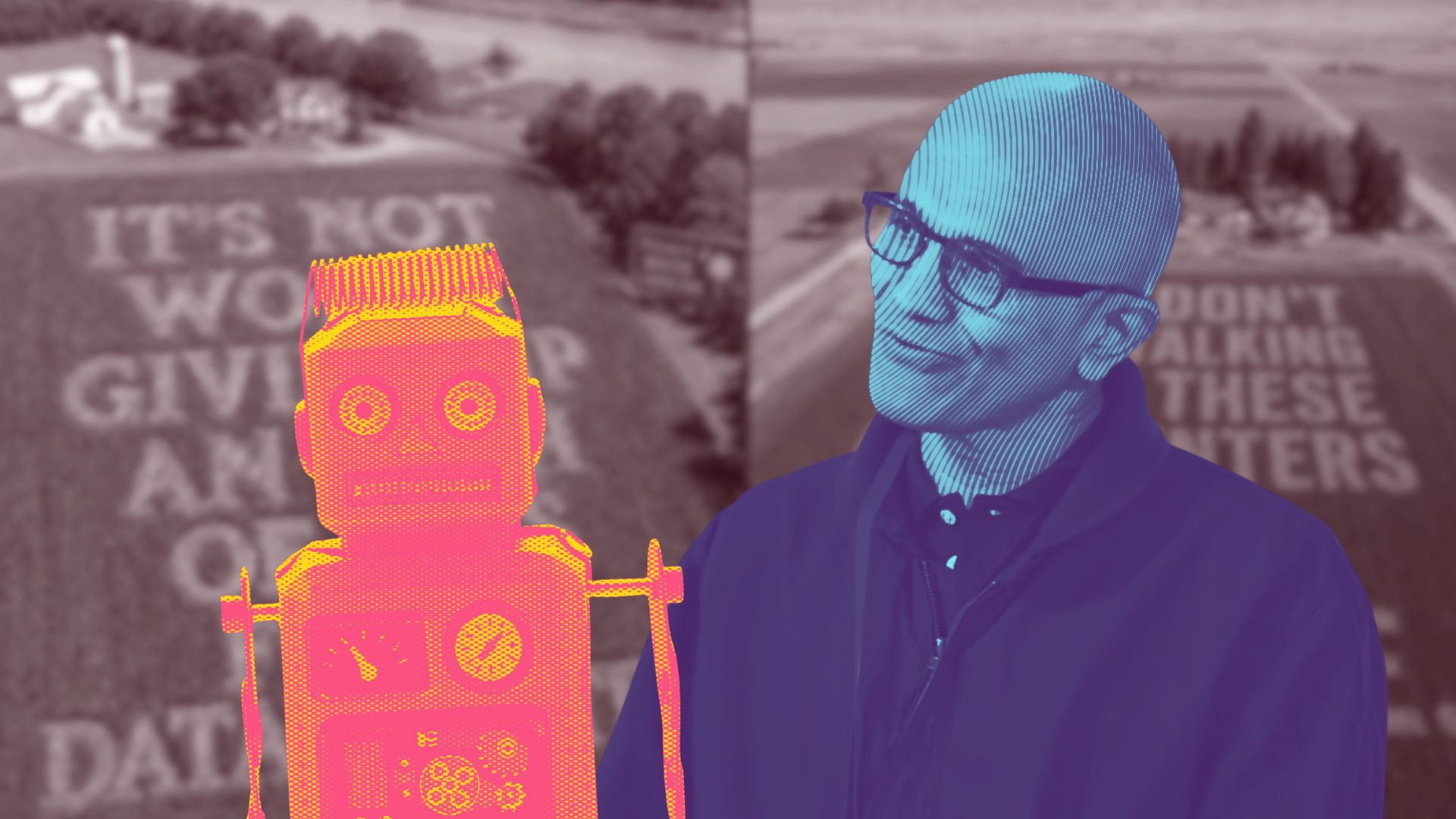
The attacks on James Talarico’s masculinity hurt everyone, including the people who lob them
I published an edited book titled Homophobia: How We All Pay the Price in 1992, not long after I read a book by Frederick Douglass (1818-1895), a man who escaped the bitter tyranny of slavery to become a preeminent leader for civil rights in the United States during the 19th century. His book, Narrative of the Life of Frederick Douglass, an American Slave, published in 1845, is a memoir reflecting on slavery and abolition during Douglass’ time in Lynn, Massachusetts: the first of his three autobiographies. What particularly sparked my interest was Douglass’ profile of Sophia Auld, wife of Hugh Auld: an estate owner and cruel ruler. Related Here’s what the United States might have become if Kamala Harris had won the presidency… A young seven-year-old Frederick Douglass was sent from the bitter plantations of the Eastern Shore of Maryland in 1825 to reside with the Aulds in Baltimore to care for their young son, Thomas. Before Douglass arrived, Sophia was never in charge of an enslaved person, and she treated him with kindness and sensitivity as she would with any human being. Since Douglass did not know how to read or write, Sophia went against social norms of the time by taking it upon herself to teach him the alphabet and simple Bible words, as a loving mother would teach her child. Once her husband discovered this, he forcefully forbade her from continuing Douglass’ lessons by claiming that providing an education to any enslaved person would do them great harm by making them “discontented and unhappy.” Insights for the LGBTQ+ community Subscribe to our briefing for insights into how politics impacts the LGBTQ+ community and more. Subscribe to our Newsletter today As Sophia internalized the social rules of conduct between whites and enslaved African Americans, her temperament quickly transformed from a caring and sympathetic woman into a cruel wife of an estate owner. Douglass highlights Sophia Auld’s conversion from kind to cruel as an example of how the misuse of power corrupts the soul and moral center of those who use their power destructively. He described the dehumanizing effects of slavery not only on those enslaved alone, but also on white slavers whose position in slavery corrupted their humanity. Douglass reflected on the case of Sophia Auld, that “No man can put a chain about the ankle of another man without at last finding the other end fastened about his own neck.” From Douglass’ example of Sophia Auld and my own observations, I have come to understand that, within the numerous forms of oppression, though it cannot be denied that oppression serves the interests of dominant group members, their actions will eventually backfire, and the chain will take hold of them. Therefore, I have concluded that members of subordinated (sometimes called “minoritized,” or “targeted”) groups are oppressed, while on many levels, members of dominant (sometimes called “agent”) groups are hurt. Although the effects of oppression differ qualitatively for specific dominant and subordinated groups, in the end, everyone loses. This is true as well within the social oppressions called “heterosexism” and “cissexism.” I define “heterosexism” as the overarching system of advantages bestowed on heterosexuals. It includes the institutionalization of a heterosexual norm or standard, which establishes and perpetuates the notion that all people are or should be heterosexual, thereby privileging heterosexuals and heterosexuality, and excluding the needs, concerns, cultures, and life experiences of people who do not define as heterosexual or gender normative. “Cissexism” (a.k.a. “Binarism,” “Transgender Oppression,” “Genderism”) comprises a conceptual structure of oppression directed against those who live and function external to the gender/sex binary, and/or the doctrine that they do not exist at all. In truth, heterosexism and cissexism are pervasive throughout society, and each of us, irrespective of our sexual or gender identities and expressions, stands at risk of their harmful effects. Attacks on James Talarico Recently, I was yet again reminded of the ways that heterosexism and cissexism negatively impact us all. This was brought to mind by the scurrilous and incessant attacks by Republican political operatives lodged against a young rising star in Texas politics and current Democratic candidate for the U.S. Senate, James Talarico. Mr. Talarico worked as a public middle school English teacher, and he has served four terms in the Texas House of Representatives. He has been consistent with his strong progressive voice on issues advocating for the clear separation between religion and government, and on the responsibilities of government to investigate political corruption. As a devout Christian, Talarico has cited Jesus’ teachings on progressive issues about serving “the least of these” when defending social safety net programs. He discusses the moral duty we have in protecting life when advocating for gun violence prevention efforts, and he has described environmental stewardship as humans’ responsibility to protect God’s creation. The fact that this young man of 37 has yet to marry, however, has left him vulnerable to right-wing attacks challenging his masculinity, sexuality, and gender identity since his pristine background and resume have allowed virtually no openings for his opponents. Stephen Miller, White House deputy chief of staff, has led the attacks by stating that Talarico is “transitioning to a woman,” and that Talarico is the Democrats’ “first transgender Senate candidate,” that his blood is soy milk, and that he has less testosterone than Black Congresswoman Jasmine Crockett (D-TX), whom he defeated in the Senate primary. Miller said during a late-May 2026 appearance on Fox News that Texans are “some of the toughest, roughest, strongest men and women,” so they will naturally vote for “a real conservative, patriotic, god-fearing, and truly beloved statewide figure” like Ken Paxton, his Republican rival, instead of “somebody with that much soy” like Talarico. Soybeans, many have falsely argued, reduce testosterone levels. Republicans are charging that Talarico’s hormone levels are more like those of women than of men. Other Republicans have “accused” him of dating a man (which all reports indicate that he is not), and that he is a “freak” and a “creep,” which are epithets often used to attack LGBTQ+ people. They also accused him of being a vegan, which he has denied. Texas Republican Attorney General Ken Paxton, during his victory remarks after winning his party’s Senatorial nomination, characterized Talarico with a collection of mocking nicknames: “Tofu Talarico,” “Six-gender Jimmy,” “James Tala-freako” and “Low T Talarico.” He also condemned Talarico’s progressive positions on issues related to gender-affirming care, race, immigration, energy, and religion. Trump chimed in after Paxton’s primary win on Truth Social that Talarico “may be the worst TEXAS candidate I have ever seen,” and that he is “a strong Open Borders advocate, he is WEAK ON CRIME, believes there are 6 genders, is insulting to Jesus Christ, will never support the Military, was a big Mask Wearer until recently, and is a Vegan who dislikes meat, not exactly a good way to be if your wanting to win an Election in Texas.” Though Talarico has denied some of these charges, he has turned some of them around into positives. For example, he has fully embraced his “Talafreako” moniker lodged against him by Paston by selling T-shirts with the slogan “I’m a Talafreako.” One of the most exploited ways of degrading males within our overarching patriarchal sexist society is by feminizing or demasculinizing males. This process exposes our society’s blatant and covert forms of misogyny. It, nonetheless, has often been used successfully in political contexts. How Heterosexism and Cissexism Impact Us All I have identified several specific ways that heterosexism and/or cissexism negatively affect all people. Heterosexist and cissexist conditioning compromise the integrity of people by pressuring them to treat others badly, which is an action contrary to their basic humanity. It inhibits one’s ability to form close, intimate relationships with members of one’s own sex, generally restricts communication with a significant portion of the population, and, more specifically, limits family relationships. Heterosexism and cissexism lock all people into rigid gender-based roles, which inhibit creativity and self-expression. They often are used to stigmatize, silence, and, on occasion, target people who are perceived or defined by others as lesbian, gay, bisexual, or transgender but who actually define as heterosexual and/or cisgender. In addition, heterosexism and cissexism are some of the causes of premature sexual involvement, which increases the chances of teen pregnancy and the spread of sexually transmitted diseases. Young people, of all sexual and gender identities, are often pressured to become heterosexually active to prove to themselves and others that they are “normal.” Societal heterosexism and cissexism prevent some LGBTQ people from developing authentic self-identities and add to the pressure on them to marry someone of the opposite sex, which in turn places undue stress and oftentimes trauma on themselves as well as their spouses and children. Heterosexism and cissexism, combined with sexphobia or erotophobia (fear and revulsion of sex), result in the elimination of discussions of the lives and sexuality of LGBTQ people as part of school-based sexuality education programs, keeping vital information from all students. Such a lack of information can kill people in the age of HIV/AIDS. And heterosexism and cissexism (along with racism, sexism, classism, and sexphobia) inhibit a unified and effective governmental and societal response to the HIV/AIDS pandemic. With all the truly important issues facing the world, heterosexism and cissexism divert energy and attention from more constructive endeavors. They also prevent heterosexuals and cisgender people from accepting the benefits and gifts offered by LGBTQ people, including theoretical insights, social and spiritual visions and options, contributions in the arts and culture, to religion, to education, to family life, indeed, to all facets of society. Ultimately, they inhibit appreciation of other forms of diversity, making it unsafe for everyone because each person has unique traits that are not considered mainstream or dominant. Therefore, we are all diminished when any one of us is demeaned. The meaning is quite clear: When any group of people is targeted for oppression, it is ultimately everyone’s concern. We all, therefore, have a self-interest in actively working to dismantle all the many forms of oppression, including heterosexism and cissexism. I believe we are all born into an environment polluted by heterosexism and cissexism (two among many forms of oppression), which falls upon us like acid rain. For some people, spirits are corroded to the core, others are marred on the surface, and no one is completely protected. Therefore, we all have a responsibility, indeed an opportunity, to join together as allies to construct protective shelters from the corrosive effects of prejudice and discrimination while working to clean up the heterosexist and cissexist environments in which we live. Once we take sufficient steps to reduce this pollution, we will all breathe more easily. Subscribe to the LGBTQ Nation newsletter and be the first to know about the latest headlines shaping LGBTQ+ communities worldwide.
0 Σχόλια
0 Μοιράστηκε
38 Views
0 Προεπισκόπηση






















 English
 Arabic
 French
 Spanish
 Portuguese
 Deutsch
 Turkish
 Dutch
Dutch
 Italiano
 Russian
 Romaian
 Portuguese (Brazil)