A Mystery Inside Earths Core Has Finally Been Solved With a Mind-Boggling Discovery
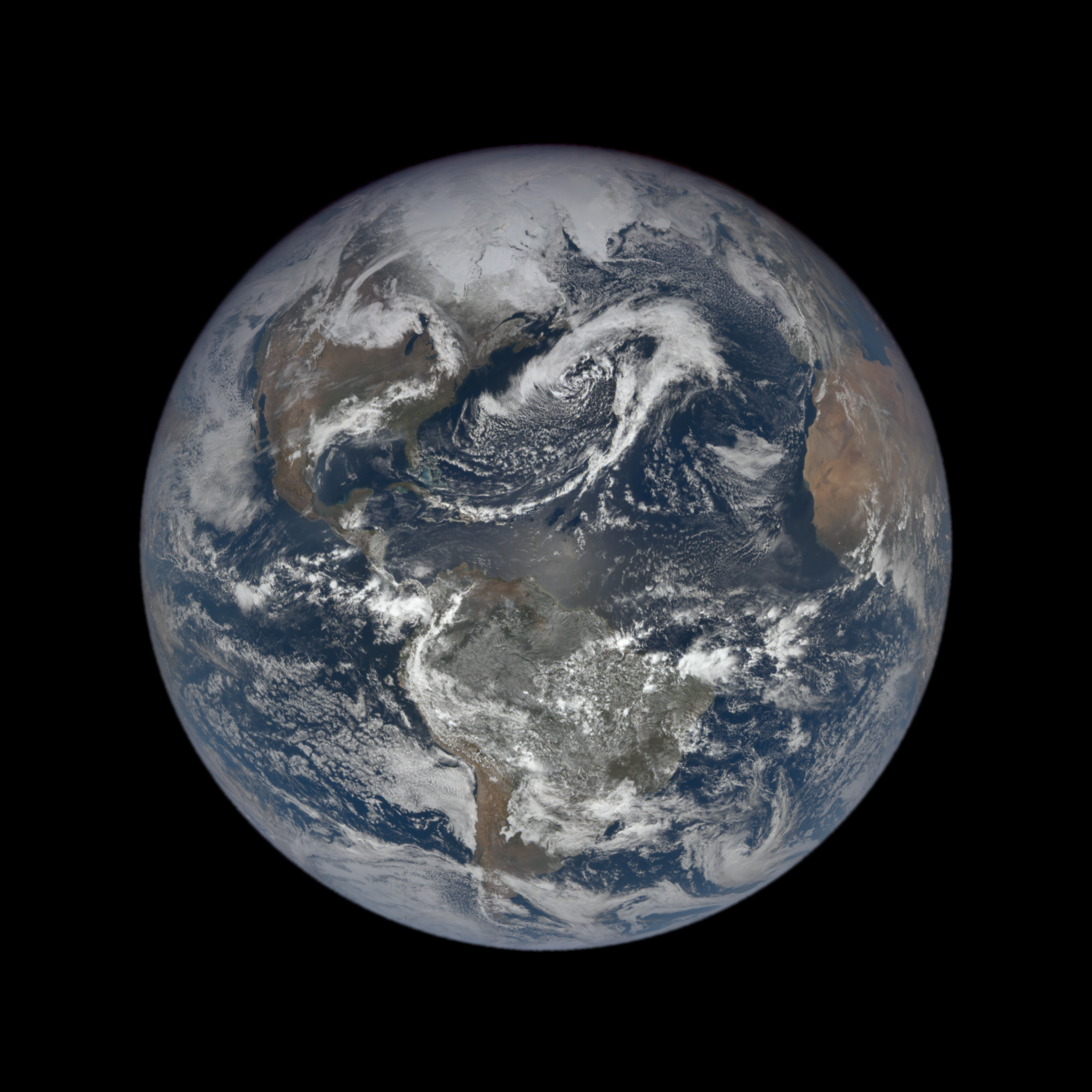
Subscribe to 404 Media to get The Abstract, our newsletter about the most exciting and mind-boggling science news and studies of the week. For decades, scientists have puzzled over the density deficit in Earths core, an unexplained discrepancy between the expected density of a solid iron core and the much lower density that is actually observed through seismic measurements of our planets center.Now, scientists have provided some of the best experimental evidence yet that this deficit can be explained by vast oceans of hydrogen that are locked within the core, significantly lowering its overall density, according to a study published on Tuesday in Nature Communications.In addition to constraining this longstanding problem, the research reveals new insights about another persistent mystery: the original source of Earths liquid water, the key ingredient that enabled life on our planet to emerge.Hydrogen has long been considered a major light-element candidate to account for the observed density deficit in Earths core, said researchers led by Dongyang Huang, an assistant professor of Earth and space sciences at Peking University, in the new study. For decades, however, our knowledge of the exact content of H in planetary cores has been hindered by the inability to unambiguously quantify H in high-pressure samples.To solve this problem, the researchers performed a series of experiments that simulated the extreme environment in the core during Earths formation billions of years ago. This approach involved heating up iron metal with lasers to a fully-molten state that resembles ancient Earths inner magma ocean, which reached temperatures up to 8,700F, and pressures more than a million times more intense than those we experience on Earths surface.The team then searched for the presence of hydrogen in nanostructures made primarily of silicon and oxygen. The results revealed that the cores hydrogen percentage sits between 0.07 to 0.36 percent, which works out to roughly nine-to-45 times the amount of the hydrogen in all of Earths oceans.But perhaps the most tantalizing part of the study is its implications for understanding the enigmatic origins of Earths water, the wellspring of life on our world.Some theories suggest that Earths water was primarily delivered from extraterrestrial sources, such as comets and asteroids that impacted our planet as it was forming more than four billion years ago. An alternate possibility is that Earths water was largely sourced from its building blocks, including vast interior reservoirs of hydrogen. This latter scenario is supported by the new study.Although 71 percent of the Earths surface is covered by ocean, mainly made of H, it has been argued that the majority of Earths H had been stored in the core since its formation, ~4.5 billion years ago, the researchers said.The estimates presented in the study require the Earth to obtain the majority of its water from the main stages of terrestrial accretion, instead of through comets during late addition, the team concluded.The study certainly helps tackle the mystery of the precise contents of Earths core, though the authors note that their estimate has large uncertainties that will need to be further narrowed down in future work. They also suggest that hydrogen alone cannot explain the density deficit, and that other light elements or compounds, including water, might be contributing to the discrepancy.Compared to existing models for Earths core composition this is a somewhat less H-rich core, and requires its density deficit to be accounted for by a mixture of light elements, rather than a single light species, akin to that of Mars core, the team said in the study.Given that water is essential to all life on Earth, solving the riddle of its origins is the first step to understanding how our planet came to be inhabited, and whether other planets may commonly go through the same process.



 Help Center

 English
 Arabic
 French
 Spanish
 Portuguese
 Deutsch
 Turkish
 Italiano
 Russian
 Romaian
 Portuguese (Brazil)
 Greek
Greek