


 Help Center
 Vibeforge: End User Guide
WWW.404MEDIA.CO
Worlds Largest Group of Chimps Waging Deadly Civil War, Scientists Discover
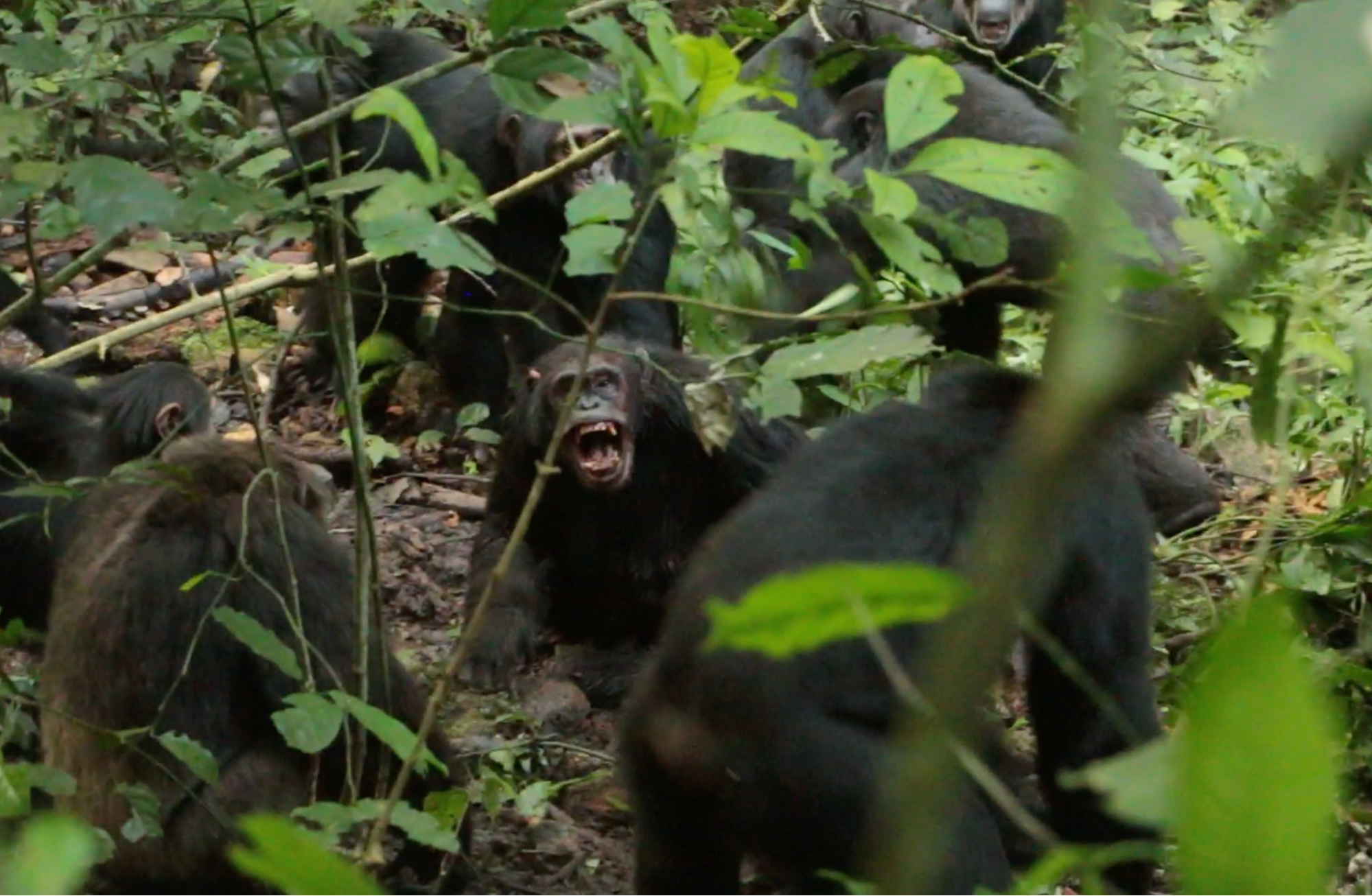
Subscribe to 404 Media to get The Abstract, our newsletter about the most exciting and mind-boggling science news and studies of the week. Scientists have observed an extremely rare chimpanzee civil war, a conflict that has killed at least seven adults and 17 infants, and which sheds new light on the nature of warfare in humans, according to a study published on Thursday in Science.Male chimpanzees are often aggressive to outsiders, but it is unusual for chimps to kill former members of their own social groups. Though Jane Goodall and her colleagues observed one famous examplethe Gombe Chimpanzee War of the 1970s, which resulted in seven adult deathsits estimated that these violent episodes occur only once every 500 years, based on genetic analyses of chimpanzee lineages.Now, a team led by Aaron Sandel, an associate professor of anthropology at the University of Texas at Austin, has reported a far more deadly group fissure among the Ngogo chimpanzees of Uganda. This population exceeded 200 individuals at one point, making it the largest group of chimpanzees ever observed in the wild. But over the past decade, the chimps have fractured into two factions, one of which has staged multiple lethal raids on the other.Certainly, these are not strangers, said Sandel in a call with 404 Media. These are chimps that once knew each other, and we know that for certain.The Ngogo group has been studied since the 1970s by primatologists like Thomas Struhsaker, and have been intensively observed since 1995 as part of the Ngogo Chimpanzee Project set up by David Watts and John Mitani. For more than three decades, researchers from around the world have convened to watch the group during summer field expeditions, while Ugandan research assistants have maintained a continuous presence at the site.Because of this longstanding observation, Sandel said, researchers were able to be on the ground witnessing every moment as the deadly chimp war unfolded.Chimpanzees from different clusters socialized together before the group fissure in 2015. Image: Aaron SandelThis group has always had distinct subpopulations that spent more time together, including the Western and Central clusters. Even so, before the fissure, the clusters regularly overlapped for shared activities like grooming, patrolling, and interbreeding.Sandel vividly remembers the exact day that this dynamic had noticeably shifted: June 24, 2015. He was following the Western cluster, which was at the center of its neighborhood territory, he said.They hear chimps from the Central neighborhood nearby, and they go quiet, he recalled. They seem nervous. They're touching each other with this reassurance that they typically do when they hear the outsider chimps, but I was just alone with them. I remember, just in that moment, being really puzzled and focused, like whats going on?They could have reunited and done what's typicalscreaming and charging around, maybe some slapping, and then come together, sit together, groom, maybe go their separate ways after, because they'd already started to be a bit more disconnected, Sandel continued. But instead of reuniting in typical chimpanzee fusion fashion, the Western chimpanzees ran and the Central chimps chased them.What started as a weird vibe transformed into a weeks-long chill between the groups, followed by a temporary thaw. Ultimately, the tension spiraled into bloody conflicts.You act like a stranger, you become a stranger, Sandel said. It seemed like that planted the seed of polarization.Over the course of the next few years, the males in each cluster began to treat each other like outsiders. The last offspring that had parents from different clusters was conceived in March 2015. The Western and Central chimps were fully separated by 2018.The Western chimps, despite being smaller in number, have since amped up hostilities by staging 24 violent attacks against their former kin, killing at least seven mature males and 17 infants from the Central cluster. The death toll may well be higher, but some deaths and disappearances cannot be conclusively attributed to the conflict.Sandel and his colleagues proposed a few possible causes of this civil war, a term that specifically refers to human conflicts, but that may have parallels in other species. First, the unusually large size of the group may have amplified feeding competition among individuals, even in their lush forest habitat. Social networks within the group may have also been disrupted by a wave of six deaths in 2014five adult males and one adult femalesome of whom likely died from disease.The beginning of the fissure also coincides with the rise of a new alpha male, Jackson, who replaced the previous alpha, Miles. Sandel recalled Miles grunting in submission to Jackson on the same day that the Western cluster ran away from the Central cluster. Such transitions between alphas can introduce social instabilities as the dominance hierarchy is upended, a process that can take several months.Indeed, Miles reacted violently toward other members of the group in the wake of his displacement. Jackson, who led the Central cluster, ended up as one the casualties of the conflict; he died from injuries inflicted by the Western cluster in 2022.Whatever the cause of the rupture, this group of former kin have now become hostile enemies. Its always dicey to draw broad comparisons between the behavior of humans and other animals, but the team speculates in the study that one possible takeaway is that "it may be in the small, daily acts of reconciliation and reunion between individuals that we find opportunities for peace.If we study chimpanzees in detail and start to understand the mechanisms driving their cooperation, their conflict, and something as complex as one group becoming polarized, splitting, and engaging in ongoing lethal conflict, then we might gain insights into similar dynamics that are happening in humans, Sandel said.If chimps are able to do this complex process in the absence of ethnicity, language, and religionthe things we often attribute to human warfarechimps don't have those narratives and those excuses, he concluded. They're stripped away of those cultural dimensions. It must be their interpersonal social bonds and daily conflicts, reconciliations, and avoidancesall those dynamics. If that's the case with chimps, to what extent is it the case in humans? Its a hypothesis to be tested.Subscribe to 404 Media to get The Abstract, our newsletter about the most exciting and mind-boggling science news and studies of the week.
0 Comentarios
0 Compartidas
2 Vistas
0 Reseñas

 English
 Arabic
 French
 Portuguese
 Deutsch
 Turkish
 Dutch
Dutch
 Italiano
 Russian
 Romaian
 Portuguese (Brazil)
 Greek
Greek