0 Σχόλια
0 Μοιράστηκε
171 Views
0 Προεπισκόπηση
Explore VibeForge
Κατάλογος
Discover people, communities, creators, and trending content on VibeForge.
Άνθρωποι
Profiles
Communities
Ομάδες
Ιστορίες
Περιεχόμενο
-
Παρακαλούμε συνδέσου στην Κοινότητά μας για να δηλώσεις τι σου αρέσει, να σχολιάσεις και να μοιραστείς με τους φίλους σου!
-
WWW.NATURE.COMDo look up: how science and international cooperation closed the ozone holeNature, Published online: 14 May 2025; doi:10.1038/d41586-025-01459-4Forty years ago this month, scientists reported that human activities had punctured Earths protective ozone layer. What happened next offers a masterclass in international science-diplomacy.0 Σχόλια 0 Μοιράστηκε 158 Views 0 Προεπισκόπηση -
WWW.NATURE.COMBlack hole fly-by modelled with landmark precisionNature, Published online: 14 May 2025; doi:10.1038/d41586-025-01339-xA prediction of the gravitational waves produced by interacting black holes achieves high precision and demonstrates the link between general relativity and geometry.0 Σχόλια 0 Μοιράστηκε 158 Views 0 Προεπισκόπηση -
WWW.NATURE.COMIs it OK for AI to write science papers? Nature survey shows researchers are splitNature, Published online: 14 May 2025; doi:10.1038/d41586-025-01463-8Poll of 5,000 researchers finds contrasting views on when its acceptable to involve AI and what needs to be disclosed.0 Σχόλια 0 Μοιράστηκε 164 Views 0 Προεπισκόπηση -
WWW.NATURE.COMFossil claw marks show reptiles arose much earlier than thoughtNature, Published online: 14 May 2025; doi:10.1038/d41586-025-01499-wTracks in Australia seem to be the earliest known prints of amniotes a group that includes reptiles, birds and mammals.0 Σχόλια 0 Μοιράστηκε 172 Views 0 Προεπισκόπηση -
WWW.PROPUBLICA.ORGThe Department of Education Forced Idaho to Stop Denying Disabled Students an Education. Then Trump Gutted Its Staff.by Becca Savransky, Idaho Statesman This article was produced for ProPublicas Local Reporting Network in partnership with the Idaho Statesman. Sign up for Dispatches to get our stories in your inbox every week. Time and again, the U.S. Department of Education has been the last resort for parents who say the state of Idaho has failed to educate their children. The federal agency in 2023 ordered Idaho to stop blocking some students with learning disabilities, like dyslexia, from special education. That same year, it flagged that the states own reviews of districts and charters obscured the fact that just 20% were fully complying with the federal disability law. Last year, it told the state it must end long delays in services for infants and toddlers with disabilities, which could include speech or physical therapy.Now President Donald Trump has pledged to dismantle the department. Idahos superintendent of public instruction Debbie Critchfield has celebrated the proposal. She insisted that the move would not change the requirement that states provide special education to students who need it. That would take an act of Congress.But parents and advocates for students with disabilities say they are worried that no one will effectively ensure schools follow special education law. Historically, when left to their own devices, states dont necessarily do the right thing for kids with disabilities and their families, said Larry Wexler, a former division director at the federal Office of Special Education Programs, who retired last year after decades at the department.Former federal Education Department employees who worked on special education monitoring said oversight measures would likely be hampered by the layoffs, which included attorneys who worked with the special education office to provide state monitoring reports. Gregg Corr, a former division director with that office, said that without the group of attorneys who were focused on enforcing special education law, it will be really difficult for staff to finalize and issue these reports to states. He added there may also be a reluctance to take on more complicated issues without running them by attorneys. What might have been, you know, inconsistent with the legal requirements six months ago may be fine now it just depends on how its interpreted, Wexler said. Before Federal Law, Millions Denied ServicesFor parents who have been fighting for services for years, the federal oversight has been critical.After Ashley Brittain, an attorney and mom to children with dyslexia, moved to Idaho in 2021, she realized a key problem: Idahos criteria for qualifying students with specific learning disabilities such as dyslexia or dysgraphia was so narrow it disqualified some eligible students from receiving services, she said. Historically, when left to their own devices, states dont necessarily do the right thing for kids with disabilities and their families. Larry Wexler, a former division director at the federal Office of Special Education Programs Together with Robin Zikmund, the founder of Decoding Dyslexia Idaho who has a son with dyslexia and dysgraphia, Brittain has spent years trying to get the state to acknowledge the disability and provide services to dozens of kids who needed help.Were at the table time and time again, at the eligibility table, where school teams wouldnt qualify our dyslexic students, Zikmund previously told the Idaho Statesman and ProPublica. And it was like, What is going on?Brittain called state officials and told them they were breaking the law. State officials disagreed. No one took action, she said. In 2022, she wrote to the Office of Special Education Programs. In the letter she sent to the federal department, she said the Idaho Department of Education, under former superintendent Sherri Ybarra, was refusing to entertain any conversations about changing the way it determined which students were eligible for special education. Ybarra could not be reached for comment.Before Congress passed what is now known as the Individuals with Disabilities Education Act in 1975 and created the U.S. Department of Education as an agency under the Cabinet about five years later, Brittain would have been on her own. At the time, nearly 1.8 million students with disabilities werent being served by the public schools, according to estimates. Some states had laws prohibiting students with certain disabilities from attending public schools, according to the federal governments own history. The law granted students with disabilities access to a free appropriate public education fitting the individual needs of the student and gave money to states to fulfill the promise. Now, the law also guarantees infants and toddlers with disabilities access to early interventions, such as physical or speech therapy. The U.S. Department of Education has since been responsible for making sure states follow the law, providing reviews of state performance, distributing money and offering technical assistance to help states improve learning outcomes for students in special education. The department conducts an annual review of each state, and a more intensive one thats supposed to be completed roughly every five years. The annual reviews look at discipline numbers, graduation rates and test scores to identify problems and help states to fix them. A five-year review includes a visit to the state and a look at state policies, student data and annual reports. When states need to take corrective action, the federal special education office monitors that they are making the changes. Idaho is one of about a dozen states currently being monitored, according to the most recent updates on the federal agencys website. Were at the table time and time again, at the eligibility table, where school teams wouldnt qualify our dyslexic students. And it was like, What is going on? Robin Zikmund, founder of Decoding Dyslexia Idaho Parent complaints can also trigger a review, as was the case with Brittain in Idaho. After Brittain alleged that the state was wrongfully keeping kids with dyslexia and other disabilities from special education, she waited over a year before she got an answer from the Office of Special Education Programs: She was right. Idaho, it turned out, accepted a lower percentage of students with specific learning disabilities, such as dyslexia, into special education compared to other states about half the national average, according to the most recent data reported to the U.S. Department of Education from the 2022-2023 school year.By then, Idaho had a new state superintendent of public instruction, Critchfield, for whom Brittain campaigned. The Office of Special Education Programs told Critchfield in 2023 that the state needed to demonstrate its policies complied with federal law or update them. In response, the Idaho Department of Education has updated its special education manual, which has since been approved by the Legislature. It has also directed school districts to review every student found ineligible for special education since 2023 to determine if they needed to be reevaluated. Parents in Idaho celebrated the victory, which could make it easier for some kids to qualify in a state that has one of the lowest percentages of students who receive special education. But they acknowledged the fix wasnt perfect and left out students who may have been found ineligible for special education before the federal office identified the problem. The state isnt tracking the number of students who have since qualified due to the change.Nicole Fuller, a policy manager at the National Center for Learning Disabilities, said a case like this, in which some students are being missed, truly underscores the need for federal oversight, and, of course, holding states accountable for accurately identifying disabilities.Federal oversight isnt perfect. By the time Idaho addressed Brittains complaint, the state had been out of compliance since at least 2015. States that fall out of compliance can be at risk of losing federal funding, although that penalty does not appear to have been used in decades. The federal government has never fulfilled its promise to fund 40% of each states special education costs, but Idaho relied on federal funding for about 18% around $60 million of its special education budget during the 2022-2023 school year, state officials said. The rest is made up by the state or by local school districts through referendums. A recent report by an independent Idaho state office estimated special education was underfunded by more than $80 million in 2023. But U.S. Education Secretary Linda McMahon, appointed by Trump in March, has said that closing the department wouldnt mean cutting off funds from those who depend on them but would eliminate the bureaucracy and regulations associated with them.Critchfield, Idahos superintendent, said on Idaho-based The Ranch Podcast that teachers involved in special education spend a lot of time filling out paperwork instead of focusing on how to help that child be successful. The changes are about removing the bureaucracy. But Critchfield acknowledged that cuts at the federal level could pose challenges if states have to take on more of an oversight role.As much as I am a champion of states doing that, the reality is there would be implications for Idaho and our department, she said in a statement to the Statesman and ProPublica. The state is looking at what it can do to prepare and where gaps would exist should more responsibilities fall to the states.Zikmund, the advocate who praised Critchfield for being responsive to parents and having an open-door policy, said that parents could be better off after the changes with good leadership at the state level, but without it, they could face a train wreck. One test will come in June, when the Office of Special Education Programs is expected to release reports telling states how they performed in their annual reviews. The layoffs and restructuring under Trump are making some advocates question if the federal government will truly hold states to account.0 Σχόλια 0 Μοιράστηκε 182 Views 0 Προεπισκόπηση -
WWW.PROPUBLICA.ORGIncalculable Damage: How a We Buy Ugly Houses Franchise Left a Trail of Financial Wreckage Across Texasby Anjeanette Damon and Mollie Simon ProPublica is a nonprofit newsroom that investigates abuses of power. Sign up to receive our biggest stories as soon as theyre published. Ronald Carver was skeptical when his investment adviser first tried to sell him on an ugly houses investment opportunity eight years ago. But once the Texas retiree heard the details, it seemed like a no-lose situation.Carver would lend money to Charles Carrier, owner of Dallas-based C&C Residential Properties, a high-producing franchise in the HomeVestors of America house-flipping chain known for its ubiquitous We Buy Ugly Houses advertisements. The business would then use the dollars to purchase properties in which Carver would receive an ownership stake securing his investment and an annual return of 9%, paid in monthly installments.Worst case, I would end up with a property worth more than what the loan was, Carver said of the pitch.Carver started with a $115,000 loan in 2017. And sure enough, the interest payments arrived each month.He had worked three decades at a nuclear power plant, and retired without a pension and before he could collect Social Security. He and his wife lived off the investment income.The deal seemed so good, Carver talked his elderly father into investing, starting with $50,000. As the monthly checks arrived as promised, both men increased their investments. By 2024, Carver estimates they had about $700,000 invested with Carrier.Then, last fall, the checks stopped. The money Carver and his father had invested was gone. Carrier is accused of orchestrating a yearslong Ponzi scheme, bilking tens of millions of dollars from scores of investors, according to multiple lawsuits and interviews with people who said they lost money. The financial wreckage is strewn across Texas, having swept up both wealthy investors and older people with modest incomes who dug into retirement savings on the advice of the same investment advisor used by Carver.As early as 2020, Carrier had begun taking out multiple loans on individual properties some of which he never owned. In cases reviewed by ProPublica, as many as five notes were recorded against a single property, far exceeding the propertys value. Carrier also failed to properly record many deeds that were supposed to secure the loans, accumulating more debt than he could ever repay while investors remained unaware they had no collateral for their investments.Its incalculable the amount of damage this guy did, said one investor who lost about $1 million and asked not to be named to avoid embarrassment and not to interfere with a criminal investigation into Carriers scheme. Hes ruined some lives. Carrier, who declined an interview request, said in a brief phone conversation that hes not trying to avoid responsibility for the harm he caused. When this thing finally stopped, it was completely driven by me saying enough and going to the people and saying, Heres the mess Ive created, he said. This is a mess created by me.Investors also blame HomeVestors. For nearly two decades, Carrier used the companys carefully cultivated brand as the largest homebuyer in the United States to gain investors trust. They accuse HomeVestors of failing to provide oversight that could have prevented the fraud, despite claiming to hold its franchises accountable for best business practices. In its answers to their lawsuits, HomeVestors has denied responsibility for Carriers actions, claiming its franchises are independently operated, despite earning hundreds of thousands of dollars from Carriers business.HomeVestors revoked Carriers franchise on Oct. 24, about the time interest payments stopped arriving in investors accounts. The company said it had received a tip on its ethics hotline created in 2023, after ProPublica detailed predatory buying practices by multiple franchises. When confronted by HomeVestors, Carrier admitted that he and his business had entered into debts that they could not pay, a HomeVestors spokesperson said. The company reported him to the FBI. In May, HomeVestors filed suit against Carrier for trademark infringement and for not indemnifying it against these lawsuits.We take all allegations of misconduct incredibly seriously as demonstrated by our decisive action, the spokesperson said. It is truly disheartening for us that anyone who lent Mr. Carrier money was misled or harmed by his alleged fraudulent activity.Now, Carrier is under investigation by the Department of Justice, according to a recording of an April call between the lead prosecutor and potential victims. (The FBI and DOJ declined to comment.) A judge in one of the many lawsuits against Carrier has deemed allegations of fraudulent loans to be true because Carrier never answered the complaint. And the investors are in a race with one another to recoup even a small amount of what they lost, by either waiting for the DOJ to pay restitution, suing Carrier or trying to foreclose on properties still left in his portfolio.Just months after learning they had lost all of their investments, and before any restitution could be paid, Carvers father died. Five notes for a property on Glen Forest Lane in Dallas given to investors between 2019 and 2023. Two of the notes were not recorded until 2024. (Obtained, collaged and highlighted by ProPublica) A Top-Performing FranchiseIn 2005, Carrier opened a HomeVestors franchise in Dallas, where HomeVestors is headquartered. In the early days, records show, he relied on a handful of institutional lenders to finance his house purchases. Soon, the Wharton School of Business MBA who had come to house-flipping following a career at Pepsi and a food service equipment company, started cultivating his wealthy friends for loans. Carrier didnt fit any stereotype of a glad-handing huckster with a bad loan to sell. Those who knew him describe him as a serious person, cordial but very direct. He always had files in front of him, constantly focusing on his business. It made him seem trustworthy, one investor said.At HomeVestors, he was held up as a model franchise operator. C&C Residential Properties routinely made the top volume and top closer lists and was even named franchise of the year. Carrier led training sessions at company conferences and described his business as the largest and most successful HomeVestors franchise in the United States a claim that remained on the website for Carriers business through early May.Chas Carrier, for maybe 15 years, was one of the golden boys at HomeVestors, said Ben Ahern, who over two decades worked for a HomeVestors franchise and later owned one before leaving the company in 2021. Internally, it was like, Do whatever Chas Carriers doing.It isnt unusual for HomeVestors franchises to rely on private investors to finance their house-flipping. Banks arent typically interested in house-flipping loans, which are often short-term and riskier than a standard mortgage. Because of that risk, investors who lend to house-flippers earn a substantially higher return.To further minimize their risk and ensure they had a legitimate ownership stake in the house, savvy investors would verify the transaction with an independent title company to research whether there were other liens against the property and then record the deed with the county recorder. But many of Carriers investors, after years of consistent payments led them to trust him, let Carrier handle recording the deeds and did not confirm that hed done so.As Carrier grew his business, he began relying more on individual investors. ProPublica identified through public records at least 124 people who have lent money to Carrier since 2009. Not all of them have lost money.Carriers search for new investors was aided by Robert Welborn, an investment adviser in Granbury, Texas, southwest of Dallas. Welborn had built a network of clients in Granbury, a city of about 12,000 people on the Brazos River, through church, friendships and referrals. Many of his clients were older and had modest nest eggs, which Welborn said were well diversified. He said he built a relationship with Carrier in 2012, after researching his background for about two months. That Carrier was a successful franchisee lent him credibility, Welborn said.I never imagined the No. 1 franchisee with a fast-growing franchise company, HomeVestors, would defraud investors, he said.At the time, Welborn also solicited new investors with invitations to steak dinners where they would hear his pitch. An investment in Carriers business, according to Welborns sales material, which also featured the HomeVestors caveman mascot, Ug, was both lucrative and secure. Your investment is protected, the sales material assured potential clients.For loans he sent Carriers way, Welborn earned a 2% commission, he said. Welborn had at least two dozen clients who invested with Carrier, most of whom had multiple loans to him, according to a public records search. He would not comment on how many of his clients invested with Carrier.Many investors were happy for years in some cases, more than a decade. The interest payments came in like clockwork. A lot of Welborns clients relied on the payments for retirement income.I was real tickled with it, said Tom Walls, 85, who said he lost $50,000 of his retirement savings by investing with Carrier.Some investors noticed small problems a payment that arrived a few days late or an error on the paperwork to secure the loan. But Carrier always fixed the problems promptly, investors said.When you have this 10-year continuous, pleasant and mutually beneficial relationship, you build up a great deal of trust, said John Moses, who estimates he lost more than $1 million to Carrier.Looking back, the investors who spoke with ProPublica said they wished they had taken those warning signs more seriously. (Max Erwin for ProPublica) He Just Pencil Whipped Those DeedsBy fall 2024, Carriers payments to his lenders stopped. Thats when the house of cards fell.Carrier had spent that summer scrambling for money. Not only did Carrier have to make loan payments to scores of investors, but he also needed to keep up with the HomeVestors franchise fees and advertising payments. The company requires its franchises to make regular reports on sales and to open their books for audits, to provide financial statements when requested, and to report all assets and liabilities. Any of those reports could have called into question Carriers ability to stay solvent. But, according to former franchise owners and employees, HomeVestors audits of its franchises are mostly geared toward ensuring theyre paying all their franchise fees, which are based on sales.Before Carriers tangle of fraudulent loans collapsed and was exposed in court, there were signs of trouble.In 2016, Carrier was fined by the Texas Real Estate Commission for managing properties without a license. The HomeVestors franchise agreement requires owners to follow all laws and regulations, particularly real estate regulations. In 2020, two title insurance companies issued special alerts on Carriers business, advising their title officers not to enter into transactions with him without further legal and underwriting review. Carrier hasnt paid taxes on some of his properties since early 2023, according to court and public records, another violation of his franchise agreement. Despite the apparent violations, HomeVestors didnt terminate Carriers franchise agreement.I dont really think they do have much in place to prevent something like this, Ahern, the former HomeVestors franchise owner, said of the company. HomeVestors at the time didnt seem to have an internal system policing how franchises finance buying properties.A HomeVestors spokesperson said the company focuses on its franchise customers experiences selling their homes and does not dictate how franchises raise capital. The more than 950 franchises of HomeVestors are independent businesses with a wide variety of finance options available to them, the spokesperson said.Last spring, Carrier began borrowing against his future receipts in exchange for cash advances with exorbitant fees and annualized interest rates that he later claimed ranged as high as 600%. Between May and October, he did this at least seven times, racking up more than $1.2 million in debt beyond what he owed his investors, exhibits included with court filings show. By fall, he owed more than $75,000 in payments a week, according to the original terms. Seven companies filed suit over the cash-advance agreements, accusing him of default. Carrier has denied the allegations of default and has countersued four of the companies, claiming he was charged unreasonably high interest rates.The lending scheme appears to have fallen in a gray area for state and federal securities regulations. Its unclear whether the promissory notes Carrier issued to investors meet the definition of a security, two experts told ProPublica.In October, Carriers investors began to confront him about the missing payments, including Jeff Daly and Steve Needham, two of Carriers largest investors who had been lending him money for years. Carrier came clean to Daly, admitting he had been running a lending scheme for several years, according to a lawsuit Daly and Needham filed. He told Needham he had taken out multiple loans on individual properties without disclosing them to the investors, according to the lawsuit. The two men claimed in their lawsuit, which resulted in default judgments against Carrier, that combined they had lost $13.5 million to Carrier.The investor who spoke to ProPublica and asked not to be named said in an interview that Carrier broke down in tears when confronted about losing more than $1 million of the investors money. Carrier admitted the loans paid for his operating expenses, not for buying and refurbishing houses, the investor said.He just pencil whipped those deeds at the end, the investor said, explaining that Carrier drew up documents but didnt record them. Because the deeds were never recorded, the investor had no lien on the properties and therefore no collateral. Some deeds were for houses that Carrier didnt own or never bought, the investor said. It was a complete fabrication.Welborns clients, who typically invested much smaller amounts with Carrier, also learned of the house-flippers collapse in the fall, when their payments stopped. Carver said that Welborn called him a couple of days after the October payment was due and said, Hey, Im sorry to tell you this, but Chas has called me and admitted to fraud.Carver said he got in the car and drove to Welborns office, where he learned the nightmarish truth that all the money Carrier had taken was gone.A Life-Changing HitInvestors are deploying a variety of strategies to get their money back some of which pit bigger investors against smaller ones and early investors against more recent ones. Those who acted quickly are recovering some money through foreclosures and lawsuit settlements. Although Carrier is denying allegations in lawsuits brought by the cash-advance companies, hes not fighting individual investors who are suing him. Three of their lawsuits have resulted in judgments against Carrier, and he has so far not defended himself against the others.Welborn said hes doing his best to help his clients recover their money by providing the necessary paperwork, connecting them with buyers for the houses used as collateral and researching lien histories on the homes. When he first learned of the scheme, Welborn tried to convince his clients to sign on with his lawyer to sue Carrier. The lawyer, Anthony Cuesta, hoped a court would seize Carriers assets to help recover the investors lost funds. But he quickly learned there were too many investors and not enough equity in the properties to fund the litigation. Now, many of Welborns clients are waiting for the FBI and DOJ to act, while wealthier investors are foreclosing on properties and making them ineligible to be used for restitution. Welborn said some of his clients have been paid restitution through a DOJ-appointed real estate agents sale of Carriers properties, but he declined to provide details.Carver isnt optimistic: We are not going to get a dime.At least one investor went after Welborn individually. According to a Securities and Exchange Commission disclosure, the claim was settled for $130,000. In his response to the SEC disclosure, Welborn denied breaching fiduciary duty to the client and said he resolved the claim to avoid controversy. Welborn told ProPublica that $120,000 of the settlement came from the sale of the house used as collateral for the familys loan and he paid $10,000 for their attorney fees.Welborn said hes devastated by the loss of his clients money. But every day I drag myself to work with Gods help and spend most of my day helping lenders with their own personal restitution battles, he said.Some investors said they will have to go back to work after having retired or are scrambling to find some way to replace their lost income.Carver wishes he had paid more attention to red flags, like paperwork errors. But the monthly checks were so reliable, he didnt listen to his gut. Or his wife.Every time I added money, my wife would say, Dont do it, Carver said. My mother, too. She would push on my dad not to add any more. But he liked getting the monthly check.Carvers dad, Larry, believed it was the best performing investment he had ever made. When the money disappeared, Carver went to work trying to recoup some of it. Maybe he could write it off on his taxes, he thought. He wanted to get at least something back for his dad. But Larry was in ill health, and in February, he died.My dad passed thinking he lost all of his money to this guy, Carver said, adding he hopes Carrier goes to jail for a very long time.The investor who asked not to be named said the loss was a life-changing hit. He had retired at 53, after sticking it out in a job he hated until his stock options vested. When he finally quit, he put the money into Carriers business and lived off of the monthly payments. He may have to go back to work.He was an arrogant son of a bitch, the investor said. It was gone before he told anyone there was a problem. Thats the unforgivable piece. He squandered it all away. And he had to get backed into a corner before he admitted it was all gone. Byard Duncan contributed reporting.0 Σχόλια 0 Μοιράστηκε 155 Views 0 Προεπισκόπηση -
WWW.NYTIMES.COMWhat to Know About the NJ Transit StrikeA deal on Sunday evening ended the three-day strike. But trains will not resume running a full schedule until Tuesday, the agency said.0 Σχόλια 0 Μοιράστηκε 169 Views 0 Προεπισκόπηση -
WWW.NYTIMES.COMGreg Cannom, Who Made Brad Pitt Old and Marlon Wayans White, Dies at 73He won five Oscars as a makeup artist on movies in which characters transformed, like Mrs. Doubtfire, White Chicks and many more.0 Σχόλια 0 Μοιράστηκε 188 Views 0 Προεπισκόπηση -
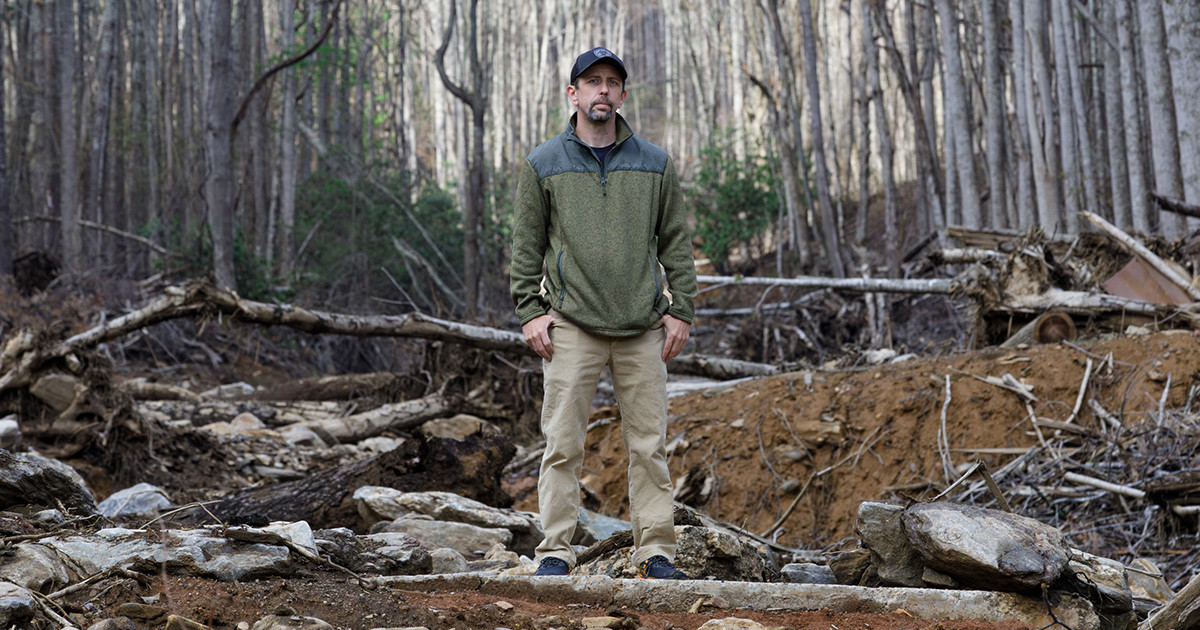
After a Deadly Tornado, a Small Kentucky City Starts Picking Up the PiecesIn London, Ky., the scope of the destruction from a tornado that killed 19 in the state was coming into view as residents tried to process the disaster.0 Σχόλια 0 Μοιράστηκε 174 Views 0 Προεπισκόπηση
-
WWW.NYTIMES.COMNicusor Dan Beats George Simion in Romanas Presidential ElectionNicusor Dan, the mayor of Bucharest, defeated George Simion, a nationalist aligned with President Trump who had been seen as the front-runner.0 Σχόλια 0 Μοιράστηκε 168 Views 0 Προεπισκόπηση -
WWW.NYTIMES.COMTrump Is Destroying a Core American Value. The World Will Notice.His overhaul of the State Departments human rights bureau will make the United States weaker.0 Σχόλια 0 Μοιράστηκε 176 Views 0 Προεπισκόπηση -
WWW.APARTMENTTHERAPY.COM9 Pottery Barn Memorial Day Deals to Shop Now, Starting at $43Save on sofas, decor, bedding, and more.READ MORE...0 Σχόλια 0 Μοιράστηκε 154 Views 0 Προεπισκόπηση
-
WWW.APARTMENTTHERAPY.COMThe Very Best Margarita Recipe (We Tested 6 Popular Contenders!)Perfect for summer.READ MORE...0 Σχόλια 0 Μοιράστηκε 175 Views 0 Προεπισκόπηση
-
WWW.APARTMENTTHERAPY.COMChristina Hendricks Totally Transformed Her Fireplace Without Any DemoAnd it cost less than $100.READ MORE...0 Σχόλια 0 Μοιράστηκε 167 Views 0 Προεπισκόπηση
-
WWW.APARTMENTTHERAPY.COMThis Makeover Convinced Me That Hula Hoops Are a Bathroom StapleA hula hoop can come in clutch in a tight space.READ MORE...0 Σχόλια 0 Μοιράστηκε 159 Views 0 Προεπισκόπηση
-
WWW.APARTMENTTHERAPY.COMAshley's Memorial Day Sale Has Unbeatable Discounts on Stylish FurnitureHurry while the deals are still live!READ MORE...0 Σχόλια 0 Μοιράστηκε 171 Views 0 Προεπισκόπηση
-
WWW.NATURE.COMThermal asymmetry in the Moons mantle inferred from monthly tidal responseNature, Published online: 14 May 2025; doi:10.1038/s41586-025-08949-5Data from the NASA GRAIL spacecraft recover the lunar gravity field suggesting preservation of a predominantly thermal anomaly in the nearside mantle, which could influence the spatial distribution of deep moonquakes.0 Σχόλια 0 Μοιράστηκε 183 Views 0 Προεπισκόπηση -
WWW.NATURE.COMI dont have the bandwidth: how to juggle dating alongside a PhDNature, Published online: 14 May 2025; doi:10.1038/d41586-025-01388-2Is lasting love more likely if you date only other scientists? How much should you talk about your research on a first date? Researchers lift the lid on their experiences of when science meets affairs of the heart.0 Σχόλια 0 Μοιράστηκε 174 Views 0 Προεπισκόπηση -
WWW.NATURE.COMEmergence of CalabiYau manifolds in high-precision black-hole scatteringNature, Published online: 14 May 2025; doi:10.1038/s41586-025-08984-2A new, highest-precision analytical result for solving the gravitational two-body problem of black hole or neutron star scattering reveals the emergence of CalabiYau manifolds in the solution to the radiated energy in these encounters.0 Σχόλια 0 Μοιράστηκε 161 Views 0 Προεπισκόπηση -
WWW.NATURE.COMWater ice in the debris disk around HD 181327Nature, Published online: 14 May 2025; doi:10.1038/s41586-025-08920-4The James Webb Space Telescope has detected water ice in the cold debris disk (analogous to the Kuiper belt) around the star HD 181327.0 Σχόλια 0 Μοιράστηκε 163 Views 0 Προεπισκόπηση -
WWW.NATURE.COMSolid phase transitions as a solution to the genome folding paradoxNature, Published online: 14 May 2025; doi:10.1038/s41586-025-09043-6In vitro reconstitution and in vivo live-cell imaging of LHX2EBF1LDB1 enhancer hubs in olfactory sensory neurons reveals that these transcription factors form condensates with solid, rather than liquid, phase properties.0 Σχόλια 0 Μοιράστηκε 183 Views 0 Προεπισκόπηση -
WWW.NYTIMES.COMIsrael Says It Has Expanded Ground Operations in Gaza Amid Cease-Fire TalksIsrael aims to press Hamas into releasing hostages and ultimately to destroy the group, but says it will now also allow some aid to enter the enclave.0 Σχόλια 0 Μοιράστηκε 158 Views 0 Προεπισκόπηση -
WWW.NYTIMES.COMPope Leo, Taking Helm of a Divided Church, Urges UnityPresiding over a Mass in St. Peters Square on Sunday, Leo was inaugurated as the first American pope, in a ceremony filled with ancient and symbolic rituals.0 Σχόλια 0 Μοιράστηκε 159 Views 0 Προεπισκόπηση -
WWW.NYTIMES.COMPoland Election: Trzaskowski Wins Critical Vote for PresidentRafal Trzaskowski, the Warsaw mayor, appeared to have won the first round of the election. Prime Minister Donald Tusk is hoping his eventual victory will help push through a liberal agenda.0 Σχόλια 0 Μοιράστηκε 173 Views 0 Προεπισκόπηση -
WWW.NYTIMES.COMAbove the Law Is Where Lawyers Mock Firms Bowing to TrumpAbove the Law, a legal industry website with a long history of skewering the nations most elite firms, has found a moment and plenty of inside tipsters.0 Σχόλια 0 Μοιράστηκε 178 Views 0 Προεπισκόπηση -
WWW.NYTIMES.COMTimes Square Sculpture Prompts Racist Backlash. To Some, Thats the Point.A 12-foot bronze statue of an anonymous Black woman has become a lightning rod in a fraught American debate about race, representation and diversity.0 Σχόλια 0 Μοιράστηκε 170 Views 0 Προεπισκόπηση -
APNEWS.COMIsraels Netanyahu acknowledges pressure from allies in decision to resume Gaza aidTrucks carrying humanitarian aid for the Gaza Strip are seen at the Kerem Shalom Crossing in southern Israel, Monday, May 19, 2025. A day after Israel said it would resume allowing aid into the territory. (AP Photo/Ohad Zwigenberg)2025-05-19T08:27:01Z TEL AVIV, Israel (AP) Israeli Prime Minister Benjamin Netanyahu said on Monday that his decision to resume aid to Gaza after a weekslong blockade came after pressure from allies.In a video statement posted to social media, Netanyahu said that Israels allies had voiced concern about images of hunger Israels greatest friends in the world, he said without mentioning specific nationalities, had said there is one thing we cannot stand. We cannot accept images of hunger, mass hunger. We cannot stand that. We will not be able to support you. Therefore to achieve victory, we need to somehow solve the problem, Netanyahu said.The aid that would be let in would be minimal, he said without specifying precisely when it would resume.Israel on Sunday said it would resume aid deliveries into the war-battered territory after a complete halt on imports since early March. Israel has maintained that the blockade on goods including fuel, food and medicine was meant to ramp up pressure on the militant Hamas group in Gaza. The weekslong halt on aid deepened and already dire humanitarian crisis and prompted warnings of famine from food experts. That change in approach came as Israel launched a new offensive during which it plans to seize Gaza, displace hundreds of thousands of Palestinians and secure aid distribution inside the territory.Israel says these are all ways to push Hamas toward agreeing to a ceasefire deal on Israels terms. And while the sides continue to negotiate a potential truce, it is not clear how much progress has been made in bridging the remaining sticking points between the sides.0 Σχόλια 0 Μοιράστηκε 189 Views 0 Προεπισκόπηση
-
WWW.NATURE.COMMighty microbes the invisible forces that can save the worldNature, Published online: 19 May 2025; doi:10.1038/d41586-025-01551-9An call to arms argues that emerging microbial technologies can not only improve planetary health and preserve biodiversity but also be the cornerstone of a thriving economy.0 Σχόλια 0 Μοιράστηκε 174 Views 0 Προεπισκόπηση -
WWW.NATURE.COMSystems consolidation reorganizes hippocampal engram circuitryNature, Published online: 14 May 2025; doi:10.1038/s41586-025-08993-1A study shows that loss of memory precision associated with systems consolidation can be explained by neurogenesis-dependent reorganization of engram circuitry within the hippocampus over time.0 Σχόλια 0 Μοιράστηκε 179 Views 0 Προεπισκόπηση -
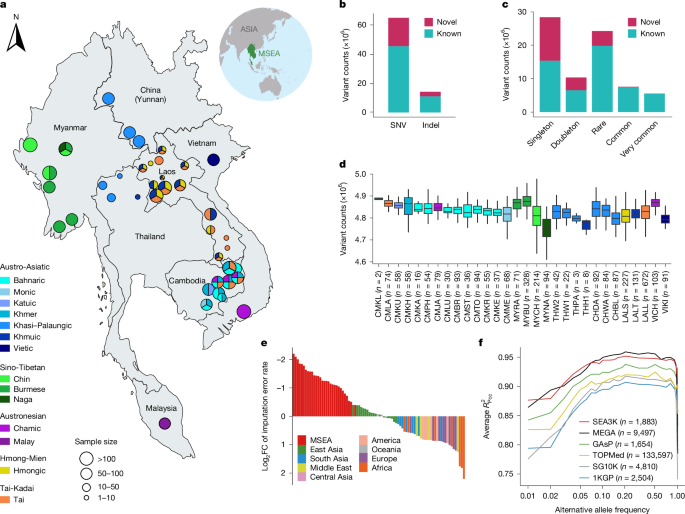
WWW.NATURE.COMGenome diversity and signatures of natural selection in mainland Southeast AsiaNature, Published online: 14 May 2025; doi:10.1038/s41586-025-08998-wAnalysis of whole-genome sequencing data from 3,023 human genomes from mainland Southeast Asia identifies high genetic heterogeneity among populations in the region and many unique small and structural variants.0 Σχόλια 0 Μοιράστηκε 184 Views 0 Προεπισκόπηση -
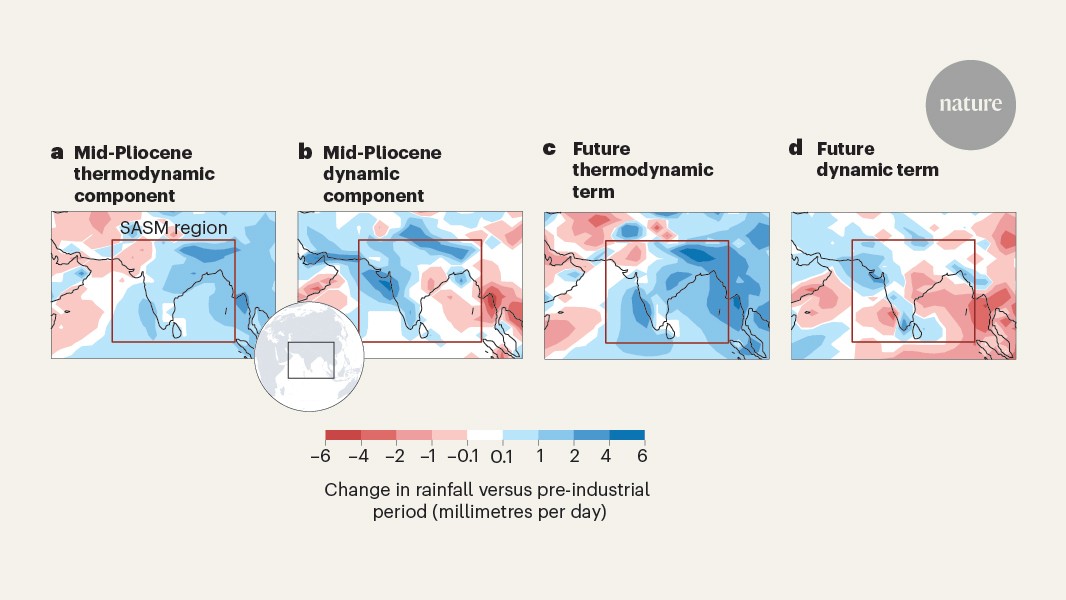
WWW.NATURE.COMEarths climatic past illuminates future South Asian monsoon patternsNature, Published online: 14 May 2025; doi:10.1038/d41586-025-01340-4An analysis of warm periods in Earths history helps to clarify an apparent anomaly in projections of the future behaviour of the South Asian summer monsoon.0 Σχόλια 0 Μοιράστηκε 168 Views 0 Προεπισκόπηση -
WWW.NATURE.COMDeepMind unveils spectacular general-purpose science AINature, Published online: 14 May 2025; doi:10.1038/d41586-025-01523-zSystem improves chip designs and tackles unsolved maths problems, but has not been rolled out to researchers outside the company.0 Σχόλια 0 Μοιράστηκε 172 Views 0 Προεπισκόπηση -
WWW.PROPUBLICA.ORGHelenes Unheard Warningsby Jennifer Berry Hawes, with additional reporting by Cassandra Garibay This Shits Crazy In their last phone call before bed, Janicke Glynn tries to reassure her husband. He is away visiting a sick relative, and a Weather Channel forecast of Hurricane Helenes imminent collision with the North Carolina mountains is leaving him uneasy. The storm, more than 400 miles wide, is expected to strike their small community the next morning, Sept. 27. Janicke encourages him to focus on his family up in Boston. That is more important. She is fine. Its been raining a lot, but the house is fine. Everything is fine. Hell fly home tomorrow. She will see him then.Love you. First image: Janicke Glynn celebrates finishing part of the renovation of her and her husbands dream property. Second image: John Glynn with the couples two rescue dogs. (Courtesy of John Glynn) Janicke, a 46-year-old French Canadian, isnt worried. She feels a deep spiritual connection to their home in Yancey County, a remote and ruggedly sublime expanse in the shadow of trendier Asheville. Nestled on a mountainside draped in maple and birch, perfumed by mountain laurel, their property is surrounded by the Black Mountains, ancient protectors of this magical place. Mount Mitchell, the tallest among them the tallest in the eastern U.S. is their backyard. When the power goes out, Janicke lights candles and opens a door. She loves to hear the creek just beyond, a normally burbling carrier of rainfall down the mountain. But after two days of rain, it is starting to roar even before Helenes arrival. She settles onto a living room couch with a little rat terrier, Troopie, one of their two rescue dogs.Seven years have passed since she and John first looked at this property. He was thinking about retirement spots by the time they married in 2016 after keeping up a long-distance relationship for nearly a decade. Both were sick of the harsh Northern winters, and Janicke longed to rekindle the bond shed felt with the natural world growing up in rural Canada. When she got out of the car to look at the property, she heard the creek and felt an instant harmony with the place. It had a 1940s stone house up on a hill, two wood-paneled cottages tucked along the creek and five acres where she envisioned tending lush gardens. When she wondered if it cost too much, John argued that wasnt the right question. Do you want to live here? he asked.I want to die here, Johnny. Janicke Glynn spent years nurturing her beautiful gardens. (Courtesy of John Glynn) After John falls asleep in his hotel, Helene makes landfall on the Florida panhandle about 500 miles south of the Black Mountains. As its massive bands close in, Janicke stays up listening to the storm and texting a tenant who rents one of their cottages, about 40 yards away right on the creek.He types, This shits crazy over here.Janicke knows he is anxious. Hours earlier, he sent her a screenshot of a National Weather Service post on Facebook that warned Helene could become one of the regions worst events in the modern era. He worried about what the forecasted 9 to 14 inches of rain, expected to fall onto the high peaks in the morning, would do to the already swollen rivers. The post described catastrophic, life-threatening flooding. Her response was typically upbeat: Thanks, Mother Nature is powerful!Hed been thinking he might drive to his brothers place in Charlotte, but Janicke offered up her house if the cottage flooded. They hadnt heard of evacuation orders or seen other signs to indicate anyone else seemed terribly concerned. Inland vs. Coastal ResponsesThe response to Helene was far different on the Florida coast. Evacuation orders were swift and targeted, the routes to safety clearly conveyed. Had Helene hit North Carolinas coast, the same likely would have happened. But as coastal areas have become far better at warning and evacuating people, inland communities too often remain ill prepared, with devastating results: In recent years, five times as many people died in freshwater drownings due to hurricanes extreme rainfall than from coastal storm surges in the continental U.S. a dramatic reversal from a decade earlier. As the hours pass and Helene closes in, Janickes tenant texts her, My nerves are shot.He soon shows up at her door with a bag and his 15-year-old cat, Mama Kitty. The creek is pounding the foundation of his cottage and seeping inside. Its increasingly violent flow fills the air with a searing white noise as it races down the mountain past houses, horse pastures and barns. Cattail Creek Road, the main way in and out of the area, winds right alongside it. Few people along Cattail fully realize the looming danger. Some of them sleep. One man laments that he will miss his flight in the morning. A woman downloads ebooks to have something to occupy her time if the internet goes out. Another assures a loved one that the storm will quickly pass before dawn. Susie and Brian Hill bought their historic farmhouse the year before Helene. (Juan Diego Reyes for ProPublica) Like Janicke Glynn, Brian Hill lives close to Cattail Creek. Closer, even. His century-old farmhouse sits about 15 yards from the banks. Unlike Janicke, he is starting to worry. Late the night of Sept. 26, he peers outside and is caught off guard by the creeks fast-rising water. Whoa, its really full, he thinks. But as far as he knows, Cattail Creek has never flooded the house where he lives with his wife, Susie, and 9-year-old daughter, Lucy. Both are asleep. He tries to be quiet, but a sudden noise jolts him boom, boom boom. It shakes his house like fireworks. He peers outside and realizes that somewhere up the mountain, the water is dislodging boulders. They are crashing down. Around midnight, someone knocks on their door. Its a firefighter warning that the creek has risen so high that it blocks the road in one direction. Soon, there could be no way out. I cant tell you what to do, the man says. But he urges them to move to higher ground. Brian and Susie grab their little girl and their dog, then rush out to their pickup truck. In the darkness, they drive up a hill that overlooks their property.Up the north fork of Cattail Creek, as the water rises, no first responder knocks on Janicke Glynns door. Tudy Creek, Friday Morning A Precarious Place to Be Overnight, Helene churns across Georgia, then clips the northwest corner of South Carolina. Before sunrise, the storm collides with the Black Mountains, particularly the towering frontal wall called the Blue Ridge Escarpment. The high peaks shove the massive storm up into the cooler atmosphere. Up in the chillier air, that water condenses. As Helenes bands lash the Black Mountains, the storm begins to dump enormous amounts of water onto the already saturated peaks. In the morning, from 7 to 10 a.m. alone, about 8 inches of rain will fall atop Mount Mitchell. Because all that water must go somewhere, the deluge creates two critical threats: flash flooding and landslides. Both pose extraordinary danger. But landslides can destroy with far less warning.The Cane River is about to get pummeled by both. Hemmed in by mountains, it forms the spine of one major valley in Yancey County. One of its tributaries, Cattail Creek, extends off that spine like an arm reaching east. Another, Tudy Creek, reaches west. (Lucas Waldron/ProPublica) Several peaks wrap around Tudy Creek. High atop a particularly craggy one, the rainfall gets a toehold beneath soil clinging to a very steep and slightly concave slope of rock. Soil and rock will begin to slide with the water. Following the creekbed, the flow will gain velocity and weight and hurtle downhill with enough power to uproot trees and dislodge boulders. In its path, a group of longtime neighbors live in a tranquil enclave of homes. Among them is Ray Strickland, who retired a decade ago after 37 years as pastor of a local Baptist church. A hardworking man who still helps at the family construction company, Ray lives by the Scripture he often used during his first year at Laurel Branch Baptist, Psalm 66: Make a joyful noise unto God. His wife, Susan, a sweet woman with short grey hair, worked as a dental hygienist and performed as a clown named Jubilee at hospitals, nursing homes, parties even the 1996 Olympics in Atlanta. Along with several of their neighbors, they raised their children here. Two newer neighbors moved here from Florida, weary of all the hurricane threats. Ray and Susan Strickland, riding the Great Smoky Mountain Railroad a couple of years ago (Courtesy of Ginnie Strickland Beverly) On Friday morning, the neighbors are all in their homes. Little do they know that the swath of land on which their houses sit was created, at moments back in geological time, by landslides. They had careened down steep slopes, probably following creekbeds, and dumped huge amounts of material here. That created a flatter spot to build houses in this otherwise rugged place. In a storm like Helene, its also a precarious place to be. If the topography enabled a landslide here before, it could do so again. Unfinished WarningThe neighbors might have been aware of the landslide threat if the state had finished a hazard mapping program that North Carolina legislators created 20 years ago. They acted after storms caused at least 85 landslides that killed five people. But when developers and real estate agents pushed back, lawmakers who didnt want statewide regulations halted the program for almost a decade.They restarted it in 2018 after more landslide deaths. But Yancey County still hasnt been mapped. Neither have four other counties in Helenes path. Given it already has been raining a lot, Ray and Susan worry most about their 43-year-old son, Aaron, who lives on the other side of the mountain with his two young children. In April, water seeped into his basement.When Ray texts Aaron around 7 a.m., just as Helene is arriving in Yancey, he responds, flooding. The curt tone isnt like him. He and his parents normally stay in daily contact, so Ray and Susan figure theyll try him again later. Then their cell service cuts out. Without it, theyre among those in pockets across the county who dont get the National Weather Services 8:50 a.m. emergency warning for Yancey: The risk of life-threatening landslide activity continues to increase. This is a PARTICULARLY DANGEROUS SITUATION. The storm worsens. Wind roars. So much water flows down the mountain that Tudy Creek normally about 4 feet across swells and merges with another creek to form a violent river that rages down the road between them. Water seems to gush through every crevice in the mountain bedrock. Around 9 a.m., when the deluge settles between the storms bands, Ray heads to the back of their house where rocks are hitting the foundation. Susan ventures outside near the road, then meets Ray on their front porch. Theyve never seen anything like this. While Ray holds an umbrella, Susan records video with her phone. Ray glances up. The tops of towering trees shake. Then a 20-foot wall of trees, boulders and mud rockets straight at them. Ray! Susan screams. Good Luck, Everyone First responders were out overnight blocking off access to roads as they vanished beneath two of Yanceys major waterways the Cane and South Toe rivers and the creeks that feed them. In this rural county, home to 19,000 people, the firefighters are all volunteers. So is the rescue squad. The county commission recently received a draft of an emergency operations plan that warned, A mass casualty event has the potential to quickly overwhelm the limited existing emergency medical resources in Yancey County.Now, on Friday morning, the wind and rain turn fierce. At 45, Sheriff Shane Hilliard hasnt seen anything like it during his entire life here. Just before 8 a.m., he texts his mother to check in, but he doesnt get a response. His parents live right on the South Toe River in the house he grew up in. His 92-year-old grandmother lives alone next door. Rain whips downtown Burnsville, the county seat where the sheriff and other officials gather in the Emergency Operations Center. This command post is basically three desks, a conference table and four big TVs on the wall in a building near the courthouse.In an adjacent building, calls pour into the countys 911 center.Landslides claw down the mountains. Hurricane-force winds splinter trees. Rivers snatch cars and rip apart homes. People climb into attics or swim through windows. A firefighter makes a distress call as the Cane River near Cattail Creek swamps his trailer. A deputy trying to rescue a family from their flooding home becomes trapped with them. Dispatch blasts out an all-call: First responders must get off the roads. Its too dangerous. Cattail Creek Turns Violent Across the street from Ray Stricklands church, Cattail Creek decimates the community at around 10 a.m. on Sept. 27. (Courtesy of William Pagan) Watch video Jeff Howell, Yancey Countys emergency management director, watches the radar as storm imagery shifts to red. Helenes rainfall now resembles blood-filled lungs hanging over the Black Mountains. Howell, who has deep roots in the area, took the job seven years ago after three decades in the Army and Army Reserves. He had no experience with emergency management, so its been a lot of learn-as-you-go. For years he asked for extra hands, but as Helene approached, the department was just him and a part-time employee. Uneven TrainingRequired education and training for emergency managers varies considerably by state. Florida recently enacted a law mandating minimum training, experience and education starting in 2026. Georgia requires directors to get the states emergency management certification within six months. But North Carolina doesnt require specific training for its county emergency managers, who are tasked with enormous life-and-death decisions. Now Howell faces the biggest test of his time in the office.Over the past week, he watched each forecast turn more ominous, with western North Carolina in a bullseye of the heaviest rainfall. Yesterday around noon, a lead meteorologist in the National Weather Services regional office ended its final briefing before Helenes arrival with a grim, Good luck, everyone. The office also issued a public statement that warned, Landslides, including fast-moving debris flows consisting of water, mud, falling rocks, trees, and other large debris, are most likely within small valleys that drain steep slopes.Around the same time, weather service staff also took to social media to post the dire message that Janicke Glynns tenant had seen: This will be one of the most significant weather events to happen in the western portions of the area in the modern era. We cannot stress the significance of this event enough, it added. Heed all evacuation orders from your local Emergency Managers. Flooding from the South Toe River in Yancey County on Sept. 27 around 9 a.m., first image, and around 11 a.m., second image (Courtesy of Zachary ODonnell) Unlike in South Carolina, where the governor typically makes evacuation decisions, in North Carolina, local and county governments primarily make them. Howell, the official who would recommend evacuation orders to the county commission chair, didnt do so. In this largely conservative place fresh off a culture war battle over a Pride display at the local library he didnt think the chair would go for them. Nor did he think residents would heed orders, given many locals disdain for government mandates and their pride in self-reliance. Lack of Detailed PlansHowell and other county leaders noted that while coastal areas are used to thinking about evacuations, inland communities, especially in the mountains, dont deal with hurricanes nearly as often.While the commission chair said he would have considered a request from Howell, he didnt think Yancey had detailed enough plans in place to know where to advise people to evacuate given the size of the storm and the complexity of mountain terrain.With the ongoing challenge of rebuilding, Yancey County has not formally examined its preparedness for the disaster, but the county chair expects it will do so later. In April, the state Emergency Management agency released a report it had commissioned on its response to Helene and its interactions with local officials, but the report doesnt probe evacuations. People who survived Helene say its true that not everyone would or could have heeded an order. But some say they would have left, or at least prepared better. Many, including those living in high-risk areas and caring for young children and frail older people, didnt evacuate because they didnt see clearer signs of urgency from the county. By nightfall on Sept. 26, the day before Helene struck, three nearby counties issued mandatory evacuation orders for certain areas and at least five issued voluntary ones. Among Yanceys rural neighbors, one of the most robust responses to Helene came from McDowell County. Officials there issued voluntary and mandatory evacuation orders for specific areas, launched two door-knocking campaigns to warn people in high-risk places, and put out flyers in English and Spanish that warned of life-threatening flash floods and urged all people in vulnerable areas to evacuate as soon as possible. Many did so.Yancey also did some door knocking. Howell joined first responders urging people in the most obviously dangerous places to consider leaving. Not everyone appreciated the warning. Howell got an earful before finally convincing a man to leave a campground almost encircled by the South Toe River.Like officials across the region, Howell took to Facebook as well. Around lunchtime on Sept. 26, he shared the weather services latest grim briefing and suggested people make plans to stay somewhere else if they live near flood-prone areas. But while the weather service aimed to alarm people into action with its dire post, Howell thought it best not to panic them. So he softened the message, adding, This information is not to frighten anyone. We Need to Go Back Now! About 150 yards up the hill from their century-old house, Brian and Susie Hill huddled in their pickup truck with their little girl and dog overnight as rain poured and darkness enveloped Cattail Creek. Now, a few hours after sunrise, they watch their house drown. They would have left if the county had issued a mandatory evacuation order, especially for Lucys sake. Still, if they hadnt gotten that middle-of-the-night knock on the door from the firefighter, it could have been worse. Susie hands her cellphone to the child to distract her from the sight beyond the trucks windows. The creek rages. It surrounds their house, pounding it with waves and ripping the porch and doors off. Windows cave in. They bought the white farmhouse, with its mountain views, a year ago and have been busy restoring it slowly, on two public school teacher salaries. This is a place where their daughter can run outside on 6 acres, where a neighbors horses graze in a field next door, where they can gather around the fire pit at night and listen to the creek. Susie raises chickens and tends a garden filled with asparagus, blueberries and strawberries. People like Susie and Brian come to Yancey County, and stay here, and die here, for the majesty of two forces: the mountains and the rivers. The ancient mountains protect; the rivers nourish. They provide hiking, whitewater rafting, kayaking and the meditations of so many tranquil creeks. Now it feels like both have betrayed them. Along Cattail, people watch the landscape of their happiest memories vanish beneath floodwaters. Janicke Glynn and her tenant, who is sheltering at her house, were up all night listening to the storm. He feared what was happening to his cottage down by the creek. Janicke remained calm, lighting candles when the power went out and trying to ease his worry. Hed gone through a tough time last year, losing family and dealing with heartbreak, and theyd become close friends.But at the first crack of daylight, his emotions fray when Janicke ventures outside to pick up branches and sticks. Rain still drenches the mountainside, and wind gusts with enough force to bend trees. Janicke wants to keep her paradise unmarred. He doesnt want anyone to get hurt. When he runs out after her, yelling at her to come back inside, she reluctantly complies. Floodwaters Tear at the Creekside Cottage Janicke Glynns tenant filmed his home at 8 a.m. Sept. 27. (Courtesy of Janicke Glynns tenant) Watch video When the rain and wind ebb just before 10 a.m., they step outside to assess the damage together. Hemlock hedges block the view of his cottage, so they head down toward it. The creek has calmed a bit as well. As they slip closer, they see the windows are busted and his belongings dragged out. Everything inside is churned up.Janicke is fearless. But her tenant is unnerved. He thinks they are acting way too comfortable. Standing beside the battered cottage, he hollers, I think we should go back to the house!Janicke steps closer to the water. We need to go back now! he screams.A gush of water rushes under her. From a dozen feet away, she turns toward him. As she does, the current rips down the cottage and then swallows them both. Across the Ruins Ray Strickland wonders if he is dead. The retired pastor realizes he is in a small pocket of empty space encased in debris from their home. Light reaches through a hole. Something pins his leg. When he yells to his wife, Susan, she does not answer. An opening. The light. If he leaves his boot, he can wriggle free. When he climbs out of the pile, destruction surrounds him. A car alarm blares. A smoke alarm screams. Water rages by.Ray sits on a boulder, dazed. Drywall sticks out of one ear. Blood runs down his arm. What looks like road rash covers his skin. Yet he feels strangely serene. If God takes him now, thats his will.Some time passes. Then a mans voice. Someone is yelling his name. It is Pete Lewicki, who lives in the next house down from him. But Pete is across a wide river blazing past the rubble. Ray hollers at him to get back. Pete Lewicki jumped into action after the landslide. (Juan Diego Reyes for ProPublica) Pete doesnt listen. When he was in the Navy, he worked in search and rescue. Now that training kicks back in. To reach Ray, he and his 24-year-old son haul over ladders and move logs to create a makeshift bridge. Pete slips crossing the slick ladder. Floodwater tears at him as he climbs back up. When he reaches Ray, Pete finds the man is shaking and is eerily calm. Once they get Ray out of the wreckage of his home and into their house, Petes wife wraps him in a blanket and finds dry clothes for him. Pete promises he will be back. A landslide barreled through their enclave. Rays house is gone. So is the house just above Rays at the top of their road. So is its freestanding garage apartment, where an older man named James Andrews lived. Trees and boulders block the way. Pete makes it, then spots James. He is dead, pinned beneath a huge tree. Pete covers the body with a bedsheet in the debris.As Pete heads back to his house, Ray comes outside. He is thinking more clearly now and is certain his wife, Susan, is in the mound of debris where hed been trapped. They had been near each other when the landslide hit. He leads Pete and two other men from down the road to the small hole hed crawled through in the ruins. The men inch down into it.Pete spots Susan. She is 3 feet down from where Rays blood pooled in the wreckage. Its clear she has died. He remembers her smile, which she used to brighten peoples lives. Almost every day, she and two neighbor ladies, both recently widowed, walked up and down the road together. When they walked by shortly after Pete moved in, Susan stopped and came over to give him a big, welcoming hug. Pete, a veteran with neck tattoos who has post-traumatic stress disorder, deeply appreciated her gesture.They all know that Susan is buried too deep to get her out themselves. Ray, her husband of almost 50 years, tells them to stop trying. Its a miracle he is alive, and he doesnt want anyone else to get hurt. The Wreckage of the Stricklands Home Pete Lewicki filmed a video around 11 a.m., after a landslide barreled down Tudy Creek. (Courtesy of Pete Lewicki) Watch video Looking across the ruins, Pete sees the landslides path down the steep slope above their road. The debris flow had barreled more than a mile down the mountain, leaving an expanse of mud and rocks. He had never seen this magnitude of destruction, not even during his 40 years living in Florida, where hurricanes repeatedly flooded his home. A massive mound of trees and remnants of the destroyed houses sits piled against a neighbors garage. A widow lives there with her parents, who are 86 and 89. Pete heads over to check on them. When he gets there, he sees that Marie-France Herman, the woman who lives at the top of the road, is there with them. She is caked in mud with a black eye and a nasty gash on her ankle. Inside the house, they are all slogging through mud almost to their knees. But getting out means crossing the landslides path to reach another neighbors house, an A-frame that looks, somehow, unscathed. After many precarious moments, they all make it. Ray joins them.The neighbors share notes about what they all just survived. When the landslide hit, Marie was looking out at the worsening storm through an antique door. An 81-year-old distant relative in poor health who lives with her was sitting nearby at the kitchen table when Marie spotted trees toppling down the mountain like dominoes. The next thing she remembers, water slammed into her. She expected to drown. Instead, she got her head above water and climbed onto some logs.She has lost everything, even her husbands ashes. And she doesnt know where her relative is. Unreachable The rain finally lets up by late morning on Sept. 27, but the rivers and creeks rage with so much water flowing down the slopes. Hilliard, the sheriff, heads to the 911 center, which is running off a generator. The calls coming in terrify him and the other county leaders. Floodwaters fill homes. Rivers ravage roads. People watch neighbors get swept away in cars and on foot. Landslides careen down slopes. At 10:51 a.m., the 911 center suddenly falls silent. The sheriff and others look at one another: What just happened?What was left of Yanceys cell service has now failed. Landlines are already out. So is the internet.Emergency responders are left with only their radio system. And that is quickly overwhelmed. It takes eight to 10 tries to get a call out, if they can even get one out. Many just get error tones.Finally, somehow, the sheriff gets through to the North Carolina Sheriffs Association director in Raleigh. I need help! he pleads. But help wont be coming, not any time soon. Yancey County Sheriff Shane Hilliard (Juan Diego Reyes for ProPublica) County-to-county communications across the region barely function. The state Emergency Management agency is severely understaffed, slowing its response. As Helenes deluge flows down the Black Mountains, it inundates rivers on all sides of the peaks, claiming dozens of lives and destroying communities in every direction. One county over from Yancey, a family of four including two little boys are swept to their deaths while fleeing their home. To Yanceys south, floodwater swallows little towns en route to Asheville. A nearby landslide kills 11 people from one family and two firefighters coming to their aid. Raging water decimates downtown Chimney Rock, a tourist village, heading to Lake Lure, a resort town. The National Weather Service blasts out an alert: DAM FAILURE IMMINENT!Minutes later, at 11:15 a.m., state transportation officials tweet, All roads in western NC should be considered closed. Get in TouchWe will continue to tell the stories of Helenes devastation, and we want to know: What is one thing the storm destroyed that you would have saved had you evacuated? To share, leave us a voicemail at 828-201-2738. Hilliard knows little of this is happening. With the 911 center silent, cellphones and landlines and internet all down, officials inside the Emergency Operations Center abandon it. The command center is useless. They cannot help anyone from here. Not long before noon, the sheriff heads out with a crew in the countys large armored military surplus vehicle. They cannot get far. Downtown Burnsville is an island. Roads and bridges in all directions are submerged, washed away, blocked by trees or smothered in the liquefied mud of landslides. Places like Tudy Creek and Cattail Creek are unreachable. Cattail Creek at around 10 a.m. on Sept. 27 (Courtesy of Douglas Rodgers) Everyone in the vehicle falls silent. A look the sheriff has never seen falls over their faces: They are afraid. His radio squawks. Someone from the South Toe Fire Department hollers his name. Firefighters made it to the river where the sheriffs parents and elderly grandmother still live. His parents house is gone, washed away. And they cannot find his parents.He yells for them to check next door at his grandmothers house. They tried, the voice says. But her house is gone, too. Where Are We? On Sunday morning, two days after the storm hit, Aaron Strickland still hasnt heard from his parents. After Helene subsided, he and his girlfriend went to the local fire station where her son, a volunteer firefighter, worked overnight. He and other firefighters returning from distress calls described an apocalyptic level of destruction. But none of them mentioned Tudy Creek, and Aaron figures thats a good thing. When his girlfriend finds a county building with working Wi-Fi, hes relieved to finally make some calls. He dials his parents, but the call wont go through. He is able to reach his sister, Ginnie Strickland Beverly, who lives a few hours away in Winston-Salem. Ginnie is distraught. Like so many people unable to reach loved ones trapped inside Helenes destruction zone across western North Carolina, she has been scouring news sources and Facebook, gathering scraps of details about whats happened. She heard crews airlifted a dead person out from Cattail Creek. But she hasnt been able to find anyone who reached Tudy Creek.Have you made it up to Mom and Daddys yet? she asks. Worry sets in. Aaron hangs up and hurries out. Maybe he can get there himself.At the first bridge, police are directing traffic, so Aaron stops to see what he can find out. This is a small community, and he sees familiar faces. One is the mother of a childhood friend who lives at the base of Tudy Creek. Aaron has known her his entire life. When she sees him, she hurries over and wraps him in a hug. Honey, Im so sorry, she says. For a moment, they look at each other. Aaron isnt sure what she means.Your mom is gone, she blurts out. His father, Ray, is hurt. She doesnt know how badly. Her son just made it down from there. A landslide. Some bodies. Aaron doesnt hear much else. Desperation consumes him. So does a plan. Aaron Strickland, Ray and Susans son, drives along the devastated Cane River area. (Juan Diego Reyes for ProPublica) Normally, it takes 20 minutes to drive around the mountain from his place to his parents house. But as a crow flies, its more like 2 or 3 miles over the mountain. Growing up, that mountain was Aarons playground. He and his girlfriends son, the volunteer firefighter, drive to an airstrip at the top of the mountain, then hike down toward his parents house. As they slip on slick mud and wet leaves, fear propels them. Aaron fights back images of his father with a head wound or broken bones, or worse. He shoves away thoughts of his mother, for now. They come upon what looks like a landslide, its mud like quicksand pocked with holes and mangled trees. To Aaron, it appears 100 yards wide. They must go around it over toppled trees and boulders. Finally, they spot a creek. It flows down a channel scoured out that looks 30 yards across and 20 feet deep. Aaron has hiked all over these mountains, and the only creeks up here are slim little things 3 or 4 feet wide, a few inches deep. Where are we? he asks.At last, they see an old logging road. There is only one on this mountain, and it leads to the top of his parents road on Tudy Creek. But when they reach where it should dead end into their street, piles of mud, trees and boulders 20 feet high and 50 yards across block their path. When they scale it, Aaron looks out over the expanse of fallen trees, boulders, mud and debris. Oh my God.He clambers down toward the spot where his parents house the home he grew up in, the tan split-level with the long front porch should be standing. Terror replaces his desperation. Chunks of the Stricklands foundation next to where their house once stood (Juan Diego Reyes for ProPublica) The woman who told him about his mothers death also said his father was at their neighbor Rita Thackers house. Aarons heart thunders. His stomach churns. He scrambles up the steep, muddy bank toward Ritas. Huge fallen trees block his view. Climbing through dense branches and leaves, he looks for holes to wiggle through. Finally he sees Ritas beautiful A-frame. He hears voices. He hadnt considered that other people might be there with his dad and Rita. Busting through the last branches, he pops out looking at her backyard. Rita is standing right there with another neighbor and that womans elderly parents. They turn to the commotion. Aaron spots his dad. Ray is standing with his back to him. But he is standing. He is talking. He is OK.Aaron sprints over and wraps his arms around his father. No contact for days, terrible, awful stories coming in, running on fumes, little sleep, the shock of his moms death, fear for his dads safety, inability to communicate, all of that bursts out in the tears of this moment. He has rarely seen his dad with a three-day scruff, so he sets his hand on his face to feel it. Its the best youve ever looked, he says. With no way to contact anyone, no running water or power or passable roads, the neighbors relied on each other since the landslide. One is a nurse who treated the physical wounds. Pastor Ray has fed spiritual needs and hauled 5-gallon buckets down to gather water to flush the toilets. Rita has a gas stove, so they cook. This morning, they made waffles. Aaron with a photo of his mother, Susan, who was one of three people killed in a landslide on Tudy Creek (Juan Diego Reyes for ProPublica) As his adrenalin ebbs with relief, Aaron turns to the destruction. His parents house looks like a giant hand crushed it. The body of Aarons 71-year-old mother, the woman who took him with her to clown conferences when he was a kid, is buried so deep in the mound of debris that it will take heavy equipment to get her out. He finds one of her old Bibles. Almost a mile down the mountain, neighbors find the body of Maries elderly relative. A New Fear Janicke Glynns husband landed in Charlotte shortly after the storm hit, and during the two days since he has turned frantic. He hasnt been able to reach her or anyone else in the area. Nor can he get back to Cattail Creek. Every road he tries is blocked by flooding, landslides and police who turn him back. He is staying at a hotel 80 miles from Burnsville with no electricity.Finally, on Sunday afternoon, he gets a text from their tenant. It comes from someone elses phone, a newer one that can get a satellite connection. Im so sorry Janicke is gone, it reads.Their tenant adds that he almost died too. When the cottage collapsed, a freight train of water and mud consumed Janicke. But when it smashed into him, it shoved him closer to the main house. He grabbed a spindly shrub and clung to it, praying that it wouldnt snap and he might see his family again. Eventually, screaming for help, he pulled himself out. But he could not find Janicke. Now, he is trying to hike to the local fire station for help. He has no glasses, his skin is shredded in spots, and hes bleeding from a deep gash in one knee. The station is a few miles away but feels unreachable with no roads and infinite destruction to cross. He promises John he will call when he can get service. The remnants of the flash flood that destroyed the cottage where the Glynns tenant lived (Courtesy of John Glynn) In Yancey County alone, 11 people died due to Helene. Per capita, thats twice the rate of deaths as any other county in North Carolina. Yancey bore the brunt of the storms highest recorded wind gust and its highest recorded rainfall both on Mount Mitchell. Thirty inches fell there over three days at the most inundated site, half of it before Helenes arrival. Hundreds of landslides raked the countys slopes. Across the South, officials attribute 250 deaths to the storm. Of those, 107 died in North Carolina. Helene is the deadliest inland hurricane on record, by far. Freshwater flooding was the top killer. The sheriff learns his parents and his grandmother are alive after a harrowing escape through floodwaters. But across the South Toe River, a family of four who came to Yancey after fleeing the war in Ukraine were swept away. Flooding damaged the pews, first image, and hymnals, second image, of Laurel Branch Baptist Church, where Ray Strickland served as a pastor for 37 years. (First image: Courtesy of Ginnie Strickland Beverly. Second image: Juan Diego Reyes for ProPublica.) Jeff Howell, the emergency management director, retired earlier this year and still remains haunted. During his time in the Army and Army Reserves, he was deployed three times for three wars in three decades. None got to him like Helene. He couldnt shoot back at the storm. In hindsight, he feels that he and others notified folks as best they could given the unprecedented nature of Helenes assault. Its true that no one alive had ever seen destruction of this magnitude in the region. But the National Weather Service warnings about the storm catastrophic, life-threatening flooding and severely damaging slope failures and among the worst in the modern era proved prescient.When Brian and Susie Hill emerged from their truck the morning of Sept. 27, they found their once-gorgeous property resembled a moonscape of mud and rocks. Inside their home, it looked like someone put the contents of their lives into a blender. But when they slogged into their daughters bedroom shortly after the floodwaters receded, they found her stuffed animals still on the top bunk where she left them before Helene hit. They were perched just above the water line and were the only thing she cared about salvaging. The little girl had been so stoic. But when they left the house with her stuffed animals, she finally cried. Lucys stuffed toys (Juan Diego Reyes for ProPublica) About a week later, the Hills are living at a friends house. Susie is grateful that Lucy can play with the familys three young sons and keep her mind off things. The sadness of all they have lost subsides for a moment and is quickly replaced by a new fear. She and Brian live on public teachers salaries. They have 28 years left on their mortgage. Because their house isnt in a flood zone, they dont have flood insurance.She gets a pause on their mortgage. But its only for three months. She can think of just one place to turn to next for the magnitude of help they need. On her cellphone, through the fog of trauma, she types in FEMA. The South Toe River (Juan Diego Reyes for ProPublica) How We Reported This StoryThis recounting of what happened when Helene struck Yancey County is based primarily on the stories shared with us by survivors, many of whom dont appear by name in the story but whose experiences deeply inform it. We also relied on their videos and photographs of the storms onslaught, which they provided so that the rest of us could better understand the severity of the storm and what they experienced when left in its bullseye. In addition, we reviewed hundreds of videos of hurricane footage uploaded to social media. Our reporting included multiple visits to Yancey and other areas of western North Carolina devastated by the storm. In total, we reached out to more than 100 people living in our focus area along the Cane River, Tudy Creek and Cattail Creek in Yancey and interviewed dozens of survivors who live there. We also spoke with loved ones of nearly all who were killed in these communities. Public records including emergency call logs, death records and weather data buttressed their accounts. So did interviews with many of the local officials who oversaw the response and first responders who saved lives during the storm, then rescued those who were trapped afterward. To understand the warnings that officials and residents received, we compiled a timeline of the National Weather Services Helene-related alerts, reviewed its briefing packets for local officials and watched the final webinar its staff had with officials before Helene hit. We then scoured contemporaneous social media posts to understand what warnings and directives local governments across the mountain counties shared with their residents. In total, we reviewed more than 500 messages from more than three dozen jurisdictions in the lead-up to the storm. We depended on key experts in the region to understand the science behind Helene and its destructive power. These included Trisha Palmer, warning coordination meteorologist, and Pat Moore, a lead meteorologist, at the National Weather Services Greenville-Spartanburg office, which serves western North Carolina. We also turned to geologist Philip Prince and Jennifer Bauer, co-owner and principal geologist of Appalachian Landslide Consultants, among other experts.We plan to continue reporting on Helenes aftermath to understand what lessons could better prepare these communities and others for future storms, as well as how the rebuilding effort is unfolding. If you would like to share tips with us, please email helenetips@propublica.org. What Did Helene Take From You?One man lost six electric guitars and four amps. One woman lost the town memorabilia kept in a landmark store that was in her family for generations. Some lost cars and homes. Many experienced the greatest loss of all, a dear friend or family member.As we continue to tell the stories of Helenes devastation of western North Carolina, we want to know: What is one thing the storm destroyed that you would have saved had you evacuated?To let us know, leave a voicemail at 828-201-2738. We appreciate you sharing your story, and we take your privacy seriously. We are gathering this information for the purposes of our reporting, and we will contact you if we wish to publish any part of your story. Graphics and development by Lucas Waldron. Design by Anna Donlan. Visual editing by Shoshana Gordon and Donlan. Research by Mollie Simon.0 Σχόλια 0 Μοιράστηκε 171 Views 0 Προεπισκόπηση -
WWW.NYTIMES.COMBidens Cancer Diagnosis, and Why Ukraine is Seeing a Surge of ViolencePlus, one school districts big A.I. experiment.0 Σχόλια 0 Μοιράστηκε 174 Views 0 Προεπισκόπηση -
WWW.NYTIMES.COMTrump and Putin Set to Discuss Ukraine War in High-Stakes CallA telephone call between the two leaders would be the latest chapter in a flurry of diplomatic maneuvering over ending the three-year conflict.0 Σχόλια 0 Μοιράστηκε 174 Views 0 Προεπισκόπηση -
WWW.NYTIMES.COMIsrael Announced a New Invasion of Gaza. Is It Bluffing?After warning of a major ground operation, Israel has bombarded Gaza but has yet to start a big advance. The threat to do so may be an attempt to force Hamas to compromise in cease-fire talks.0 Σχόλια 0 Μοιράστηκε 178 Views 0 Προεπισκόπηση -
WWW.NYTIMES.COMUK and EU Strike Brexit Reset DealAs leaders gathered in London for a long awaited summit, a senior British minister said his country had secured a new agreement with the bloc.0 Σχόλια 0 Μοιράστηκε 185 Views 0 Προεπισκόπηση -
WWW.NYTIMES.COMThe Moodys Downgrade Is an Alarm. Washington Better Pay Attention.Moodys announcement last week means that not one of the firms that rate Americas debt still consider it pristine.0 Σχόλια 0 Μοιράστηκε 167 Views 0 Προεπισκόπηση -
WWW.NATURE.COMWhen the government cancels your research grant, heres what you can doNature, Published online: 19 May 2025; doi:10.1038/d41586-025-01547-5The mass cancellation of US federal grants marks yet another escalation in political interference in science, but there are ways to keep crucial research going.0 Σχόλια 0 Μοιράστηκε 159 Views 0 Προεπισκόπηση -
WWW.NATURE.COMDaily briefing: Meet the baby who received the worlds first personalized CRISPR therapyNature, Published online: 16 May 2025; doi:10.1038/d41586-025-01596-wA baby boy is thriving after receiving a CRISPR therapy to treat his specific disease-causing mutation. Plus, the FDA plans to phase out animal toxicity testing and physicists are trialling a portable antimatter containment system.0 Σχόλια 0 Μοιράστηκε 167 Views 0 Προεπισκόπηση -
WWW.NATURE.COMMarsupial embryos lack the epigenetic reset seen in placental mammalsNature, Published online: 14 May 2025; doi:10.1038/d41586-025-01477-2Biochemical DNA methylation marks are found across the genome in vertebrate animals, but in the early embryos of placental mammals, such as mice and humans, they are largely erased in a system reset. Surveying DNA methylation in opossum embryos reveals that, in marsupials, such marks are retained.0 Σχόλια 0 Μοιράστηκε 177 Views 0 Προεπισκόπηση -
WWW.NATURE.COMBulkspatiotemporal vortex correspondence in gyromagnetic zero-index mediaNature, Published online: 14 May 2025; doi:10.1038/s41586-025-08948-6Realization of a gyromagnetic double-zero-index metamaterial results in unconventional optical and topological properties, suitable to be used for the generation of light pulses shaped as a vortex both in time and space.0 Σχόλια 0 Μοιράστηκε 178 Views 0 Προεπισκόπηση -
WWW.NATURE.COMHow to transport antimatter stick it on the back of a vanNature, Published online: 14 May 2025; doi:10.1038/d41586-025-01532-yResearchers put a portable antimatter containment system through its paces at CERN plus, the maths of a black hole fly-by.0 Σχόλια 0 Μοιράστηκε 172 Views 0 Προεπισκόπηση -
WWW.NYTIMES.COMIn Eastern Europe, Centrists Hold Off 2 Nationalist ChallengesPresidential elections on Sunday in Romania and Poland halted, or at least slowed, a hard-right breakthrough that many liberals had feared. But discontent with mainstream parties lingers.0 Σχόλια 0 Μοιράστηκε 171 Views 0 Προεπισκόπηση -
WWW.NYTIMES.COMThe Sean Combs TrialPlus, President Joe Bidens cancer diagnosis.0 Σχόλια 0 Μοιράστηκε 187 Views 0 Προεπισκόπηση -
WWW.NYTIMES.COMPittsburghs Mayoral Race Heats Up as Pressure Mounts on Ed GaineyThe Democratic primary for mayor of Pittsburgh on Tuesday has become something of a proxy for the national struggle over the partys future direction.0 Σχόλια 0 Μοιράστηκε 190 Views 0 Προεπισκόπηση -
WWW.NYTIMES.COMHow Kara Swisher Scaled Even HigherThe tech journalist and co-host of Pivot with Scott Galloway has a novel multimillion-dollar podcast contract with Vox Media, is in talks about a CNN series and has a slew of other ventures.0 Σχόλια 0 Μοιράστηκε 165 Views 0 Προεπισκόπηση -
Trump Has His Law Firms Right Where He Wants ThemEven more than free legal help, what the president gets from the firms is the joy of publicly dominating and demeaning his adversaries.0 Σχόλια 0 Μοιράστηκε 164 Views 0 Προεπισκόπηση
-
APNEWS.COMRussia outlaws Amnesty International in latest crackdown on dissent and activistsA Russian state flag waves on top of a hummer and sickle at the State Duma, lower parliament chamber, headquarters in Moscow, Russia, Sunday, March 3, 2019. (AP Photo/Alexander Zemlianichenko, File)2025-05-19T10:24:08Z The Russian authorities on Monday outlawed Amnesty International as an undesirable organization, a label that under a 2015 law makes involvement with such organizations a criminal offense. The decision by the Russian Prosecutor Generals office, announced in an online statement, is the latest in the unrelenting crackdown on Kremlin critics, journalists and activists that intensified to unprecedented levels after Moscow invaded Ukraine in February 2022. The designation means the international human rights group must stop any work in Russia and it subjects those who cooperate with it or support it to prosecution.Russias list of undesirable organizations currently covers 223 entities, including prominent independent news outlets and rights groups. Amnesty International was launched in 1961. The group documents and reports human rights violations across the globe and campaigns for release of those it deems unjustly imprisoned. It has released reports on Russias war in Ukraine, accusing Moscow of crimes against humanity, and has spoke out against the Kremlins crackdown on dissent that has swept up thousands of people in recent years. The Prosecutor Generals office in their statement on Monday accused the group of running Russophobic projects and activities aimed at Russias political and economic isolation. Amnesty International did not immediately comment on the move.0 Σχόλια 0 Μοιράστηκε 182 Views 0 Προεπισκόπηση