


 Help Center
WWW.UNCLOSETEDMEDIA.COM
The Harsh Truth About HIV Phobia in Gay Dating
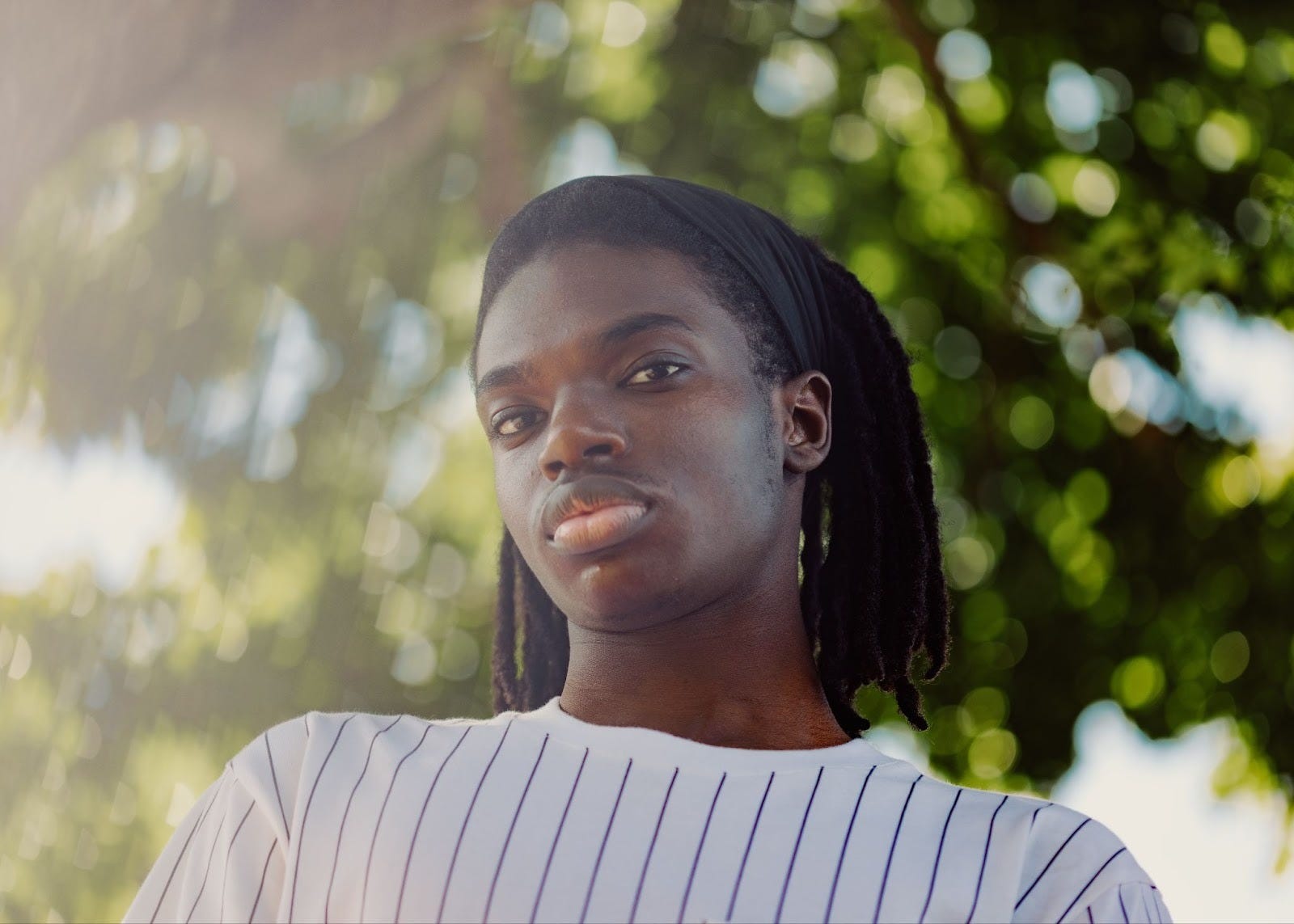
Photo by Val Chaparro for Uncloseted Media.Subscribe nowThis story was produced with the support of MISTR, a telehealth platform offering free online access to PrEP, DoxyPEP, STI testing, Hepatitis C testing and treatment and long-term HIV care across the U.S. MISTR did not have any editorial input into the content of this story.In his room, 19-year-old Cody Nester toggles between Grindr profiles on his phone.As he senses chemistry with a match, he knows he has to flag something that could be a deal breaker.Did you see on my profile that Im HIV positive? he writes.The reply arrives instantly.Youre disgusting. I dont know why youre on here. Seconds later, the profile disappears, suggesting Nester is blocked.Cody Nester on his phone. Photo by Val Chaparro for Uncloseted Media.He went out of his way to say that. People could at least be more aware, ask questions, and understand the reality [of living with HIV] instead of attacking us, Nester told Uncloseted Media.I would say 95% of people respond that way, says Nester, who lives in Hollywood, Florida, and works at a Mexican restaurant. The entire conversation is going fine. Theyre down to meet up and then right when I mention [HIV], its always, Oh no, never mind.Some other messages hes received include:Youll never get anything in your life.Why dont you die?Why are you on here?More often, its silence, a cold No or a sudden block.Its like youre a white fish in a school of black fish, he says. Youre immediately the odd one out.Photo by Val Chaparro for Uncloseted Media.Even though Nesters undetectable status makes it impossible for him to transmit HIV to partners during sex, he experiences stigma around HIV, something which nearly 90% of Americans agree still exists, according to a 2022 GLAAD report. And a survey shared in 2019 found that 64% of respondents would feel uncomfortable having sex with someone living with HIV, even on effective treatment. The emotional cost of this stigma is a significant barrier to intimacy and can result in a loss of self-esteem, fear of disclosure and suicidal thoughts.Photo by Val Chaparro for Uncloseted Media.What the Science Saysand Why It Doesnt Seem to MatterThe fear comes from antiquated ideas around HIV, says Xavier A. Erguera, senior clinical research coordinator at University of California, San Franciscos (UCSF) Division of HIV, Infectious Diseases & Global Medicine. A lot of people who are newly diagnosed still fear its a death sentence. Even though we have medications now to treat it effectively, and its basically a chronic condition, people havent caught up.Since 1996, antiretroviral therapies have developed to where they can suppress the virus to levels so low that it is undetectable in the blood, and thus not able to be transmitted to sexual partners. This is known as Undetectable = Untransmittable, or U=U. According to a Centers for Disease Control and Prevention report from 2024, 65% of HIV-positive cases are virally suppressed.Another line of defense is pre-exposure prophylaxis (PrEP), which reduces the risk of acquiring HIV from sexual intercourse by roughly 99% when taken as prescribed. Approved by the Food and Drug Administration in 2012, the medication launched as a once-a-day pill and was hailed as a breakthrough as it transformed the sex lives of gay men, which had been shaped by decades of fear about HIV complications and about where AIDS came from.Internal logic doesnt reflect what we know scientifically, says Kim Koester, associate professor in the Department of Medicine at UCSF. I was very optimistic when PrEP came out. The drug works, so why wouldnt everyone use it?Subscribe nowEven with PrEP use on the rise, less than 600,000 Americans used it in 2024, and Koester says skepticism and judgments about taking the drug persist.The phobia is pervasive, Koester told Uncloseted Media. People believe that others get the disease because of their lifestyle. PrEP was supposed to be the antidote to the threat of HIV, reduce the anxiety, and make you more open to who you are and the sex you want. Its supposed to be liberating. It is part of the answer. But its not enough. We dont have enough people using PrEP for it to make the dent in the stigma we need.According to a 2023 study of seven informants living with HIV, public stigma stems from problematic views from society that those living with HIV are a dangerous transmission source, disgraceful and violators of social and religious norms who have committed deviant behavior.Laramie Smith, assistant professor of Global Public Health at the University of California, San Diego, says this stigma is unwarranted and fueled by misunderstanding:With todays treatments, it shouldnt be a life-altering identity shift. It should be no different than, I have diabetes. If youre virally suppressed, it shouldnt matter whether youre friends with someone, whether youre sleeping with someonethe science shows us that.How HIV Phobia Shows Up OnlinePhoto by Val Chaparro for Uncloseted Media.Nester, who contracted HIV last year from a Grindr hook-up who insisted he was negative, says he is just starting to accept his diagnosis. I didnt go back on the apps for a long time after that. It messed with my mental health realizing Id have to take medication for the rest of my life.Since he started dating again this year, returning to apps like Grindr and Sniffies, he has faced a new normal. He tries to do everything right and disclose his status early. Even on his Grindr profile, he identifies as poz, slang for HIV-positive.Nester on Sniffies, a queer dating app. Photo by Val Chaparro for Uncloseted Media.Still, he says most people ghost him once they find out. The second I bring it up, its No, says Nester. The amount of discrimination you get its always the same pattern. People dont know, and they dont want to know. It messes with you.This discrimination may be fueled by a deprioritization of HIV awareness programs across the country. Earlier this month, the U.S. State Department did not commemorate World AIDS Day for the first time in 37 years. HIV prevention programs have been slashed, especially in conservative districts, and only 25 states and D.C. require both HIV and sex education. In many states, health curricula often lag behind current science and omit teaching about PrEP, gay sex and concepts like U=U. Research shows that Gen Z is currently the least educated generation about HIV.Photo by Val Chaparro for Uncloseted Media.I could go all day explaining HIV, but people dont want to listen, says Nester, who is part of Gen Z. People dont want to learn about it; they just want to avoid it.HIV Anxiety and Public Stigma Shaped by HistoryEven in more progressive areas, stigma still exists. Damian Jack, a 45-year-old from Brooklyn, remembers sitting in an exam room in 2009 as a doctor explained how low his T-cell count was, which is a hallmark of HIV infection.I started hysterically crying, he told Uncloseted Media. HIV meant death. Thats what I thought.Photo courtesy of Jack.In 1981, when Jack was 1 year old, the first reports of a mysterious and deadly immune deficiency syndrome, which would later be named AIDS, appeared in the U.S. Growing up, Jack saw countless terrifying images of men on their deathbeds with Kaposi sarcoma, the purple lesions the media once called gay cancer. Public misinformation and fearmongering spread ideas that AIDS was a disease that only gay men and drug users get. And politicians often equated it with homosexuality and moral failure, calling it a gay plague. It wasnt until September 1985, four years after the crisis began and thousands had died, that President Ronald Reagan first publicly mentioned AIDS.Decades later, the emotional residue of that era and the shame associated with the virus lingers.Hours after learning of his diagnosis, Jack faced his first encounter with rejection. He already had a date planned that night, and his doctor and friends encouraged him to go.They had a great time until the date asked him: Are you negative or positive?He told the truth.It was just understood there wouldnt be a second date, says Jack. I remember thinking, This is how dating is going to be now. I felt so anxious telling guys. It followed me everywhere. I dont think that anxiety ever truly goes away.The Emotional Impact of HIV StigmaFor those who are HIV-negative, experts say that stigmas whole design is to other.The us versus them creates that false sense of safety when it comes to HIV, says Smith. If I can believe that someone did something to deserve their diagnosis, and Im not that [kind of person], then Im safe.This othering is painful and can lead to shame, fear and isolation, and it is linked to a higher risk of depression and anxiety.If Im undesirable, and thats what those messages are communicating, that threatens your sense of safety, your sense of belonging and the fundamental desire we all have to be loved, Smith says. And that starts to reinforce the thinking that I am not worthy. This virus that I have means that Im not lovable. I am not safe showing up among other men.Photo by Val Chaparro for Uncloseted Media.I pretend it doesnt hurt, but some things do sting a little bit, Nester says. You start thinking, Am I really that disgusting? Am I really that singled out?When Public Stigma Turns InwardInternalized stigma is what occurs when applying the stereotypes about who gets HIV, the prejudice, the negative feelings, onto yourself, says Smith.In 2024, 38% of people living with HIV reported internalized stigma. And studies show that it can predict hopelessness and lower quality of life, even when people are engaged in care or virally suppressed.Internalized stigma can also affect how people practice safe sex and communicate about the virus. A 2019 survey of men who have sex with men found that individuals who perceived greater community-level stigma were less likely to be aware ofand usesafer-sex functions available on dating apps, such as HIV-status disclosure fields, as well as sexual health information and resources.Subscribe now[HIV phobia] is probably the most intense, subvert bigotry I think you could experience, Joseph Monroe Jr., a 48-year-old living in the Bronx, told Uncloseted Media.On dating apps, men have messaged him things like, You look like youve got that thing and Go ahead and infect someone else.Monroe Jr. has also dealt with misinformed people who rudely opine about how he contracted the virus: Who fucked you? Thats how you got it, right? people will say to him.You end up internalizing all these stereotypes about who gets HIVthat you were promiscuous, that you didnt care about yourself, that you did something wrong, says Smith. You carry that in, and then you have to relearn: No, I didnt. This is just a health condition.ShareWhat HIV Acceptance Looks Like and Raising AwarenessFor those living with HIV, acceptance feels far away.Youre living under this threat of HIV and the threat that others find you threatening. It inhabits you socially and sexually, Koester says. People are hunkering down. Not putting themselves out there and having a mediocre quality of life. To have a sense of empowerment, you have to be legitimate and seen in the world and its hard to do that with the stigma that exists.Researchers say the path forward lies as much in conversation as in medicine.Koester says she talks about HIV and PrEP anywhere she can, including in salons, cafes and restaurants. Whenever I get into a cab with someone, Im going to bring up HIV so the driver gets accustomed to hearing about it. We have a long way to go in terms of exposure and awareness and every little bit helps.Part of this lies in increasing awareness through targeted marketing campaigns. PrEP is still profoundly misunderstood outside major urban centers, with uneven uptake among minority groups and usage gaps in the bible belt. And a 2022 U.S. survey found that 54.5% of people living with HIV didnt know what U=U meant, and less than half of Americans agree that people living with HIV who are on proper medications cannot transmit the virus.While eradicating stigma is slow, there is hope for acceptance.Years after Jacks diagnosis, in 2021, he told a man he was on a third date with that he was HIV-positive but undetectable. His dates reply was almost casual:Ohis that it? I thought you were going to say you had a boyfriend or something. Im on PrEP. Youre fine.Photo courtesy of Jack.It felt so good to hear him say that and accept me, says Jack. I was like, This is my person. Youre my person. One year later, they got married.Photo by Val Chaparro for Uncloseted Media.Back in Florida, 19-year-old Cody Nester isnt feeling this acceptance. He still scrolls past profiles that read Only negative guys and tries to ignore the hateful messages.It still hurts, but I know its coming from fear, he says. I wasnt too informed about HIV before I got it. When I got it, I really jumped into the rabbit hole and began to learn. I really do think [HIV and stigma] is because people are not knowledgeable. When people dont know details, they tend to get scared.Additional Reporting by Nandika Chatterjee.If objective, nonpartisan, rigorous, LGBTQ-focused journalism is important to you, please consider making a tax-deductible donation through our fiscal sponsor, Resource Impact, by clicking this button:Donate to Uncloseted Media
0 Comments
0 Shares
3 Views
0 Reviews

 Arabic
 French
 Spanish
 Portuguese
 Deutsch
 Turkish
 Dutch
Dutch
 Italiano
 Russian
 Romaian
 Portuguese (Brazil)
 Greek
Greek