
• WWW.ESPN.COM
    UGA finishes 11-1, Smart not 'scared' of SEC game
    Georgia coach Kirby Smart said his team would welcome a potential SEC title game berth after the Bulldogs finished the regular season with a win over Georgia Tech.
    0 Комментарии 0 Поделились 152 Просмотры 0 предпросмотр
  • WWW.ESPN.COM
    Kiffin to make 'hard decision' on future Saturday
    Lane Kiffin said he'll decide Saturday whether he will return as Ole Miss' coach in 2026 or take another job, presumably at LSU.
    0 Комментарии 0 Поделились 161 Просмотры 0 предпросмотр
  • WWW.ESPN.COM
    Inside weird and wonderful college football rivalry trophies
    What do an axe, skillet and a gold boot have in common? Meet the iconic rivalry trophies of college football.
    0 Комментарии 0 Поделились 165 Просмотры 0 предпросмотр
  • WWW.ESPN.COM
    Bears beat Eagles in Philly, boos rain down on Lincoln Financial
    This pivotal NFC showdown ended in close fashion with the Bears recording their fifth straight win.
    0 Комментарии 0 Поделились 169 Просмотры 0 предпросмотр
  • WWW.ESPN.COM
    Our guide to remaining Week 13 NFL games: Matchup previews, predictions, picks and nuggets
    The Browns and Shedeur Sanders hosting the Niners? Sam Darnold playing his old Vikings team? We have picks, predictions and stats for every Week 13 game.
    0 Комментарии 0 Поделились 158 Просмотры 0 предпросмотр
  • WWW.PROPUBLICA.ORG
    Senators Launch Inquiry After a White House Official Intervened on Behalf of Andrew Tate During a Federal Investigation
    Two key Senate Democrats have launched an inquiry after a ProPublica investigation revealed this week that a White House official had intervened on behalf of his former legal clients pro-Trump influencer Andrew Tate and his brother during a federal investigation.On Thursday, Sens. Richard Blumenthal and Gary Peters sent letters to the White House and the Department of Homeland Security asking for a full accounting of the officials activities, calling his actions a brazen interference with a federal investigation.ProPublica reported this week that the official, Paul Ingrassia, told senior DHS officials to return electronic devices seized from the Tate brothers when they arrived in the U.S. in February. Ingrassia made clear the request was coming from the White House, according to interviews and records that ProPublica reviewed.The Tates are facing sex trafficking accusations in three countries. Ingrassia, who has served as White House Liaison to DHS and to the Department of Justice, was part of a legal team that represented the pair before he joined the White House. Ingrassia had been President Donald Trumps nominee for the Office of Special Counsel, but the administration withdrew his name after Politico reported he had sent a series of racist text messages to other conservative activists. (His lawyer raised doubts about the authenticity of the texts but said even if the texts are authentic, they clearly read as self-deprecating and satirical humor.) Ingrassia has since been offered a job at the General Services Administration.In their letters to the White House and DHS, Blumenthal and Peters wrote that Ingrassias behavior raises grave questions regarding the independence and impartiality of federal law enforcement operations and the White Houses potential meddling in such investigations. The letters, first reported by Politico, asked whether Ingrassias decision to intervene was made at the direction of other White House personnel, who at DHS knew of the intervention and what DHS did in response.Read MoreThe White House Intervened on Behalf of Accused Sex Trafficker Andrew Tate During a Federal InvestigationThe senators gave DHS a Dec. 4 deadline to produce records of all communications between Ingrassia and other officials discussing the Tates. They sent a separate letter to DHS inspector general calling on him to open an investigation. Blumenthal, of Connecticut, is the ranking member on the Senate Permanent Subcommittee on Investigations; Peters, of Michigan, is the ranking member on the Senate Committee on Homeland Security and Governmental Affairs.Ingrassias intervention on behalf of Andrew Tate and his brother, Tristan, caused alarm among DHS officials that they could be interfering with a federal investigation if they followed through with the instruction, according to interviews and screenshots of contemporaneous communications between officials.The incident is the latest in a string of law enforcement matters where the Trump White House has inserted itself to help friends and target foes. Andrew Tate is one of the most prominent members of the so-called manosphere, a collection of influencers, podcasters and content creators who helped deliver young male voters to Trump.Its unclear why law enforcement wanted to examine the Tates electronic devices, what their analysis found or whether Ingrassias intervention hindered any investigation. The White House and DHS declined to answer questions about the incident.The Tate brothers lawyer, Joseph McBride, told ProPublica he didnt know what happened to the devices but that his clients have still not had them returned. His clients, he said, are innocent and there were no illicit materials on their electronics.Ingrassia worked at McBrides firm before joining the White House and was identified as a member of the firms legal team representing the Tates. In a brief interview with ProPublica, he denied trying to help the Tates, before hanging up. There was no intervention. Nothing happened, he said. There was nothing.Ingrassias lawyer, Edward Paltzik, said in a text message: Mr. Ingrassia never ordered that the Tate Brothers devices be returned to them, nor did he say and nor would he have ever said that such a directive came from the White House. This story is fiction, simply not true.When questioned about whether Ingrassia had asked, rather than ordered, authorities to return the devices, Paltzik declined to answer, explaining that the word ask is inappropriate because it is meaningless in this context. He either ordered something or he didnt. And as I said, he did NOT order anything.No criminal charges have been filed against the brothers in the United States. Romanian authorities have accused them of operating a criminal group that trafficked women, including some who alleged the brothers led them to believe they were interested in relationships but instead forced the women into filming online pornographic videos. Prosecutors also said they were investigating allegations that the Tates trafficked minors. Andrew Tate was charged with rape. The Tates have denied the allegations, and the initial charges were sent back to prosecutors by a court because of procedural issues.The Tates face similar allegations in Britain. Authorities there authorized a raft of charges against the brothers, including rape and human trafficking, based on allegations from three women. In 2024, arrest warrants were issued for the brothers, who have denied wrongdoing.A woman has also sued the Tates in Florida, accusing them of luring her to Romania to coerce her into sex work. The Tates have denied the allegations, and last month a judge dismissed most of her claims but allowed for her to refile.The post Senators Launch Inquiry After a White House Official Intervened on Behalf of Andrew Tate During a Federal Investigation appeared first on ProPublica.
    0 Комментарии 0 Поделились 160 Просмотры 0 предпросмотр
  • WWW.PROPUBLICA.ORG
    Were Broken: As Federal Prisons Run Low on Food and Toilet Paper, Corrections Officers Are Leaving in Droves for ICE
    After years of struggling to find enough workers for some of the nations toughest lockups, the Federal Bureau of Prisons is facing a new challenge: Corrections officers are jumping ship for more lucrative jobs at Immigration and Customs Enforcement.This is one of the unintended consequences of the Trump administrations focus on mass deportations. For months, ICE has been on a recruiting blitz, offering $50,000 starting bonuses and tuition reimbursement at an agency that has long offered better pay than the federal prison system. For many corrections officers, its been an easy sell.Workers at detention centers and maximum-security prisons from Florida to Minnesota to California counted off the number of co-workers whod left for ICE or were in the process of doing so. Six at one lockup in Texas, eight at another. More than a dozen at one California facility, and over four dozen at a larger one. After retirements and other attrition, by the start of November the agency had lost at least 1,400 more staff this year than it had hired, according to internal prison data shared with ProPublica.Were broken and were being poached by ICE, one official with the prison workers union told ProPublica. Its unbelievable. People are leaving in droves.The exodus comes amid shortages of critical supplies, from food to personal hygiene items, and threatens to make the already grim conditions in federal prisons even worse. Fewer corrections officers means more lockdowns, less programming and fewer health care services for inmates, along with more risks to staff and more grueling hours of mandatory overtime. Prison teachers and medical staff are being forced to step in as corrections officers on a regular basis.And at some facilities, staff said the agency had even stopped providing basic hygiene items for officers, such as paper towels, soap and toilet paper.I have never seen it like this in all my 25 years, an officer in Texas told ProPublica. You have to literally go around carrying your own roll of toilet paper. No paper towels, you have to bring your own stuff. No soap. I even ordered little sheets that you put in an envelope and it turns to soap because there wasnt any soap.The prisons bureau did not answer a series of emailed questions. In a video posted Wednesday afternoon, Deputy Director Josh Smith said that the agency was left in shambles by the previous administration and would take years to repair. Staffing levels, he said, were catastrophic, which, along with crumbling infrastructure and corruption, had made the prisons less safe.Smith said that he and Director William Marshall III had been empowered by the Trump administration to confront these challenges head-on. Transparency and accountability are the cornerstones of our mission to make the BOP great again, and were going to expose the truth and hold those responsible accountable.ICE, meanwhile, responded to a request for comment by forwarding a press release that failed to answer specific questions but noted that the agency had made more than 18,000 total tentative job offers as of mid-September.The BOP has long faced challenges, from sex abuse scandals and contraband problems to crumbling infrastructure and poor medical care. It has repeatedly been deemed the worst federal workplace by one analysis of annual employee surveys, and in 2023 union officials said that some 40% of corrections officer jobs sat vacant.That dearth of officers helped land the prison system on a government list of high-risk agencies with serious vulnerabilities and attracted the eye of oversight officials, who blamed chronic understaffing for contributing to at least 30 prisoner deaths.The bureau tried tackling the problem with a long-term hiring push that included signing bonuses, retention pay and a fast-tracked hiring process. By the start of the year, that effort seemed to be working.Kathleen Toomey, then the bureaus associate deputy director, told members of Congress in February that the agency had just enjoyed its most successful hiring spree in a decade, increasing its ranks by more than 1,200 in 2024.Higher staffing levels make institutions safer, she told a House appropriations subcommittee.But the costly efforts to reel in more staff strained a stagnant budget that was already stretched thin. Toomey told Congress the bureau had not seen a funding increase since 2023, even as it absorbed millions in pay raises and retention incentives. As inflation and personnel costs rose, the bureau was forced to cut its operating budgets by 20%, Toomey said.And despite some improvement, the staffing problems persisted. In her February testimony, Toomey acknowledged there were still at least 4,000 vacant positions, leaving the agency with so few officers that prison teachers, nurses and electricians were regularly being ordered to abandon their normal duties and fill in as corrections officers.Then ICE rolled out its recruiting drive.At first it seemed like it was going to be no big deal, and then over the last week or so we already lost five, and then we have another 10 to 15 in various stages of waiting for a start date, an employee at one low-security facility told ProPublica in October. For us thats almost 20% of our custody staff.He, like most of the prison workers and union officials who spoke to ProPublica, asked to remain anonymous for fear of retaliation a concern that has grown since the agency canceled the unions contract in September following an executive order. Now union leaders say theyve been warned that without their union protections, they could be punished for speaking to the media.After the contracts cancellation, many of the current staff who had originally spoken on the record asked to have their names withheld. Those who still agreed to be identified asked ProPublica to note that their interviews took place before the agency revoked the union agreement.Earlier this year, Brandy Moore White, national president of the prison workers union, said its not unprecedented to see a string of prison staffers leaving the agency, often in response to changes that significantly impact their working conditions. Prior government shutdowns, changes in leadership and the pandemic all drove away workers but usually, she said, people leaving the agency en masse tended to be near the end of their careers. Now, thats not the case.This is, from what I can remember, the biggest exodus of younger staff, staff who are not retirement-eligible, she said. And thats super concerning to me.ICEs expansion has even thrown a wrench into BOPs usual training program for rookies. Normally, new officers have to take a three-week Introduction to Correctional Techniques course at the Federal Law Enforcement Training Centers in Georgia within their first 60 days on the job, according to the prisons bureaus website. In August, FLETC announced that it would focus only on surge-related training, pausing programs for other law enforcement agencies until at least early 2026, according to an internal email obtained by ProPublica. Afterward, FLETC said in a press release that it was exploring temporary solutions to meet the needs of all partner agencies, though its not clear whether any of those solutions have since been implemented. The centers did not respond to emailed requests for comment.At the same time, the effects of the budget crunch were starting to show. In recent months, more than 40 staff and prisoners at facilities across the country have reported cutbacks even more severe than the usual prison scarcities.In September, Moore White told ProPublica some prisons had fallen behind on utility and trash bills. At one point, she said, the prison complex in Oakdale, Louisiana, was days away from running out of food for inmates before the union worried that hungry prisoners would be more apt to riot intervened, nudging agency higher-ups to address the problem, an account confirmed by two other prison workers. (Officials at the prison complex declined to comment.) Elsewhere, staff and prisoners reported shortages no eggs in a California facility and no beef in a Texas lockup where staff said they were doling out smaller portions at mealtimes.Earlier this year, a defense lawyer complained that the Los Angeles detention center ran out of pens for prisoners in solitary confinement, where people without phone or e-messaging privileges rely on snail mail to contact the outside world. One of his clients was rationing his ink to write letters to his family, the attorney said. The center didnt respond to requests for comment.Personal hygiene supplies have been running low, too. Several prisoners said their facilities had become stingier than usual with toilet paper, and women incarcerated in Carswell in Texas reported a shortage of tampons. I was told to use my socks, one said. The facility did not answer questions from ProPublica about conditions there.Fewer staff has meant in some cases that inmates have lost access to care. At the prison complex in Victorville, California, staff lodged written complaints accusing the warden of skimping on the number of officers assigned to inmate hospital visits in order to cut back on overtime. (The complex did not respond to a request for comment.) In some instances, the complaints alleged, that left so few officers at the hospital that ailing inmates missed the procedures that had landed them there in the first place.Chyann Bratcher, a prisoner at Carswell, a medical lockup in Texas, said she missed an appointment for rectal surgery something shed been waiting on for two years because there werent enough staff to take her there. She was able to have the procedure almost two months later, after another cancellation.Staffers say several facilities have started scheduling recurring blackout days, when officers are banned from working overtime in an effort to save money. Instead, prison officials turn to a practice known as augmentation, where they direct teachers, plumbers and medical staff to fill in as corrections officers.Thats why I left, said Tom Kamm, who retired in September from the federal prison in Pekin, Illinois, after 29 years with the bureau. My job was to try to settle EEO complaints, so if somebody alleged discrimination against the agency it was my job to look into it and try to resolve it.When he found out earlier this year that he would soon be required to work two shifts per week as a corrections officer, he decided to retire instead.I hadnt been an officer in a housing unit since like 2001 it had been like 24 years, he said. I had really no clue how to do that anymore.Augmentation isnt new, but staff and prisoners at some facilities say its being used more often than it once was. It also means fewer medical staff available to address inmates needs. Today we had a Physical Therapist as a unit officer so all of his PT appointments would have been cancelled, Brian Casper, an inmate at the federal medical prison in Missouri, wrote in an email earlier this year. Yesterday one of the other units had the head of Radiology for the unit officer so there would have been one less person doing x-rays and CT scans. The prison didnt respond to emailed questions.When the government shutdown hit in October, it only made the situation worse, exacerbating the shortages and increasing the allure of leaving the bureau. While ICE agents and corrections officers continued bringing home paychecks, thousands of prison teachers, plumbers and nurses did not.The so-called One Big Beautiful Bill Act, the domestic policy megabill that Trump signed into law on July 4, could offer some financial support for the agencys staffing woes, as it will route another $5 billion to the prisons bureau over four years $3 billion of which is specifically earmarked to improve retention, hiring and training. Yet exactly what the effects of that cash infusion will look like remains to be seen: Though the funding bill passed more than four months ago, in November the bureau declined to answer questions about when it will receive the money or how it will be spent.The post Were Broken: As Federal Prisons Run Low on Food and Toilet Paper, Corrections Officers Are Leaving in Droves for ICE appeared first on ProPublica.
    0 Комментарии 0 Поделились 155 Просмотры 0 предпросмотр
  • WWW.PROPUBLICA.ORG
    The Indian Health Service Is Flagging Vaccine-Related Speech. Doctors Say Theyre Being Censored.
    A year ago, the federal Indian Health Service posted dozens of flyers on Facebook promoting flu and COVID-19 vaccine clinics across the Navajo Nation, where the pandemic had inflicted a staggering toll just a few years earlier.The notices, featuring photos of smiling families and elders in traditional clothing, tied immunization to tribal values like community responsibility and made a clear case for getting the shots. Vaccines are effective at preventing serious illness or hospitalization, one of them said.But this year, as Health and Human Services Secretary Robert F. Kennedy Jr., a vaccine critic, has put his stamp on federal immunization policy, IHS public messaging on vaccines has taken a stark turn.In internal emails obtained by ProPublica, IHS officials have flagged terms such as immunizations and vaccines for additional scrutiny, deeming them risky buzzwords that require approval from agency public information officers to be used in social media posts, pamphlets and presentations for patients.Through mid-October, IHS had published far fewer posts on Facebook promoting vaccine clinics this year than last, ProPublica found. And in those posts as well as other notices, it replaced language touting immunizations benefits with wording that frames both routine childhood vaccinations and annual flu and COVID-19 shots as a personal choice, advising patients to consult health care providers about their options regarding vaccines.Current and former IHS clinicians told ProPublica the changes threaten vaccine uptake in Navajo communities and have left medical practitioners who serve this population feeling censored.It seems to me that theyre trying to put up barriers, said Harry Brown, a physician and epidemiologist who left IHS in 2016 and now works for a tribally operated health facility in North Carolina. In a 26-year career with IHS, he said, he had never encountered an effort to stifle public health campaigns or restrict what medical providers said publicly about vaccines.Aside from Brown, the health care providers who spoke with ProPublica didnt want their names used, concerned it could endanger their jobs. One physician said the new IHS restrictions on vaccine-related speech factored into her decision to leave the agency this year.I cant keep people safe, she said in an interview just before she quit. I dont have any of the words anymore to say anything I need to say.Two Facebook posts from 2024 by the Indian Health Service in the Navajo area emphasize the importance of vaccination. Navajo Indian Health Service via FacebookA more recent post about COVID-19 vaccine availability by the Indian Health Service in the Navajo area uses more restrained language, no color and no inviting imagery. Navajo Indian Health Service via FacebookIHS shift in vaccine messaging has not been previously reported but aligns with widely publicized changes within the Department of Health and Human Services under Kennedys leadership. In the past 10 months, as measles cases have hit their highest levels in decades, Kennedy has been tepid in endorsing the vaccine to prevent the disease while taking several steps critics predict will undermine public confidence in immunization.Hes launched a federal probe into scientifically debunked links between immunizations and autism and canceled nearly $500 million in contracts and research grants for mRNA vaccines. This technology was central to the speedy development of the COVID-19 vaccine.In June, he removed all 17 members of the Advisory Committee on Immunization Practices, which advises the Centers for Disease Control and Prevention on vaccine policy, replacing them with his own appointments, including several vaccine skeptics. Kennedy has also endorsed the founders of Idahos medical freedom movement, who helped persuade the state to ban vaccine mandates this year.At IHS, the only branch of HHS that operates its own network of hospitals and clinics, the altered federal landscape on vaccine policy has had a more direct effect on patient care, clinicians said.In a statement, an HHS spokesperson said the redrafting of IHS public messaging materials was designed to encourage shared decision-making between patients and their health care providers.The Indian Health Service continues to provide accurate, evidence-based information on vaccines and infectious-disease prevention, the statement said. Our focus remains ensuring Tribal communities have clear, trusted guidance and access to the care they choose.The statement didnt address questions about what prompted the revamped messaging or concerns raised by doctors about its potential effect.In a separate statement, Matthew Clark, the IHS deputy chief medical officer, insisted the agencys approach to immunizations has remained consistent, even if its messaging about them has changed.We continue to advocate that every patient at every encounter be offered every FDA-approved and ACIP-recommended vaccine, when appropriate, Clarks statement said.Its not clear yet what effect the changes are having. Data hasnt been released showing this seasons flu and COVID-19 vaccination rates for the Navajo Nation. Through September, the uptake rate for the measles, mumps and rubella vaccine, known as MMR, for 2-year-olds has held steady at around 95%, the level of herd immunity needed to prevent outbreaks, IHS data shows.Still, IHS clinicians said, the agencys lack of public messaging about vaccines was especially notable during the winter and spring, when a measles outbreak emerged in Texas and then neared the reservations borders in New Mexico.The outbreak had spurred alarm. Tribal health facilities, which operate independently from IHS, flooded Facebook with information about MMR shots at the end of February and urged residents to get themselves and their children vaccinated.Yet two IHS doctors said that at about the same time, the agency installed its new restrictions on vaccine-related speech.According to a March 13 email that Ryan Goldtooth, a public information officer at one Navajo Nation hospital, sent to colleagues, members of the group had been instructed to take down social media posts or flyers that contained the terms vaccines (namely Measles) and immunizations from the agencys Facebook pages. We cannot forward or post to the public, the email said.The email also said that the terms immunizations and vaccines had been reclassified from low to medium-risk. As a result, if clinicians used these words in public presentations and printed materials, they needed to be cleared by a public information officer first, Goldtooth wrote.The email listed several other topics or types of information that could no longer be freely shared or talked about publicly. Starting from the date President Donald Trump returned to office, any information shared from a state health department, for instance, had to be removed from Facebook, the email said, without providing a reason. Any posts about executive orders also had to come down.Goldtooth, who still works for IHS, did not respond to requests for comment about the email.Laura Hammitt, the director of infectious disease programs for the Center for Indigenous Health at Johns Hopkins Bloomberg School of Public Health, has worked closely with IHS staffers on vaccination efforts. Limiting what they can say about vaccines could harm their ability to respond to future outbreaks, she said.People are really trying to be compliant with changes required by the administration but also have a responsibility to care for their patients, Hammitt said. Those two things can seem to be at odds.The Navajo Nation, the countrys largest tribal jurisdiction with around 170,000 residents, has long been a focal point and challenge for IHS. The reservation is served by four of the agencys 22 hospitals, but pockets within its 27,000 square miles of mountains and high desert have no cellphone service, internet access or electricity, creating hurdles for clinicians when it comes to communicating information and delivering care.These structural issues had a devastating effect at the start of the pandemic, when the reservations rates of COVID-19 infections, hospitalizations and deaths were among the highest in the country. The virus claimed the lives of at least 2,300 Navajo citizens.In the previous decade, vaccination rates among Navajos, especially for MMR and the flu, had regularly exceeded figures for the nation overall. They also exceeded rates for tribal communities in other regions served by IHS, which typically lagged behind the national average, according to the agencys data. When the COVID-19 vaccine arrived in 2021, Native Americans uptake exceeded 60%, an effort bolstered by IHS public service messages and outreach.On the Navajo Nation, IHS hospitals posted messages on their Facebook pages and circulated flyers that pushed community members to get the shots. Protect yourself, protect your family, protect your elders, the flyers said. Tribal members responded, arriving at clinics in droves, lining up in their vehicles to get vaccinated at hospitals and clinics.For those who couldnt travel to larger towns on the reservation that had health care facilities, teams working for IHS, the tribe and Johns Hopkins set up mobile clinics and made home visits to especially remote communities.After the pandemic, IHS and tribal teams on the Navajo Nation sought to extend the COVID-19 shot success to routine vaccines. MMR immunization rates among 2-year-olds had dropped to 85%, but another coordinated effort restored communities on the reservation to prepandemic levels.IHS was the engine driving the campaign, said Hammitt, the Johns Hopkins doctor. Agency flyers and Facebook posts retooled appeals used to promote COVID-19 shots to endorse the MMR vaccine, adding a call to protect future generations.In the first few months of this year, however, the messaging began to morph again, with mentions of measles and COVID disappearing from IHS social media pages.The weeks leading up to flu season and the new school year typically usher in a robust vaccine campaign in IHS hospitals. But this year, doctors took note of how few notices went out, they said, as New Mexico continued to contend with the measles outbreak that began in Texas and the Navajo Nation encountered a late-summer surge in COVID-19 cases.One exception came in May, when IHS officials shared a New Mexico Department of Health alert on Facebook saying measles had reached Sandoval County, which overlaps with the eastern flank of the Navajo reservation. Another came that same month, when the IHS hospital in the town of Gallup, New Mexico, announced a clinic for people who wanted to get vaccinated for measles.The IHS hospital in Shiprock, New Mexico, was the only facility to post a public service announcement about a back-to-school vaccine clinic for children. It included language telling patients to talk to doctors about their options and didnt specifically mention measles, COVID-19 or any other infectious disease as such announcements had in the past.Another measles outbreak surfaced in the Southwest in mid-August, this time just to the west of the Navajo Nation along the Arizona-Utah border. In early November, it had grown to at least 200 confirmed cases, according to Arizona and Utah health officials. IHS didnt issue any advisories or notices on Facebook about this outbreak. The new approval processes for greenlighting public health alerts slowed down local administrators and hospitals response, the clinicians who spoke to ProPublica noted.Several clinicians said the restrictions on vaccine-related speech alter the relationship between IHS doctors and patients, even if they apply only to public communications and not to one-on-one consultations.This is what we do for a living, and the most important thing we do is explain whats going on to patients, one of the doctors said. If there is an external body interfering with that, as there is now, then that is shaping the fundamental trust between patients and the people trying to provide their care.The post The Indian Health Service Is Flagging Vaccine-Related Speech. Doctors Say Theyre Being Censored. appeared first on ProPublica.
    0 Комментарии 0 Поделились 172 Просмотры 0 предпросмотр
  • WWW.PROPUBLICA.ORG
    How the Trump Administration Abandoned Plans for a Major Cut in Disability Benefits for Older Workers
    On Nov. 13, a small team of advocates for people with disabilities stepped through White House security and into the narrow, bustling corridors of the West Wing, unsure what to expect. Theyd managed to get a short meeting with James Blair, who is one of President Donald Trumps deputy chiefs of staff, in the hopes of preventing a planned policy change. In recent weeks, ProPublica and The Washington Post had reported that officials at the Social Security Administration were working on a proposed regulation that could result in at least 830,000 mostly older blue-collar workers being denied disability benefits.The advocates, led by Jason Turkish, co-founder of the Social Security disability rights group Alliance for Americas Promise, had sent the White House team ProPublicas Oct. 31 article and other materials. The reporting showed that if the Trump administration enacted this regulation, the harm would disproportionately fall on some of the presidents most loyal supporters: 50- to 60-year-old coal miners, factory workers and other manual laborers, especially in West Virginia, Arkansas, Kentucky, Mississippi and Alabama. The administrations logic for cutting these workers eligibility was that even if they have a severe physical disability, they should be able, in the modern economy, to find a more sedentary job at a computer or perhaps driving for Uber or DoorDash. Disability advocates countered that people whove worked in grueling fields for decades, some of whom dont have a high school education and who grew up before the digital age would face severe obstacles to such a career change, including age discrimination in the hiring process, the lack of desk jobs in rural areas and the difficulty of mastering unfamiliar skills at this point in their lives.A few doors down from the Oval Office, Turkish and his colleagues turned a corner into Blairs office. Sitting across from him was a second person, one the advocates hadnt expected to encounter: Russell Vought, the powerful White House budget director. He looked displeased.After several minutes of dialogue about the disability regulation, according to Turkish and another person present, Vought said, I know that this is being written about. But, he added, the rule change isnt going to be happening.It was a startling announcement from an often uncompromising senior official in an administration with little history of changing its mind in response to journalistic scrutiny and pressure from advocates for the vulnerable. But thats what Turkish and three other sources say has happened: The Trump administration has decided not to pursue the disability cuts that it has been working on all year and in fact since at least 2019, when officials during Trumps first term were close to finalizing a similar regulation.Turkish, who is also president and managing partner of one of the nations largest law firms that represents disability claimants and beneficiaries, said in an interview that Vought and Blair seemed to have absorbed the recent reporting on the issue. He said they acknowledged the anxiety that disabled workers were experiencing people like Christopher Tincher, a former coal miner who lost his leg on the job at a wastewater treatment facility in Arkansas and was featured in ProPublicas story. Both officials were unambiguous, Turkish and another person present confirmed, that the regulation would not proceed in any form.Turkishs takeaway is that in the West Wing, vulnerable Americans with disabilities like Tincher dont get talked about enough. To have his story read by senior White House staffers, to remember what this program is, to remember that Social Security disability is not partisan, was crucial, Turkish said.Afterward, they walked out together, back through the corridors, and Vought was walking in the same direction. He didnt say another word the whole way, according to one of the people present.Spokespeople for the Social Security Administration and the White House Office of Management and Budget did not respond to questions from ProPublica, including whether they would contest the advocates assertion that the planned regulation has been nixed. A top Social Security Administration official confirmed in a meeting yesterday that the regulation has indeed been called off, according to a person present. Its not clear why officials have said this in meetings, including with advocates, but havent made any public announcement.At the White House meeting, according to two participants, Blair told Turkish to go to Frank Bisignano, the commissioner of the Social Security Administration, and ask him point blank if the regulation is in fact no longer being pursued.On Tuesday, Turkish said, he did just that and met with Bisignano. Also present at this second meeting were the longtime lobbyist Andrew Woods as well as Mark Steffensen, the Social Security Administrations general counsel. Bisignano, according to both Turkish and Woods, asked them what the White House had said about the disability issue and he, too, decisively confirmed that the regulation would not proceed.The commissioner, they said, made clear that his focus is on modernizing the Social Security Administration, not cutting disability benefits. I take him at face value, Turkish said, adding that Bisignano may not have been actively involved in crafting or discussing the regulation and decided against pursuing it when it reached his level.Turkish and Woods say Bisignano told them to convey to the disability advocacy community that there is no daylight between this office and the White House with respect to us not moving forward with the regulation. On Monday, Bisignano should be able to tell them that himself: Hes considering participating in a town hall with advocates and people with disabilities.Turkish has told other advocates in a group email that his organization will remain vigilant to ensure these assurances are honored.The regulation that the Trump administration had been drafting which remains listed on a federal bulletin with a scheduled publication date in December would have made two major changes to the Social Security Administrations disability system, according to four officials from the agency who had knowledge of the plans. First, it wouldve modernized the job listings that Social Securitys disability adjudicators use to decide if theres work available in the U.S. economy that a manual laborer could still do despite physical impairments. This proposed change, which wouldve updated severely outdated jobs data, arose from a bipartisan effort thats been in the works since the Obama administration.The second provision was the controversial one. It wouldve almost entirely removed age as a criterion in these decisions, making a disabled 50-plus-year-old no more eligible for assistance than a 20-something. This would have had collateral effects: Losing eligibility for disability would block such workers access to Medicare, which theyre currently eligible for at an earlier age precisely because theyre disabled. And if workers were to be increasingly denied benefits in their 50s, many would be forced to draw down any savings they have, which could lead them to apply for Social Securitys retirement benefits early, in turn diminishing their and their spouses benefits until they die.New polling by a Trump-aligned firm has suggested that older Trump voters would overwhelmingly oppose such changes to disability eligibility. In the wake of Democrats strong showing in recent elections, two people with knowledge of the situation said that the administration may have been particularly sensitive to these views. As one lobbyist put it, its all about the elevation of an issue, and getting it on the right desks.The post How the Trump Administration Abandoned Plans for a Major Cut in Disability Benefits for Older Workers appeared first on ProPublica.
    0 Комментарии 0 Поделились 166 Просмотры 0 предпросмотр
  • WWW.PROPUBLICA.ORG
    Young Girls Were Sexually Abused by a Church Member. They Were Told to Forgive and Forget.
    The girl pleaded not to go.She fought with her father on the drive over, screaming and crying in his truck until they arrived at the office building for Bruckelmyer Brothers, a home construction company on the outskirts of Duluth, Minnesota. She was just entering her first years of grade school.In the office, two men were waiting. One of them was Clint Massie, who the girl had recently told her parents had touched her genitals and groped her under her shirt. The other was Daryl Bruckelmyer, a preacher and leader of the Old Apostolic Lutheran Church down the road, where the girls family worshipped. Massie was a respected member of the congregation. Bruckelmyer had asked them all to the meeting, according to the girls account to police years later.In front of the girl, her father and Bruckelmyer, Massie asked her for forgiveness. Looming over her, the three men wept. Then the girls dad and preacher allowed the man who had been sexually abusing her since kindergarten to hug her.It was one of the worst things ever, she told police some 15 years later.In accordance with one of the core tenets of their church, the matter was resolved. It was forgiven. It should now be forgotten. If she spoke of it again, she would be guilty of having an unforgiving heart and the sins would become hers. But she could never forget. And neither could the other children.Over the course of about 20 years in two states, Massie had, according to court documents and by his own admission, sexually abused children within the Old Apostolic Lutheran Church, or OALC, community. He touched girls under blankets when their parents were present, in the backseat of a car with other passengers even in the pews at church. His abuse was such an open secret among the tight-knit congregation that mothers warned their daughters to stay away from him.Some former victims, as adults, confronted preachers, including Bruckelmyer, about what Massie had done to them. Church leaders told Massie to stay away from the congregations children, and they sent him to a therapist who specialized in sex offender treatment.Clint Massie in a March booking photo. Over the course of about 20 years in two states, Massie had, according to court documents and by his own admission, sexually abused children within the Old Apostolic Lutheran Church community. St. Louis CountyBut they never reported Massies crimes to police, as required by the law. Instead, Bruckelmyer and other leaders in the church encouraged the victims to take part in forgiveness sessions which allowed Massie, now 50, to continue abusing children, according to an investigation by the Minnesota Star Tribune and ProPublica.Massie did not respond to requests for comment but has denied abuse allegations relating to some individual victims in pending lawsuits. In December 2024, he pleaded guilty to four counts of felony criminal sexual conduct with victims under the age of 13. In March, a judge sentenced him to 7 1/2 years in prison. Church officials, including Bruckelmyer, were not charged in connection with Massies crime, but prosecutors said they should have done more to stop him.It gives the appearance of a group of people who are not just trying to protect someone but something, Mike Ryan, the assistant St. Louis County attorney who prosecuted Massie, said at his sentencing. And they have enabled something awful here.Law enforcement there first became aware of the allegations against Massie in 2017. They said that the churchs lack of cooperation including pressuring potential witnesses and victims to stay quiet about the abuse and preachers failing to report it to authorities was a major factor in the delay in bringing charges.Bruckelmyer declined to comment or to answer a detailed list of questions. But in a 2023 interview with a St. Louis County detective, he acknowledged knowing about Massies sexual abuse and didnt dispute that he took part in forgiveness sessions involving Massie and his victims.He said it was up to the victims to report the crimes to police, a clear misreading of the law for mandated reporters doctors, teachers and others who are required to report crimes against children.We dont protect either one, Bruckelmyer said of sexual abusers and their victims.Bruckelmyer also told police his actions followed church protocol. An internal church document, obtained by the Star Tribune and ProPublica, suggests that, when appropriate, church leaders and others facilitate a conversation with both parties together an action that experts who work with abuse victims say can add to a victims trauma. While the document praises the police and the justice system, it doesnt mention mandatory reporting laws and gives preachers wide latitude on whether to involve police.An internal church document outlining guidelines for handling abuse includes bringing both parties together for a discussion. Obtained by the Star Tribune and ProPublica. Highlighted by ProPublica.Kimberly Lowe, a lawyer and crisis manager for the church, said its preachers are unpaid and therefore might not be legally required to report sexual abuse of children. Asked if she believes the preachers are mandated reporters under Minnesota law, Lowe would only say that the language of the statute is unclear.Bruckelmyers church, Woodland Park, is one of two OALC congregations north of Duluth, in the bluff region above Lake Superior. Some members live nearby, in a rural, forest-lined community. Members are not obviously identifiable by their clothing they dress modestly but modernly, in muted colors and long skirts. Women do not wear makeup, jewelry or open-toed shoes and they keep their hair up in a bun, giving rise to the nickname bunners. According to church literature, members are to live simple, modest lives like Jesus did; television, music and dancing are seen as sinful, according to former members.On a recent Sunday, the modern, unadorned sanctuary of the Woodland Park church, which seats 1,000, was full of families, parents soothing babbling and crying infants, older children clutching baggies of candy or toy cars.At the close of the sermon, the preacher asked the entire congregation for forgiveness, which kicked off movements a portion of the service when congregants embraced and begged one another for forgiveness for various sins, frequently in tears.OALC is a conservative Christian revival movement that came to the U.S. with 19th-century settlers from Norway, Finland and Sweden, and it is not affiliated with any mainstream Lutheran denominations. There is no official count, but one academic study estimated 31,000 members worldwide as of 2016, with most in the United States. The church is rapidly growing, experts say, and the member count today is likely much higher. OALCs emphasis on large families has created booms in places like Washington state and Duluth.There are 33 OALC churches in the U.S. and Canada. Only men hold leadership positions. The less formal nature of OALC structure a spokesperson said theres no headquarters in the U.S. means that, unlike sexual abuse scandals in the Catholic Church or Southern Baptist Convention, theres no central authority to hold accountable. Still, news of the criminal case against Massie spread widely in the insular OALC, inspiring more victims to come forward in Minnesota and other states.St. Louis County investigators say they have been contacted by current and former church members in South Dakota and Washington who allege they were victims of sexual abuse that was never reported to law enforcement. The Star Tribune and ProPublica have interviewed more than a dozen alleged victims of Massie and of other church members in Wyoming, Maryland and Michigan.By forgiving men like Massie, prosecutors and police said, preachers created a situation where the alleged victims had to worship next to their alleged abusers and allowed Massie to escape arrest and prosecution for years.He was so brazen about it and there was so little done about it that he thought it was permission, Ryan said.The Old Apostolic Lutheran Church is a conservative Christian revival movement that came to the U.S. with 19th-century settlers from Norway, Finland and Sweden, and it is not affiliated with any mainstream Lutheran denominations. Amanda Anderson/Star TribuneChurch KnowsFor the girl who said she was pressured to forgive Massie at Bruckelmyers office, the silence that followed only compounded her trauma. She reported struggling with debilitating anxiety and obsessive-compulsive disorder in her teens. She grew tense every time she walked into the church, especially when she saw Massie holding another little girl.I lived in darkness for so many years of my life because I couldnt talk about it, the girl said in a recorded interview with police. Multiple times in my life I wanted to die.When she was 16 and in counseling, she told her therapist how Massie had abused her. The therapist reported it to the police, which is how the St. Louis County Sheriffs Office in Duluth first learned about Massie in summer 2017.Sgt. Jessica LaBore was the investigator assigned to the case. In a recorded interview, the girl reluctantly told LaBore how she used to sit with Massie and his wife, Sarah, at church, just a few rows from the front. Massie would snake his hands up her skirt and touch her thighs and genitals. Another time, at a gathering at the home of her parents friends, she said, Massie told her to get a blanket and began touching her underneath it, with her mom and dad nearby.She told LaBore that shed reported the abuse to a preacher, Calvin Raisanen, and that her mother had spoken to Bruckelmyer about it, according to police documents and a recording of the interview obtained through a public records request. Raisanen did not respond to requests for comment. In her own conversation with LaBore, the girls mother confirmed that Massie had asked forgiveness from her husband and daughter years ago.Like some victims in the records from Massies case, she declined to speak to reporters for this story and is not being identified because the news organizations typically dont name victims of sex crimes without their consent.In an email to reporters, she wrote that she is still a member of the church and feels supported by its community: I truly believe Im in the right place.St. Louis Countys case against Massie cites victims descriptions of the churchs forgive and forget practice. Obtained by the Star Tribune and ProPublica. Highlighted and redacted by ProPublica.When LaBore interviewed Massie, he confirmed some important details about the allegations: Bruckelmyer was aware that several girls had accused Massie of sexual abuse. And he remembered asking for forgiveness at his preachers business office.LaBore did not respond to requests for comment, but police reports show that the girls family stopped cooperating with the investigation. The mother told her that preachers at the church had spoken to Massie and that hed learned his lesson, though the mother believed that Massie had continued to sexually assault children after this point, according to LaBores notes.LaBore referred the case for charges to Deputy St. Louis County Attorney Jon Holets. In a statement to the Star Tribune and ProPublica, Holets said he also spoke to the victims mother, who informed him that there had been therapeutic intervention, that they were good and that her daughter did not want anything more to be done. Without the girls cooperation, Holets said he decided he could not bring charges against Massie, an outcome he said gives him heartache to this day.5 Takeaways From Our Investigation Into How Leaders of a Minnesota Church Community Enabled a Child AbuserThree years later, Massie again came to the attention of the sheriffs office. Two crime-reporting hotlines received anonymous tips saying Massie had sexually assaulted little girls over the course of three decades. Church knows but no action, reads a police summary of one of the tips.This time, LaBore went to Bruckelmyer. According to her notes, Bruckelmyer said the church encourages abuse victims to go to police, but he told her he believed it was on them to do that.LaBore explained the states mandated reporting law to Bruckelmyer and told him that he and others at the church could be charged criminally if somebody that they already know about were to keep abusing children and they failed to report it.We are finding out from our investigations that these Mandated Reports are not being made, and instead, these incidents are being dealt with within the church, she wrote in a departmental memo to update other detectives. Sometimes the preachers are facilitating in the asking for forgiveness.For the second time, Holets decided not to bring charges, though this time it was about church preachers rather than Massie. In a statement to reporters, Holets said law enforcement decided to try to educate church leaders about their legal responsibility to report the sexual abuse of children.I believed it was more effective to work with existing leadership to influence practices and attitudes regarding child abuse reporting, rather than to pursue criminal enforcement at that stage, Holets wrote. That said, criminal charges for failure to report remain a possibility in such cases.When LaBore spoke to Bruckelmyer, she read him the entire mandated reporter law over the phone, line by line, then texted it to him.Haunted by SilenceIn 2023, a call to police breathed new life into the case.A woman told police that shed been sexually abused repeatedly as a kid. Her abuser was a relative: Clint Massie.The case landed on the desk of Sgt. Adam Kleffman of the St. Louis County Sheriffs Office. He interviewed the victim and listened to the different ways the woman said Massie sexually abused her: the nights when she slept over after helping tend to his horses, the day when she rode a tractor with him, or swam with him and other members of her family at the lake.Her mom had reported Massie to a preacher when she was a child, she told Kleffman. At the time, the preacher promised to handle it, she said, and told her mother never to speak of it again, not even to her husband. Later, she went through a session with Bruckelmyer, similar to the other girl, where she was pressured to forgive Massie and forget the abuse.As an adult, she was alarmed to see Massie in church, hugging and kissing children about the same age she was when the abuse began, which is why shed felt a duty to report it all these years later, she said.I went back to the same preacher, which is Daryl [Bruckelmyer], and said, Why is he still able to hold kids and whatever? she recalled to Kleffman in a recorded interview. And hes like: I dont know. Like, weve told him that hes not supposed to, but he still does.Kleffman picked up where LaBore left off and contacted the girl who spoke to their office in 2017. She was now in her early 20s, married, a new mom living in Washington state. In a recorded conversation, she told Kleffman that the trauma and in particular, the mandate that she remain silent about it still haunted her.Though the woman had tried to put time and distance between herself and Massie, Massies wife, Sarah, had asked for a meeting about a year earlier when the woman returned to Duluth for a visit. At a Starbucks, she said, Sarah Massie told her that the abuse was no big deal and she needed to forget about what happened. The conversation, the woman said, was horrible.Sarah Massie declined to comment for this story.The woman agreed to be part of the police investigation but told Kleffman that she had little faith it would go anywhere. It did not, after all, go anywhere last time.I can tell you, Kleffman said, you should have lots of faith in me.The investigator now had two victims. They gave him the names of others they suspected had also been abused by Massie. Kleffman tried to contact them, but some were reluctant to cooperate. One woman told Kleffman that Massie had asked for forgiveness. The sin, she said in the recorded call, was washed away in the blood of reconciliation.It is gone forever, she told Kleffman.So youre following what the church says to do, Kleffman replied.I am following what God says to do, the woman told him, before hanging up.Sgt. Adam Kleffman of the St. Louis County Sheriffs Office was the investigator on the Massie case.There Could Be HundredsOn Feb. 10, 2023, Massie sat opposite Kleffman and Investigator Tony McTavish in a beige, windowless room at the sheriffs office in Duluth. In a video of the interrogation, Massie downplayed the allegations as a series of accidents and misunderstandings. But as the 90-minute interrogation progressed, his demeanor shifted. He admitted hed felt a tinge of a sick, perverted thing when, he claimed, one very young girl had pulled his hand to her vagina before he realized what was happening.Im a lustful man, sure, he said, but he denied he touched girls on purpose. Strike me dead right now if Im lying to you. I was not trying to touch her sexually.I call bullshit on that, Kleffman said.Massie told Kleffman and McTavish that Bruckelmyer had spoken to him at least three times about inappropriate behavior with children. The investigators asked how many more girls might come forward with stories about him touching or kissing them.I mean, there could be hundreds, Massie said.Five days later, Bruckelmyer walked into the same interview room with Raisanen, another preacher at the church.Bruckelmyer, now 68, is described as a kind but domineering force in the church, a father of at least 12 who worked in construction.Unlike in other branches of Christianity, OALC preachers like Bruckelmyer do not attend traditional seminaries or receive formal training before assuming their leadership roles. Instead, according to a church spokesperson, they are selected by the congregation.Their advice is seen as coming directly from God, according to several former church members.In a video recording of the police interview, Bruckelmyer and Raisanen joked quietly with one another before Kleffman and Sgt. Eric Sathers, another investigator, entered the room.Do you know what the mandated reporting laws are in the state of Minnesota? Kleffman asked.We have looked at them some, but its hard for us to interpret everything, Bruckelmyer replied.Have you ever been told about them? the officer asked.No, Bruckelmyer said.Kleffman said he knew that wasnt true and brought up the 2020 call with LaBore. I just listened to the audio recording, and it was line-for-line. You said you understood what they were, Kleffman said.We felt, unless its changed, that as a part of the church that we keep silent, Bruckelmyer said.Investigators with the St. Louis County Sheriffs Office interview Daryl Bruckelmyer and Calvin Raisanen, preachers with the Old Apostolic Lutheran Church in Duluth. Video provided by St. Louis County Sheriffs OfficeKleffman and Sathers explained that if someone like Massie confessed to Bruckelmyer one-on-one, that would constitute a protected conversation with clergy. But hearing directly from the victims, from parents of victims or about abuse allegations in a group setting was another matter entirely.Bruckelmyer and Raisanen claimed ignorance of the legal distinction and thanked the officers for the clarification. Bruckelmyer asked what became of the 2017 investigation into Massie. I mean, it should have been taken care of then, you know? the preacher said. Its like, what happened?Kleffman reminded him that a decade before that, the girls parents had come forward to Bruckelmyer and was told to forgive Massie.Nothing was done by you, Kleffman said. So in that meantime, she is not being protected while Clint is still scot-free doing what hes been doing for 15 years.I see, Bruckelmyer said quietly.Youre just keeping a pedophile in your church, Kleffman said.Both Bruckelmyer and Raisanen confirmed theyd known about the girl from the 2017 report, and Bruckelmyer said he knew of two others as well. He expressed his eagerness to cooperate with law enforcement moving forward but denied knowledge of any other victims beyond the three.Bruckelmyer and Raisanen left the St. Louis County Sheriffs Department office without facing any consequences. John Hiivala, a spokesperson for the Woodland Park Old Apostolic Lutheran Church, said that the church has fully complied with the law in the referenced case, and its a matter of legal record. Hiivala declined to comment further.By the time prosecutors brought the case against Massie, the three-year statute of limitations had run out on charging Bruckelmyer with failure to report.Kyla Chamberlin flew in from North Dakota for Massies sentencing. Of the nine alleged victims prosecutors identified from the case, she was the only one to attend the sentencing in person.ReckoningOn the day of Massies sentencing in March 2025, Kleffman walked Kyla Chamberlin to the front row of the high-ceilinged courtroom. The opposite side of the courtroom quickly filled with at least a dozen Massie supporters, including his wife, Sarah.Chamberlin had flown in from North Dakota alone. Of the nine alleged victims prosecutors identified from the case, she was the only one to attend the sentencing in person. As she waited, she was shaking. She didnt want to look back, particularly at Sarah Massie, whom shed adored as a child. She said she could feel the eyes of her former church community on her, people shed once trusted and loved.A former EMT and mother of three, Chamberlin had grown up in the Black Hills of South Dakota in the 1990s. Clint and Sarah Massie lived nearby and opened their home to Chamberlin and her four siblings. Her parents sometimes asked Clint, starting in his late teens, to babysit.The sexual abuse began around the time Chamberlin was 7 years old, she told police. In interviews with Kleffman, she described a remarkably similar pattern of abuse as the two Duluth victims.After the Massies moved to Duluth in the early 2000s, Chamberlins parents say she went from meek and sweet to being filled with an inexplicable anger. She rebelled, she drank. The close-knit family began to fray. She and one of her older sisters, Kristi Bertolotto, stopped speaking to each other.Ive lost a lot of friendships, a lot of relationships, divorces, anger management didnt understand why I was so mad, Chamberlin said.Ive lost a lot of friendships, a lot of relationships, divorces, anger management didnt understand why I was so mad, Chamberlin said, speaking about the aftermath of her alleged sexual abuse.She stopped attending church in 2010 and, in response, her parents made it clear that she was no longer welcome at family and holiday functions, a painful and common experience described by several former church members.Its like you dont even think for yourself, Janie Williamson, Chamberlins mother, said in an interview. To turn against your own children because of some of those things is its awful.After St. Louis County announced charges against Massie, Kleffman began receiving calls from alleged victims all over the country. One of those was from Chamberlin. Months later, Kleffman realized that one of the other victims he interviewed was Chamberlins older sister, Bertolotto.Neither of them knew what had happened to the other. Neither knew the other sister had come forward. Both women agreed to be named in this story.Court filings listed nine alleged victims, but only three of the cases resulted in charges of felony sexual conduct with a victim under the age of 13. The statute of limitations under South Dakota law had run out for Bertolotto and Chamberlin. And the girl whod been pressured to forgive Massie in Bruckelmyers office hadnt had her case charged either; under Minnesota law, too much time had passed between her initial report in 2017 and the prosecution.Nevertheless, six of the alleged victims whose cases didnt result in charges were still part of the case, and some of the women traveled to Duluth in December 2024 to testify at Massies trial. Just after jury selection, Massie agreed to plead guilty to four felony counts. One charge was dropped.Four months later, at his sentencing, Massie looked pale and paunchy in an orange jumpsuit, his hands and feet shackled. His attorney, citing Massies lack of a criminal record, asked that he receive no prison time and be allowed to seek treatment and receive probation that he could serve at home. Massie apologized to his victims and their families.I beg for their forgiveness, for the damage and hurt that Ive caused them over the years, he said in a quavering voice. I feel responsible for the horrible acts to these children.But Judge Eric Hylden noted that since Massie had pleaded guilty, hed never tried to enroll in sex-offender treatment or written apology letters to his victims. Hylden also quoted aloud from one of 17 letters of support for Massie, many from OALC members, which he said demonstrated that some in Massies community still did not believe hed done anything wrong: I wish you find ones that have actually done these things and get them put away rather than putting your energy into lying and seeking evil where there is none to be found.The judge sentenced Massie to 7 1/2 years in prison.Afterward, in the witness room a floor higher in the courthouse, Chamberlin met Ryan, the assistant county attorney, and Kleffman the two men she credited with putting Massie in prison 30 years after hed abused her. The three exchanged hugs.I feel a sense of justice for the first time in 30 years, Chamberlin said.At the same time, none of them felt completely satisfied that the problem began and ended with Massie that church leaders had not been held accountable.Ryan said that hed struggled as he prepared to go to trial with keeping several of the women from succumbing to what he called a constant effort by members of the church to try to get these girls to either tone down their position on it or just to not cooperate. One alleged victim, he said, had dropped out weeks before trial.Chamberlin and her sister have retained the same lawyer who represented some of the victims in the Jeffrey Epstein case. He has filed lawsuits on their behalf against Massie, their church in South Dakota and the Old Apostolic Lutheran Church of America.In a letter written from prison that was filed in court, Massie denied both sisters allegations. The OALC, in a motion to dismiss both lawsuits, wrote that while OALC-America is mindful and sympathetic to Plaintiff for the abuse Plaintiff alleges occurred by Massie, such empathy does not take away from the plain fact that this Court does not have personal jurisdiction over OALC-America.Chamberlin and Bertolottos family has left the church. They are now navigating a delicate reconciliation, which Chamberlin credits to the abuse finally coming to light.Chamberlin said she hoped to have a role encouraging other victims to come forward before the secrecy consumes their lives the way it had consumed hers.Theres a lot more to be done, she said. Theres a lot of Clints out there.After Massies sentencing, Chamberlin said, I feel a sense of justice for the first time in 30 years.The post Young Girls Were Sexually Abused by a Church Member. They Were Told to Forgive and Forget. appeared first on ProPublica.
    0 Комментарии 0 Поделились 161 Просмотры 0 предпросмотр
  • WWW.NYTIMES.COM
    Two West Virginia Communities Bound Together by Grief
    Red ribbons adorned one city, while blue ribbons hung in another town all to honor the National Guard members who were attacked in Washington this week.
    0 Комментарии 0 Поделились 148 Просмотры 0 предпросмотр
  • WWW.NYTIMES.COM
    Northwestern Agrees to Deal With Trump Administration
    The university will pay $75 million to regain its research funding and end investigations, the second highest payment by a school facing pressure from the administration.
    0 Комментарии 0 Поделились 153 Просмотры 0 предпросмотр
  • WWW.NYTIMES.COM
    John Tesh Keeps Bouncing Ba-Ba-Ba-Ba-Ba Back
    The resurgence of Roundball Rock, the N.B.A. theme song he composed, has made the musician more visible than hes been in over 20 years. He hasnt been idle.
    0 Комментарии 0 Поделились 163 Просмотры 0 предпросмотр
  • WWW.NYTIMES.COM
    Andriy Yermak, Zelenskys Chief of Staff, Resigns
    Andriy Yermak, President Volodymyr Zelenskys chief of staff and top peace negotiator, became the highest-ranking casualty of an investigation into a vast kickback scheme.
    0 Комментарии 0 Поделились 154 Просмотры 0 предпросмотр
  • Late Rally Pushes Stocks Back Near Record High
    A midmonth stumble, driven by worries about the frenzy around artificial intelligence, was reversed as investors inched back into stocks this week.
    0 Комментарии 0 Поделились 165 Просмотры 0 предпросмотр
  • THEONION.COM
    Astronaut Hates Long Nightly Spacewalk To ISS Outhouse
    LOW EARTH ORBITSaying the dreaded nightly ritual had quickly become his least favorite part of his mission, astronaut Dave Barron told reporters Wednesday that he absolutely hated the long, freezing spacewalk required to reach the International Space Stations outhouse. God, its such a pain. You have to put on the whole suit, depressurize, and then spend 25 minutes trudging through the dark, near-absolute-zero void just to take a piss, said Barron, adding that if, God forbid, he forgot to bring toilet paper, he had to spacewalk all the way back to the orbital station. And once you get to the outhouse, its even worse. Theres always human waste floating around and just an old copy of Popular Mechanics to read. They only gave the ISS one john for all seven of us, and the whole place reeks because they only send up maintenance from Earth every few months. You cant wash your hands in there, eitherthey just have a Purell dispenser thats always empty. Im telling you, if its the middle of the night, Ill just hold it until morning, cause theres no fucking way Im heading out there to be pelted with micrometeorites if I have to wake up in a few hours. Barron went on to complain about the ISSs outdoor shower, which he described as way too cold.The post Astronaut Hates Long Nightly Spacewalk To ISS Outhouse appeared first on The Onion.
    0 Комментарии 0 Поделились 165 Просмотры 0 предпросмотр
  • THEONION.COM
    Fraternity Under Investigation After Forcing Pledges To Volunteer At Soup Kitchen
    The post Fraternity Under Investigation After Forcing Pledges To Volunteer At Soup Kitchen appeared first on The Onion.
    0 Комментарии 0 Поделились 153 Просмотры 0 предпросмотр
  • WWW.APARTMENTTHERAPY.COM
    This Black Friday Sale Is the Perfect Opportunity to Upgrade Your Laundry Routine
    Fresh laundry, fewer chemicals, smaller footprint, and 30% off!READ MORE...
    0 Комментарии 0 Поделились 158 Просмотры 0 предпросмотр
  • 0 Комментарии 0 Поделились 166 Просмотры 0 предпросмотр
  • 0 Комментарии 0 Поделились 156 Просмотры 0 предпросмотр
  • 0 Комментарии 0 Поделились 156 Просмотры 0 предпросмотр
  • WWW.APARTMENTTHERAPY.COM
    I Finally Tested this Viral Pre-Lit Tree and Wow!
    A flocked, fairy-lit showstopper thats as easy to assemble as it is beautiful.READ MORE...
    0 Комментарии 0 Поделились 159 Просмотры 0 предпросмотр
  • WWW.NATURE.COM
    Land-use changes threaten the safety net for birds
    Nature, Published online: 26 November 2025; doi:10.1038/d41586-025-03594-4Alterations in land use are found to leave bird communities with fewer backup species for key ecological roles, making ecosystems vulnerable to further species loss.
    0 Комментарии 0 Поделились 121 Просмотры 0 предпросмотр
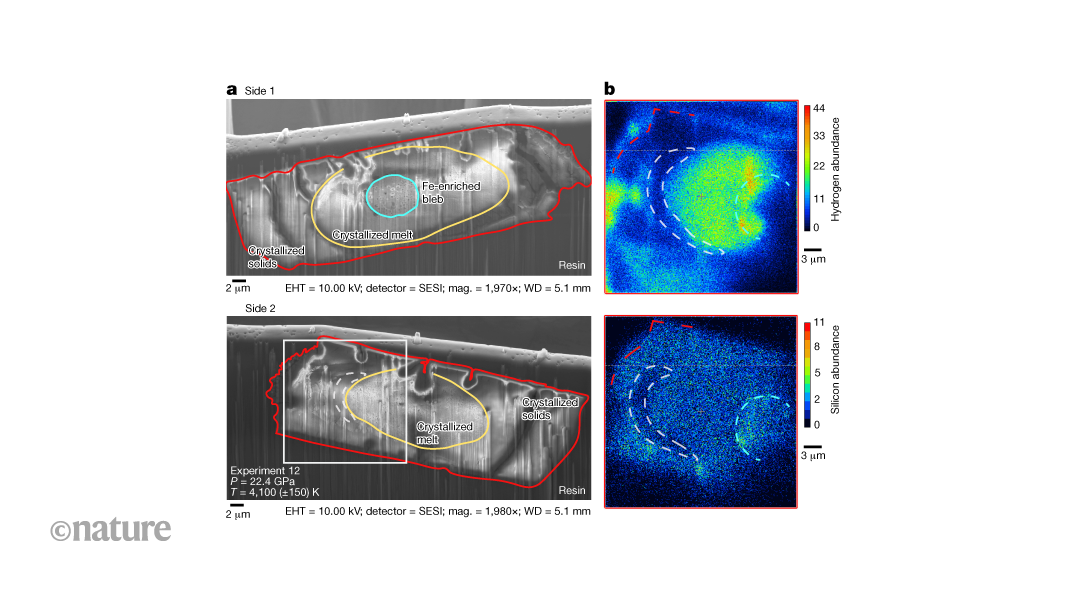
  • WWW.NATURE.COM
    Land-use change undermines the stability of avian functional diversity
    Nature, Published online: 26 November 2025; doi:10.1038/s41586-025-09788-0Large-scale analyses of bird species traits reveal that land-use change reduces resilience of key ecological functions more than previously thought.
    0 Комментарии 0 Поделились 153 Просмотры 0 предпросмотр
  • WWW.NATURE.COM
    Trumps AI Genesis Mission: what are the risks and opportunities?
    Nature, Published online: 26 November 2025; doi:10.1038/d41586-025-03890-zNational laboratories have been instructed to broaden access to their data sets to accelerate research as part of the federal governments AI platform. But who stands to benefit?
    0 Комментарии 0 Поделились 151 Просмотры 0 предпросмотр
  • WWW.NATURE.COM
    Weighing up the wild-meat harvest in Amazonia
    Nature, Published online: 26 November 2025; doi:10.1038/d41586-025-03454-1An assessment of the food hunted across the Amazon rainforest reveals its crucial role and how human pressures, particularly deforestation, threaten the resource.
    0 Комментарии 0 Поделились 148 Просмотры 0 предпросмотр
  • WWW.NATURE.COM
    These programmable knots harness physics to make surgical stitches safer
    Nature, Published online: 26 November 2025; doi:10.1038/d41586-025-03892-xLoops precisely knotted into thread can help novice surgeons to perform perfect sutures.
    0 Комментарии 0 Поделились 146 Просмотры 0 предпросмотр
  • WWW.ESPN.COM
    NBA Cup takeaways: Knicks, Magic clinch spots in quarters
    The 2025 NBA Cup continues as group play wraps up. Here's everything you need to know about the third annual in-season tournament.
    0 Комментарии 0 Поделились 147 Просмотры 0 предпросмотр
  • WWW.ESPN.COM
    37 games with postseason implications to fill your Rivalry Week menu
    As if the intensity of rival games weren't enough, there are high stakes everywhere you look this weekend.
    0 Комментарии 0 Поделились 134 Просмотры 0 предпросмотр
  • WWW.ESPN.COM
    Week 14 preview: Rivalry Week stakes, plus conference championship scenarios
    Our college football experts break down the stakes of the week's biggest matchups.
    0 Комментарии 0 Поделились 131 Просмотры 0 предпросмотр
  • WWW.ESPN.COM
    Bears' win in Philly sends message: 'We're for real'
    The Bears' 24-15 win over the Eagles went a long way toward legitimizing their surprising run this season, with several players saying they're "changing the culture" after winning nine of their past 10 games.
    0 Комментарии 0 Поделились 128 Просмотры 0 предпросмотр
  • WWW.ESPN.COM
    Week 13 buzz: What we're hearing on the struggling Bucs, Pickens' next deal, more
    Are the Bucs worried about their losing streak? Will the Cowboys extend George Pickens? Here's the latest intel.
    0 Комментарии 0 Поделились 129 Просмотры 0 предпросмотр
  • WWW.PROPUBLICA.ORG
    How Trumps Transportation Department Is Loosening Safety Rules Meant to Protect the Public
    On its face, the rule proposed in July by the countrys pipeline-safety regulator seemed innocuous. The regulator, a division of the U.S. Department of Transportation called the Pipeline and Hazardous Materials Safety Administration, was proposing what looked like minor, bureaucratic changes to its process for issuing regulatory waivers. Between the lines, PHMSA watchers saw a much more consequential effort one that would curtail the power of agency experts to impose conditions aimed at preventing catastrophic pipeline failures.The rule was signed by Ben Kochman, whom the administration of President Donald Trump appointed as deputy administrator of the agency. In the proposal, Kochman noted that the Interstate Natural Gas Association of America, a powerful pipeline industry group, had criticized the policy that the new rule would change. It went unmentioned that Kochman was a director of that same trade group until January.You hear of the phrase the fox guarding the henhouse, said Bill Caram, executive director of the Pipeline Safety Trust, an advocacy group. What were worrying about in this situation is the fox designing the henhouse.The rule is part of a much larger rollback of regulations at the DOT under the second Trump administration. The agencys new leaders have touted this rollback as cutting red tape and encouraging innovation. But dozens of the regulations they have targeted sought to prevent deaths and injuries in the nations transportation and infrastructure systems.The DOTs sprawling regulatory domain stretches from air traffic control to highway and train safety to maintenance of oil pipelines and rules governing autonomous vehicles. In recent months, the agency has scrapped possible limits on subway and bus driver hours meant to keep them from falling asleep at the wheel; delayed a requirement that airplanes be equipped with an extra cockpit barrier to prevent 9/11-style takeovers; nixed a planned mandate for safer motorcycle helmets; proposed exempting school bus child-restraint systems from new crash-protection requirements; and postponed a rule that freight trains transporting hazardous materials carry emergency oxygen masks to protect crews.In total, ProPublica identified 30 regulatory actions taken by the DOT under the new administration that current and former agency officials as well as safety advocates said are at odds with the agencys mission to protect the public. Some of the regulations targeted by the new administration were required by federal legislation. Five of the targeted regulations could prevent as many as 1,000 deaths and 40,000 injuries each year, according to the agencys own prior estimates.The regulations are written in blood, said John Putnam, the agencys general counsel during the administration of former President Joe Biden. Most of them are driven by a tragedy that resulted in the loss of life. But industry groups objected to many of the rules as unjustified or burdensome and pushed for, or later commended, the DOTs recent changes to them.The DOTs safety enforcement has dropped dramatically as well. In the first eight months of Trumps second term, the agency opened 50% fewer investigations into vehicle safety defects, concluded 83% fewer enforcement cases against trucking and bus companies and started 58% fewer pipeline enforcement cases compared with the same period in the Biden administration, agency data shows. The agency has also proposed allowing subjects of DOT enforcement actions to bypass career staff and appeal directly to Trump appointees.Overseeing these decisions are dozens of political appointees who previously worked for industries regulated by the DOT. The agencys top posts are now occupied by lobbyists and consultants, former airline and railroad CEOs, alumni of autonomous vehicle technology startups and shipping and infrastructure firms, and ex-lawyers for pipeline and trucking companies. Some of the appointees previously battled against the DOT divisions they now control. Some took industry jobs after prior stints at the agency and have now cycled back into the upper ranks of the DOT.ProPublica identified 32 political appointees at the DOT with industry ties, including 11 who recently held investments in transportation companies and adjacent industries. Those appointees disclosed between $12 million and $52 million in stock holdings and other financial interests in airlines, railroads, oil and gas corporations, transportation technology firms and other businesses whose work is close enough to the agencys purview that the appointees pledged to divest or recuse themselves from matters involving those companies. Such investments by DOT leadership may be far greater, but financial disclosures are not publicly available for all of the appointees. The agency has not fulfilled a request by ProPublica for any disclosure filings from other appointees that are subject to release under federal law.ProPublicas findings are based on a review of hundreds of rulemaking documents as well as internal agency emails, financial disclosures, legal filings and other records. ProPublica also interviewed safety advocates and researchers as well as 19 current and former DOT officials, most of whom spoke on the condition of anonymity for fear of retribution from the administration.Some degree of industry presence at the DOT is common, even desirable, those officials noted. The agencys regulatory responsibilities are vast, often involving arcane technical matters for which the input of engineers and operators is essential. Many of the DOTs recent deregulatory moves are backed by lengthy justifications from the administration or industry groups, and safety advocates do not view all of them as equally consequential.DOT spokesperson Nate Sizemore said in a statement that safety comes first at the agency under its new leadership. The insinuation that slashing duplicative and outdated regulations contradicts that mission isnt just wrong it ignores the fact that doing so enhances focus on enforcing the key rules that actually keep the American people secure. (He disputed that the pipeline rule signed by Kochman would reduce the agencys regulatory authority.) Regarding the industry ties of agency leadership, he added: ProPublicas gross smears are flat out lies, and these attacks on our exceptionally qualified staff are a shameful attempt to fearmonger. He did not respond to a question about what the agency viewed as lies or answer other detailed questions.The breadth and speed of the rollbacks are unprecedented, according to Marc Scribner, a senior transportation policy analyst at Reason Foundation, a libertarian think tank, who studies the agencys regulatory activity. We havent seen deregulatory rulemaking volume at USDOT like this before, Scribner said.And the number of DOT appointees who hail from industries they now regulate is also raising eyebrows among some agency veterans. Historically Republicans have been more business focused, Democrats have been more public transportation and public interest and safety focused, said one former senior DOT official. What youre seeing this time around is the industry focus on steroids.Safety advocates and former agency officials fear this will lead to deaths and injuries that could be prevented. The consequence of this, of pulling back on these safety regulations, is that more daughters, mothers, children, bread winners are going to lose their lives, said Barbara McCann, a former senior DOT safety official who served in Democratic and Republican administrations. Government is here to safeguard people, protect people, and the new leadership at DOT is not performing that role.No division of the DOT better exemplifies the alignment of industry and regulator under the second Trump administration than its pipeline office. Kochman, the appointee who signed the July proposed rule, is one of four political appointees in the division who previously worked for the pipeline industry or in closely related fields. Another is Keith Coyle, the agencys chief counsel, who, as a lawyer representing industry groups, successfully fought to undo a pipeline safety regulation as recently as 2023. The arrival of these appointees has coincided with an exodus of high-ranking civil servants from the agency.The new appointees have wasted little time. PHMSA has published 23 notices of proposed rulemaking under the new administration most of them deregulatory which is more than the Biden administration published in four years. I dont think weve ever seen anything like this, Caram said. All 23 proposals were signed by Kochman.An aerial view of Danville after the 2019 pipeline explosion. The regulations are written in blood, a former DOT official said. Most of them are driven by a tragedy that resulted in the loss of life. Michael Clevenger/Courier Journal/USA Today NetworkThe regulatory revisions largely point in the same direction. The general tone is, Weve done great on pipeline safety, so its time to start looking at how to decrease costs for the industry and improve efficiency, Caram said. Theres really nothing in there about how we can make the rules more effective or more efficient to improve safety, which is the agencys mission.In recent months, Kochman has sought to triple the monetary value of property damage caused by a hazardous liquid pipeline failure before its operators must report the accident to PHMSA. (The agency was forced to withdraw the regulation on procedural grounds.) He proposed allowing companies to transport larger quantities of lithium batteries, which are known to spontaneously explode, and appliances containing flammable gasses. He questioned the agencys existing drug and alcohol testing requirements for pipeline workers, requesting public feedback on whether those requirements impose an undue burden on affected stakeholders. He asked the same about packaging requirements for radioactive materials.Four of PHMSAs recent regulatory actions cite INGAA, the trade group for which Kochman used to work. That includes a plan to scale back a requirement that pipeline operators report emergency shutdown events, such as when pipeline systems malfunction and release flammable gases into the air. That proposal quoted regulatory language suggested by INGAA and other trade associations. PHMSA agrees with the proposed revisions, the notice reads.While PHMSAs rulemaking office has been busy, its enforcement wing has slowed dramatically. From 2002 to the end of the Biden administration, PHMSA typically proposed around $475,000 in penalties for safety violations every 30 days, according to an analysis by the Pipeline Safety Trust. In the first eight months of the new administration, that figure fell to around $8,000 in proposed penalties every 30 days, a 98% drop. (Enforcement picked up in October, Caram said.)Kochman has become a divisive figure at the agency, according to two former PHMSA employees who left this year and another federal employee familiar with the matter. An ex-congressional staffer in his late 30s with no engineering or legal credentials listed on his LinkedIn profile, Kochman has shouted at colleagues in meetings and demeaned the agencys prior work, the current and former employees said. He has dismissed carefully considered agency positions as obviously wrong and cut out career officials in determining PHMSA policy. His positions typically aligned with those of INGAA and the pipeline industry more broadly, the current and former employees said.Kochman and Coyle, both of whom also served in PHMSA under prior administrations, did not respond to requests for comment.Sizemore, the DOT spokesperson, called Kochman and Coyle dedicated public servants whose collective knowledge of pipeline and hazardous materials safety matters have proved invaluable to this Administrations efforts to modernize the agency. He said PHMSA has taken steps to advance safety, including updating its inspection and enforcement process, dispatching more personnel in response to safety incidents and protecting safety critical positions from layoffs.An INGAA spokesperson said in a statement that the groups members have a goal of operating natural gas pipeline infrastructure with zero incidents, and we will continue to engage with PHMSA to advance rulemakings that prioritize the safety of our members and the communities that they serve.Some of PHMSAs most consequential moves under the new administration occurred with no public notice. In the waning days of the Biden presidency, the agency announced new steps on two major rulemaking initiatives. One would strengthen regulations for carbon dioxide pipelines an initiative spurred by a pipeline rupture in Mississippi in 2020 that sent 45 people to the hospital. The other would crack down on leaks and was expected to eliminate as much as 500,000 metric tons of methane emissions. But because the Biden administration waited until its final days to propose the rules, they were not officially published before Trump took office.That enabled the new administration to kill the rules silently, without ever having to formally withdraw them.For appointed leadership to pull them back without replacing them with anything, and with no intention to replace them with anything, is damaging to pipeline safety, one of the former PHMSA employees said. And its contrary to what Congress told PHMSA to do.Transportation Secretary Sean Duffy frequently says safety is his top priority. But that rings hollow to Gary Wilburn. It calls to mind a sunny morning 23 years ago when Wilburn, then a volunteer firefighter, came upon the charred remains of a driver.Wilburn had responded to a crash on an interstate in western Oklahoma. The deceased man, a subsequent investigation would show, was stopped in traffic on his way home from college when a semitruck traveling an estimated 75 miles per hour smashed into his Chevrolet Camaro from behind, crushing it and causing it to burst into flames. Wilburn was on the scene for 45 minutes before finding the Camaros license plate and realizing the victim was Orbie Wilburn, his 19-year-old son. His body had been burned beyond recognition.The Chevrolet Camaro that 19-year-old Orbie Wilburn was driving in 2002 when it was hit from behind by a semitruck traveling an estimated 75 miles per hour. Courtesy of Linda WilburnSince then, Wilburn and his wife, Linda, have spent decades advocating for stronger truck safety regulations through letter-writing campaigns and conversations with members of Congress. One of their primary goals has been to secure a federal requirement for devices in big rigs that prevent them from speeding. By 2016, it seemed their efforts would finally pay off: The U.S. Department of Transportation proposed a rule mandating speed limiters in trucks like the one that killed their son. Studying possible maximum speeds of 60, 65 and 68 miles per hour, the agency estimated the regulation could prevent up to 500 deaths and 10,000 injuries each year.But many truckers hated the idea. The devices would force them to travel slower than surrounding traffic, which could itself be dangerous, they argued. Less discussed was that many truckers are paid per mile, which means the faster they go, the more money they can make.The rule stalled for years before seeming to be revived in 2022 when the Biden administration put it back in play. Then Trump appointees returned to the DOT.We want D.C. bureaucrats OUT of your trucks so were eliminating the absurd speed limiters rule, Duffy posted on social media in July. The rule was dead.It just is heartbreaking, Linda Wilburn told ProPublica. It has potential to save lives.The agency has drawn less attention to other road and vehicle safety regulations that it has targeted. In September, the DOT quietly signaled that it was delaying two possible rules, one for side underride guards on heavy trucks to prevent cars from getting crushed underneath them, another for additional seat belt warning systems in cars. The rules were estimated to prevent as many as 70 deaths and 600 injuries annually, but industry groups objected to aspects of both. Later that month, the agency said it would push back changes to its vehicle safety ratings for consumers, citing the objection of an automakers trade group. The changes were meant to prod automakers to adopt vehicle designs that would be less lethal to pedestrians.Tests from 2017 show how crashes can play out differently if a truck has only a fiberglass skirt for fuel efficiency, top, vs. a steel side underride guard, bottom. Courtesy of the Insurance Institute for Highway SafetyIf youre going to say safety is our top priority, then you should push for any initiative that is going to save lives and prevent harm, said David Harkey, president of the Insurance Institute for Highway Safety, a nonprofit that researches vehicle crashes.Rule delays are common when new administrations take office. But administrations may also slow-walk proposed rules that theyve inherited but dislike as a way to effectively kill them without formally withdrawing them and facing the criticism that such a step might trigger, former officials said.Among the moves most concerning to safety advocates are those related to automatic emergency braking, a technology that detects possible collisions and forces vehicles to slow down or stop. The Biden administration proposed or adopted rules that would require the technology in cars and large trucks, estimating they could prevent more than 500 deaths and 33,000 injuries each year, but industry groups criticized the proposals as impractical and dangerous.That blowback appears to have had an effect. The DOT is planning to significantly narrow the requirement for trucks, according to internal agency emails obtained by ProPublica. Those emails, from May, show that the administration plans to revise the rule to apply only to heavier trucks, not to smaller and midsized trucks as well, as originally proposed. Drivers and OOIDA oppose, one official wrote to colleagues, referring to the Owner-Operator Independent Drivers Association, an influential trucker trade group.Nobody cares more about highway safety than professional truck drivers, its where they make their living, an OOIDA spokesperson said in a statement. OOIDA and the small-business truckers we represent appreciate that Secretary Duffy and his team continue to listen to the men and women who keep Americas supply chain moving.Zach Cahalan, executive director of the Truck Safety Coalition, criticized the reversal. Nothing is going to do more to prevent loss of life and severity of injury than automatic emergency breaking, he said. That is by far the most consequential rule sitting at DOT.The automatic emergency braking requirement for cars could also be in jeopardy. An automakers trade group brought the DOT to court over the regulation this year. Instead of defending the proposal, the Trump administration has repeatedly asked the judge to delay the case, legal filings show. The Department is under new leadership and is reviewing the rule at issue in this litigation, which could lead to its modification, one filing reads.Scrapping that requirement would be catastrophic, one former agency official said. Pulling back that rule or slowing it down would just lead to more fatalities with virtually no benefit.Also significant, but largely unscrutinized, was the administrations decision to quietly withdraw two proposals to embed new safety requirements in major federal programs that funnel billions of dollars a year to state and local governments for road projects. That included requiring states to advance the so-called Safe System Approach to road safety, which seeks to reduce crashes and make them less severe in part through design features like roundabouts, rumble strips and high-visibility intersections. The Trump administration had little to say about why it withdrew them beyond that they did not align with agency needs, priorities, and objectives.McCann, the former DOT safety official, noted that deaths from car crashes occur in the United States at a vastly higher rate than in other developed countries. She estimated that the proposals, if adopted, eventually could have saved hundreds of lives annually. The problem with surface transportation is that people die in ones and twos and threes, but it adds up to 40,000 deaths a year, which is not enough to spark outrage, she said. The only way to solve that is to make broad systematic changes, and thats what these rules help us do, especially on the roadway side. And without them that carnage is just going to continue.The post How Trumps Transportation Department Is Loosening Safety Rules Meant to Protect the Public appeared first on ProPublica.
    0 Комментарии 0 Поделились 139 Просмотры 0 предпросмотр
  • WWW.PROPUBLICA.ORG
    New York Moves Forward With a Brooklyn Flood Protection Plan That Falls Short of Other City Projects
    After a decade of planning, New York City broke ground in September on a $218 million plan to prevent flooding in the portside neighborhood of Red Hook in Brooklyn, even though experts say it will provide inadequate protection from storms. The project also will provide less protection than other city flood prevention projects, including a new $3.5 billion upscale development on the edge of the neighborhood.Over a decade ago, Superstorm Sandy killed 44 people and caused $19 billion in damage across New York City, swamping homes and destroying businesses in Red Hook. The city responded, pumping billions of dollars into neighborhood flood protection projects. Most of the money went to protect lower Manhattan from powerful 100-year storms defined as storms that have a 1-in-4 chance of occurring at some point during the typical 30-year home mortgage.But in Red Hook, where roughly two-thirds of residents are Black and Hispanic and earn below the citys median income, the city is instead building to protect against a 10-year storm. The planned construction is expected to raise streets and sidewalks and erect barriers and floodwalls to an elevation of up to 10 feet above sea level.Its at best temporary. At worst, it gives a false sense of security, said John Shapiro, a Pratt Institute professor whose research focuses on the impact of climate change on urban planning.Shapiro and other experts say that as the climate warms, floods and storms are striking more frequently and with greater intensity. This leaves coastal communities with a complicated choice: Retreat from the coast, or build protection against the next violent storm.Port warehouses, brick buildings with black shutters, which now house artists studios, with the Manhattan skyline in the background Shuran Huang for ProPublicaRed Hook sits on a peninsula jutting into New York Harbor, which makes it vulnerable to flooding. The neighborhood was a marsh before the city began filling it in by the 1870s. In 1939, the city added the first section of the Red Hook Houses to board dock workers. The 32 buildings of the Red Hook Houses make up one of the citys largest public housing developments and dominate the neighborhoods skyline.The neighborhood has Brooklyns last working port, along with an Amazon warehouse and an Ikea store. Artists studios are now tucked into old port buildings and trendy stores lining the cobblestone streets. In recent years the area has gentrified.Quincy Phillips was living in a third-floor apartment in the Red Hook Houses when Sandy hit. He watched as the water swamped the first floor of the building.Quincy Phillips and his family had to live without power for two weeks after Hurricane Sandy. Alex Bandoni/ProPublicaIt didnt reach past the second floor, thank God, he said. We had to roll our pants up to even walk past to get outside.The storm sent a 6-foot wave of water through the neighborhood, destroying homes, ripping metal doors from warehouses, dropping boats onto the streets and carrying cars out into the harbor.Phillips family, like several thousand others in Red Hook, lived for two weeks without power and had to rely on federal aid until his refrigerator came back on.The year after Sandy wiped out the homes of Phillips and his neighbors in Red Hook, the administration of then-Mayor Mike Bloomberg determined Red Hook was at high risk of future flooding. A 2013 city report recommended a flood protection system for the neighborhood, using a combination of infrastructure such as floodwalls and floodgates.The city said the project, now known as the Red Hook Coastal Resiliency Project, would cost $200 million but at the time was able to secure only a $50 million grant from the Federal Emergency Management Agency. The administration of subsequent Mayor Bill de Blasio tapped the citys capital budget for another $50 million. As a result, the city told consultants to only consider projects that it could afford on the smaller budget, according to a feasibility study. This would be a less ambitious 10-year storm plan.Construction on the Red Hook Coastal Resiliency Project began in September. Shuran Huang for ProPublicaNo Accounting for Sea Level RiseIn order to predict how frequently storms will occur in the future and how high floodwaters are likely to reach, scientists and engineers use historic tidal data.The models project that in Red Hook, a 100-year storm at current sea level would produce surging waves that would reach an elevation of at least 11 feet a foot higher than the current plan would protect against.That doesnt account for sea level rise. Climate experts serving on a city climate change panel have projected that by mid-century, in the worst case scenario sea levels will rise several feet. Counting that additional water height, the citys own study found that Red Hook would need to erect barriers between 15 and 18 feet. Neighborhood storm protection projects in other parts of the city are being built to an elevation of at least 16 feet.Elevation of City Flood Protection ProjectsEast Side Coastal Resiliency: 16.5 feet above sea levelBrooklyn Bridge-Montgomery Coastal Resilience: 16.5 feet (plus 1.5 feet with deployable barriers)South Battery Park City Resiliency: Up to 19.8 feetNorth/West Battery Park Resiliency: Up to 20 feetRed Hook Coastal Resiliency: 10 feetThe federal flood insurance program, which provides subsidized flood insurance to homeowners who live in high-risk flood zones, encourages communities to adopt a 100-year flood plan, said Philip Orton, an engineering professor at Stevens Institute of Technology who researches flood protection. Doing so, he said, lowers the cost of flood insurance for residents. Its rare that communities will not do it, he said. All other coastal storm protection projects in New York City meet a 100-year standard.Biden and Obama administration guidelines encouraged federally funded projects to build to an elevation of at least 2 feet over 100-year storm projections. The Trump administration revoked those during each of his terms.Last year, the city and FEMA increased funding by about $100 million for the Red Hook project. According to the citys Department of Design and Construction, the agency responsible for the project, the added funds covered a decade of inflation and paid for upgrades to park and green spaces in the area.New floodwalls at Asser Levy Playground in Manhattan are part of the East Side Coastal Resiliency Project. The walls, seen in the background, are 6.5 feet higher than the planned walls for the Red Hook project. Shuran Huang for ProPublicaThe funds also increased the elevation of the project from the original height of 8 feet to 10, taking into account greater changes to sea levels. But it didnt bring it up to the levels that are being pursued in other parts of the city.The Department of Design and Construction said a bigger project would disrupt ports, cruises and other waterfront businesses while taking away park space. When asked why Red Hook was receiving a lower level of protection than other communities, a department spokesperson said its low-lying topography and privately owned waterfront made gaining access to build and maintain a protection system difficult. The current project is sufficient, the spokesperson added, because Sandy is the only storm to strike the city since 1927 that would have overtopped the flood barrier.Michael Oppenheimer, a professor at Princeton University who served on the citys climate change panel that came up with the sea level rise projections, said the city is misusing the historical record to justify its failure to protect against future storms.Thats a pretty poor excuse, he said, adding that storms and floods like those experienced in Sandy will occur more frequently as sea levels rise.A man tries to ride his bike through Hurricane Sandy floodwaters in Red Hook on Oct. 29, 2012. The heavy flooding destroyed homes and businesses. Craig Warga/NY Daily News via Getty ImagesBernice Rosenzweig, a professor at Sarah Lawrence College who studies urban flooding and serves on the New York City Panel on Climate Change, said the project is inadequate to protect Red Hook from even todays large storms.The walls are not designed for major floods, not even our contemporary major floods, forget about major floods that will happen at the end of the 21st century, she said.Unequal ProtectionAlexa Avils, the City Council member representing Red Hook, said infrastructure planning is particularly frustrating in Red Hook. Along with community activists and residents, she argues that the system the city and the federal government use to decide how much money to spend on flood protections is biased against poor communities.It never feels like we are prioritized, and were constantly fighting with the city again for both a basic level of service and then to get these major projects done and coordinated properly, she said.To win federal grants, applicants conduct a cost-benefit analysis that needs to show flood projects save more money in the event of a storm than they cost to build, said Kristin Smith, an economics researcher at Headwaters Economics, a nonprofit that studies flood risk.That can be difficult for poor communities, she said.The benefit-cost analysis can be a barrier to qualifying for federal funding when its a lower-income neighborhood and the cost of the project is so high that you just dont have the benefits to justify it, she said.Red Hook residents, advocates and leaders say the flood barrier system proposed for the $3.5 billion housing development in the neighborhood shows how wealthy residents in the city receive greater protection.The development, called the Brooklyn Marine Terminal, would build 6,000 mostly market-rate units on the northwest side of Red Hook, according to planning documents. A city task force approved the development in September along with a plan to refurbish and upgrade the port. It promises a flood barrier system that would protect from 100-year storms.New Housing Developments Would Have Higher Flood Protection Than the Rest of Red HookNote: The proposed housing and 21 feet of protection are part of the Brooklyn Marine Terminal development plan. The 10 feet of protection is part of the Red Hook Coastal Resiliency Project and includes floodwalls and other forms of protection, like raised streets, sidewalks and floodgates. Sources: NYC Economic Development Corp., NYC Department of Design and Construction Lucas Waldron/ProPublicaThe Economic Development Corp., a city-run nonprofit organization, owns the land and plans to pay for the flood protection and other infrastructure with funding from federal grants, the citys capital budget and the state, plus some from developers.The Brooklyn Marine Terminal plan still needs to pass an environmental review and the states approval process, but it will bypass the citys more extensive process. According to the planning documents, it could take until 2038 to finish the project.The plan would protect the new development site with a 21-foot coastal floodwall, which would start on the northern end of Red Hook and extend about 1 mile north.Urban planners who conducted an analysis of the Brooklyn Marine Terminal for the City Club of New York Waterfront Committee, an advocacy group promoting flood protection for waterfronts, say its a mistake to protect the new development while the south coast of Red Hook receives a lower level of protection. That will place the new development at risk, as a storm surge can overtop those barriers and flood the area from the landward side of the development.The group said the plan serves gentrification and developer interests rather than the larger Red Hook community.Most Red Hook residents live in public housing and lack the income necessary for housing mobility in NYC, the analysis said. In contrast, most of the residents in the new development are expected to be very affluent, based on projected rents, it said.A spokesperson for the Economic Development Corp. said the city would study how to integrate the two projects but that there are no plans to further protect the peninsula.The post New York Moves Forward With a Brooklyn Flood Protection Plan That Falls Short of Other City Projects appeared first on ProPublica.
    0 Комментарии 0 Поделились 140 Просмотры 0 предпросмотр
  • WWW.PROPUBLICA.ORG
    Ticking Time Bomb: A Pregnant Mother Kept Getting Sicker. She Died After She Couldnt Get an Abortion in Texas.
    Tierra Walker had reached her limit. In the weeks since shed learned she was pregnant, the 37-year-old dental assistant had been wracked by unexplained seizures and mostly confined to a hospital cot. With soaring blood pressure and diabetes, she knew she was at high risk of developing preeclampsia, a pregnancy complication that could end her life.Her mind was made up on the morning of Oct. 14, 2024: For the sake of her 14-year-old son, JJ, she needed to ask her doctor for an abortion to protect her health.Wouldnt you think it would be better for me to not have the baby? she asked a physician at Methodist Hospital Northeast near San Antonio, according to her aunt. Just a few years earlier, Walker had developed a dangerous case of preeclampsia that had led to the stillbirth of her twins.But the doctor, her family said, told her what many other medical providers would say in the weeks that followed: There was no emergency; nothing was wrong with her pregnancy, only her health.Just after Christmas, on his birthday, JJ found his mom draped over her bed, lifeless. An autopsy would later confirm what she had feared: Preeclampsia killed her at 20 weeks pregnant.Every day, JJ revisits photos and videos of his mom.Walkers death is one of multiple cases ProPublica is investigating in which women with underlying health conditions died after they were unable to end their pregnancies.Walker had known that abortion was illegal in Texas, but she had thought that hospitals could make an exception for patients like her, whose health was at risk.The reality: In states that ban abortion, patients with chronic conditions and other high-risk pregnancies often have nowhere to turn.They enter pregnancy sick and are expected to get sicker. Yet lawmakers who wrote the bans have refused to create exceptions for health risks. As a result, many hospitals and doctors, facing the threat of criminal charges, no longer offer these patients terminations, ProPublica found in interviews with more than 100 OB-GYNs across the country. Instead, these women are left to gamble with their lives.As Walkers blood pressure swung wildly and a blood clot threatened to kill her, she continued to press doctors at prenatal appointments and emergency room visits, asking if it was safe for her to continue the pregnancy. Although one doctor documented in her medical record that she was at high risk of clinical deterioration and/or death, she was told over and over again that she didnt need to worry, her relatives say. More than 90 doctors were involved in Walkers care, but not one offered her the option to end her pregnancy, according to medical records.Walkers case unfolded during the fall of 2024, when the dangers of abortion bans were a focus of protests, media coverage and electoral campaigns across the country. ProPublica had revealed that five women three in Texas alone had died after they were unable to access standard reproductive care under the new bans.ProPublica condensed more than 6,500 pages of Walkers medical records into a summary of her care with the guidance of two high-risk pregnancy specialists. More than a dozen OB-GYNs reviewed the case for ProPublica and said that since Walker had persistently high blood pressure, it would have been standard medical practice to advise her of the serious risks of her pregnancy early on, to revisit the conversation as new complications emerged and to offer termination at any point if she wanted it. Some described her condition as a ticking time bomb. Had Walker ended her pregnancy, every expert believed, she would not have died.Many said that her case illustrated why they think all patients need the freedom to choose how much risk they are willing to take during pregnancy. Walker expressed that she didnt want to take that risk, her family says. She had a vibrant life, a husband and son whom she loved.Under Texas abortion law, though, that didnt matter.Walkers mother, Pamela Walker, holds her daughters ashes. I Dont Know How Much More I Can TakeOn a hot September day, Walker was lying down with JJ after a walk with their two small dogs, Milo and Twinkie, when she started shaking uncontrollably.Terrified, JJ called 911, asking for an ambulance.As the only child of a single mom, JJ had always considered Walker his closest friend, coach and protector wrapped in one. In their mobile home, JJ was greeted each morning by his moms wide smile and upturned eyes, as she shot off vocabulary quizzes or grilled him on state capitals. He loved how fearlessly she went after what she wanted; in 2021, she had proposed to her boyfriend, Eric Carson, and the two eloped. Shed just been talking about moving the family to Austin for a promotion she was offered at a dental clinic.Eric Carson and Walker married in 2021. At the hospital, JJ was shocked to see her so pale and helpless, with wires snaking from her head and arms.To Walkers surprise, doctors quickly discovered that she was five weeks pregnant. They also noted hypertension at levels so high that it reduces circulation to major organs and can cause a heart attack or stroke. That, and her weight, age and medical history, put Walker at an increased risk of developing preeclampsia, a pregnancy-related blood pressure disorder, said Dr. Jennifer Lewey, director of the Penn Womens Cardiovascular Health Program and expert in hypertension.If Im seeing a patient in her first trimester and her blood pressure is this uncontrolled never mind anything else what Im talking about is: Your pregnancy will be so high risk, do we need to think about terminating the pregnancy and getting your health under control?As Walkers first trimester continued, she kept seizing. Her body convulsed, her eyes rolled back and she was often unable to speak for up to 30 minutes at a time. Some days, the episodes came in rapid waves, with little relief.For three weeks, she stayed at Methodist hospitals; doctors were not able to determine what was causing the spasms. Walker couldnt get out of bed, in case a seizure made her fall, and this left her vulnerable to blood clots. She soon developed one in her leg that posed a new lethal threat: It could travel to her lungs and kill her instantly.Carson watched over her during the day and her aunt Latanya Walker took the night shift. She was panicked that her tough niece, whose constant mantra was quit your crying, now seemed defeated. One evening, during Walkers third hospitalization, when she was about 9 weeks pregnant, she told Latanya shed had a vision during a seizure: Her grandmother and aunt, who had died years earlier, were preparing a place for her on the other side.You better tell them youre not ready to go, Latanya said.I dont know how much more I can take of this, Walker whispered.Walkers aunt, Latanya Walker, tried to advocate for her niece during her hospitalizations.The next morning, Walker called for a doctor and asked about ending her pregnancy for the sake of her health. When we get you under control, then everything will go smoothly, the doctor replied, Latanya recalled. The physician on the floor was not an OB-GYN with the expertise to give a high-risk consultation, but the Walkers didnt realize that this mattered. By the time the doctor left the room, her aunt said, tears streamed down Walkers cheeks.Dr. Elizabeth Langen, a maternal-fetal medicine specialist in Michigan who reviewed Walkers case, said a physician comfortable with high-risk pregnancies should have counseled her on the dangers of continuing and offered her an abortion. The safest thing for her was to terminate this pregnancy, thats for sure.During Walkers many hospital and prenatal visits, 21 OB-GYNs were among the more than 90 physicians involved in her care. None of them counseled her on the option or the health benefits of a termination, according to medical records.In Texas, the law bars aiding and abetting an illegal abortion. As a result, many physicians have avoided even mentioning it, according to interviews with dozens of doctors.In her condition, Walker couldnt fathom leaving the state. When her aunt suggested ordering abortion medication online, Walker was worried she could go to jail. She was spending so much time in the hospital; what if she got caught taking the pills?At 12 weeks pregnant, she was admitted to University Hospital. Doctors there noted that even on anticoagulation medication, the clotting in Walkers leg was so profound that she needed a thrombectomy to remove it.At this point, weve gone from complicated, but within the realm of normal to weve got someone with a major procedure in pregnancy that tells us something isnt going well, said Dr. Will Williams, a maternal-fetal medicine specialist in New Orleans, where an abortion ban is also in place. In my practice, wed have a frank discussion about whether this is a person wed offer a termination to at the point of thrombectomy.ProPublica reached out to five physicians who were involved in key moments of Walkers care: the hospitalist on duty on Oct. 14, 2024, when she asked about ending her pregnancy; three OB-GYNs; and a hospitalist on duty at the time of her thrombectomy. They did not respond. The hospitals Walker visited, including those run by University Health System and Methodist Healthcare, which is co-owned by HCA, did not comment on Walkers care, despite permission from her family. Although the Walkers have not pursued legal action, they have engaged a lawyer. A University Health System spokesperson said that it is the companys policy not to comment on potential litigation.In her second trimester, Walkers seizures continued and her hypertension remained out of control. At an appointment on Dec. 27, at around 20 weeks, a doctor noted spiking blood pressure and sent her to University Hospitals ER. There, doctors recorded a diagnosis of preeclampsia.The experts who reviewed Walkers vital signs for ProPublica said her blood pressure of 174 over 115 was so concerning at that point, she needed to be admitted and monitored. Most questioned her doctors choice not to label her condition as severe. The treatment for severe preeclampsia, which points to a problem with the placenta, is delivery or, at 20 weeks, an abortion.Instead, doctors lowered her blood pressure with medication and sent her home.Carson in the bedroom he shared with Walker Three days later, JJ crawled into bed with his mom and fed her soup. Im so sorry, Walker croaked. Its your birthday and it shouldnt be like this.He told his mom it was okay. He hadnt expected laser tag or a trip to Dave & Busters this year. Over the past few months, when his mom was home, he had tried his best to make things easier on her, walking the dogs when she was out of breath, checking in every hour or so with a hug. JJ knew that after missing so many days of work, she had lost her job. She was stressed about getting enough food for the house. He was relieved when he heard her snoring at least she was resting.That afternoon, when his stepdad was out grocery shopping and his grandmother was just getting back from dialysis, he cracked open the door to Walkers room.His mom was lying face-down in bed, as if she had fallen over while getting up. JJ ran over and tried to find any sign she was breathing. When he called 911, a dispatcher coached him to slide her to the rug and start CPR.I need you, he shouted as he leaned over his mom, pressing down on her chest. I need you!JJ receives prayers at church in San Antonio.We Have to Allow for More ExceptionsThe anti-abortion activists who helped shape Americas latest wave of abortion bans have long seen health exemptions as a loophole that would get in the way of their goals. They fear such exceptions, if included in the laws, would allow virtually anyone to terminate a pregnancy.In Idaho, an anti-abortion leader testifying at a state Senate hearing suggested doctors would use health exceptions to give abortions to patients with headaches.In South Dakota, a pregnant Republican lawmaker with a high risk of blood clots begged her colleagues to consider creating a health exception that would protect her; her bill never made it to a hearing.In Tennessee, an anti-abortion lobbyist with no medical training fought and defeated an amendment to the state law that would allow a health exception to prevent an emergency. He testified in the state Capitol that the carve-out was too broad since some pregnancy complications work themselves out.The refusal to entertain these broader exceptions is particularly consequential given the state of womens health. Women are entering pregnancy older and sicker than they have in decades. The rate of blood pressure disorders in pregnancy has more than doubled since 1993; they now affect up to 15% of U.S. pregnancies. And theyre most prevalent in states with restrictive abortion policies, according to a 2023 study in the Journal of the American College of Cardiology. The burden of disease falls heaviest on Black women, like Walker, for an array of reasons: neighborhood disinvestment, poor access to health care and discrimination in the medical system. Cuts to Medicaid funding and changes to the Affordable Care Act are likely to exacerbate these problems, according to experts.Other countries give pregnant women and their doctors far more control over the medical decision to terminate. Across Europe, for example, most laws permit abortion for any reason through the first trimester, when more than 90% of abortions occur. After that gestational limit, their statutes also tend to include broad health exceptions that can be used for chronic conditions, illnesses that develop in pregnancy, fetal anomalies and, in some countries, mental health.U.S. abortion bans generally restrict interventions to a far more limited set of health risks, like a life-threatening medical emergency or substantial and irreversible harm to major organs. A small subset of lawyers and doctors argue that the law can and should be interpreted to cover patients with chronic conditions that are worsening in pregnancy. But the vaguely written bans threaten criminal penalties for performing an illegal abortion in Texas, up to 99 years behind bars. In practice, few hospitals grant health exceptions, ProPublicas reporting has found.Dr. Jessica Tarleton, an OB-GYN who provides abortions in South Carolina, recalled how much changed at her hospital when the states ban was put in place: OB-GYNs who want to provide an abortion to a patient with a health risk now need to get a maternal-fetal medicine specialist to explicitly write in the chart that it is necessary, in compliance with the law. Not many doctors are willing to do so.Some people were not because of their personal beliefs, and some because they didnt want to be involved in any kind of potential legal actions, Tarleton said. They didnt want their opinion to have anything to do with a patient getting an abortion or not.Recently, for example, Cristina Nuez sued two hospitals in El Paso for their inaction in her care in 2023. She had diabetes, uncontrolled blood pressure and end-stage kidney disease when she learned she was unexpectedly pregnant at 36. Doctors wrote in her medical record that she needs termination based on threat to maternal life or health, but Nuez alleged that one hospital failed to find an anesthesiologist willing to participate. She remained pregnant for weeks, even as blood clots turned her right arm black, until an advocacy organization threatened legal action and she was able to obtain an abortion. The lawsuit is ongoing.This year, Texas Republicans passed legislation with minor amendments to their ban after ProPublica reported the deaths of three miscarrying women who did not receive critical abortion care during emergencies. In the updated law, an emergency still needs to be life-threatening to qualify for an abortion, but it no longer needs to be imminent. Doctors expect that most hospitals still wont provide abortions to women like Walker who have dangerous chronic conditions but no certain threat to their lives.ProPublica asked Sen. Bryan Hughes, the author of Texas abortion ban, about how the specific complications Walker faced should be treated by doctors under the amended law. When her pregnancy began, would she be eligible for an abortion due to her health? Would she need to wait for a diagnosis of severe preeclampsia? Is there a reason the law doesnt include an exception for health risks? ProPublica put the same questions to the 20 state senators who co-wrote the bipartisan amendment.Only Sen. Carol Alvarado, a Democrat, responded. In her view, the amendment was far too narrow. But, she said, her Republican colleagues defer to the far right of their base and oppose broader exceptions.You cant proclaim to be pro-life, but youre passing laws that are endangering women and causing death, she said. We have to allow for more exceptions.Latanya and Pamela in San AntonioSo Youd Rather Let Somebody Die?After Walker died, her family felt bewildered by her medical care. The doctors had assured them that her baby was healthy and she would be fine. The autopsy found that the fetus was indeed healthy, at just under a pound and measuring 9 inches long. But it showed that Walker had hypertensive cardiovascular disease with preeclampsia, along with an enlarged heart, dangerously full of fluid, and kidney damage signs that her condition had declined even more than she knew.In Carsons mind, the many doctors they saw cast the risks as challenges that would be overcome if his wife followed directions. She was doing what they told her to do, he said. He couldnt understand how no one suggested ending the pregnancy to keep Walker safe. Nobody said nothing.Latanya worried the law played a role. They didnt want to offer to end the pregnancy, because the government or someone says you cant? So youd rather let somebody die? she said. Now we are the ones that have to suffer.Read MoreA Striking Trend: After Texas Banned Abortion, More Women Nearly Bled to Death During MiscarriageJJ couldnt bear to stay in the home where he had found his mom, so he moved in with Latanya. Each day, he scrolls through old videos on the computer so he can hear Walkers voice.Latanya does everything she can to support him, but she knows she cant erase his pain.She recalls watching JJ steady himself at Walkers funeral, to see her one last time. Until that point, he hadnt cried.When he finally faced the open casket where his mom lay holding her fetus, JJ sank to his knees, overcome. His aunt, uncles, cousins and grandmother gathered around him and rocked him in their arms.The post Ticking Time Bomb: A Pregnant Mother Kept Getting Sicker. She Died After She Couldnt Get an Abortion in Texas. appeared first on ProPublica.
    0 Комментарии 0 Поделились 141 Просмотры 0 предпросмотр
  • WWW.PROPUBLICA.ORG
    Gov. Greg Abbott Was Ordered to Release Some of His Emails With Elon Musk. Most Are Blacked Out.
    Months after fighting to keep secret the emails exchanged between Texas Gov. Greg Abbotts office and tech billionaire Elon Musks companies, state officials released nearly 1,400 pages to The Texas Newsroom.The records, however, reveal little about the two mens relationship or Musks influence over state government. In fact, all but about 200 of the pages are entirely blacked out.Of those that were readable, many were either already public or provided minimal information. They included old incorporation records for Musks rocket company SpaceX, a couple of agendas for the governors committee on aerospace and aviation, emails regarding a state grant awarded to SpaceX and an application from a then-Musk employee to sit on a state commission.One is an invitation to happy hour. Another is a reminder of the next SpaceX launch.The documents were provided in response to a public records request by The Texas Newsroom, which asked Abbotts office for communications with Musk and the businessmans employees dating back to last fall. Abbotts and Musks lawyers fought their release, arguing they would reveal trade secrets, potentially intimate and embarrassing exchanges or confidential legal and policymaking discussions.Abbotts spokesperson, Andrew Mahaleris, said the governors office rigorously complies with the Texas Public Information Act and releases any responsive information that is determined to not be confidential or excepted from disclosure.Open government experts say the limited disclosure is emblematic of a larger transparency problem in Texas. They pointed to a 2015 state Supreme Court decision that allowed companies to oppose the release of records by arguing that they contain competitively sensitive information. The ruling, experts said, made it harder to obtain records documenting interactions between governments and private companies.Tom Leatherbury, who directs the First Amendment Clinic at Southern Methodist Universitys Dedman School of Law, said companies took advantage of the ruling. Among the most prominent examples of the rulings effect on transparency was McAllen, Texas refusal to disclose how much money was spent to lure pop star Enrique Iglesias to the city for a concert. The city argued that such disclosures would hurt its ability to negotiate with artists for future performances. Eventually, it was revealed that Iglesias was paid nearly half a million dollars.The problem has been exacerbated, Leatherbury added, by the fact that the Office of the Attorney General, which referees public records disputes, does not have the power to investigate whether the records that companies want to withhold actually contain trade secrets.Corporations are willing to assert that information is confidential, commercial information, and more governmental bodies are willing not to second-guess the companys assertion, Leatherbury said. (Leatherbury has performed pro bono legal work for The Texas Newsroom.)Musk and his companies representatives did not respond to questions about the records.One of the richest people in the world, Musk has invested heavily in Texas. Hes relocated many of his businesses headquarters to the state and hired lobbyists who successfully pushed for several new laws that will benefit his companies.As part of an effort to track Musks clout in the state Capitol, The Texas Newsroom on April 20 asked Abbotts office for communications with employees from four of the businessmans companies: SpaceX, car manufacturer Tesla, the social media site X and Neuralink, which specializes in brain nanotechnology.The governors office said it would cost $244.64 to review the documents, which The Texas Newsroom paid. After the check was cashed, lawyers representing Abbotts office and SpaceX each sought to keep the records secret.SpaceXs lawyer sent a letter to Texas Attorney General Ken Paxton dated June 26, saying that publicly releasing the emails would hurt its competitive advantage.Abbotts public information coordinator, Matthew Taylor, also asked Paxtons office for permission to withhold the documents, arguing they included private exchanges with lawyers, details about policymaking decisions and information that would reveal how the state entices companies to invest here. Taylor said some of the records were protected under an exception to public records laws known as common-law privacy because they consisted of information that is intimate and embarrassing and not of legitimate concern to the public.Releasing the Musk emails, he said, would have a chilling effect on the frank and open discussion necessary for the decision-making process.Ultimately, Paxtons office mostly sided with Abbott and Musk. In a Aug. 11 opinion, Assistant Attorney General Erin Groff wrote that many of the documents could be withheld. Groff, however, ordered the release of some records determined to be either not highly intimate or embarrassing or of legitimate public interest.A month later, the governors office released 1,374 pages of records, the vast majority of which were completely redacted.Some records included a note that appeared to explain why. A note on page 401, for example, cited the exemption for competitive bidding records for 974 redacted pages. Names and emails of Musks employees were also removed.The fact that a governmental body can redact more than 1,000 pages of documents that are directly related to a major businesss activities in Texas is certainly problematic, said Reid Pillifant, an attorney specializing in public records and media law. (Pillifant has represented a coalition of media outlets, including ProPublica and The Texas Tribune, in lawsuits seeking therelease of public information related to the May 2022 mass shooting at an Uvalde, Texas, elementary school.)He and other experts said such hurdles are becoming more common as legislation and court decisions have weakened the states public records laws.Four years after the 2015 Supreme Court decision, legislators passed a new law that was meant to ensure the release of basic information about government deals with private businesses. But open government experts said the law did not go far enough to restore transparency, adding that some local governments are still objecting to the release of contract information.Moreover, lawmakers continue to add carve-outs to what qualifies as public information every legislative session. Just this year, for example, legislators added the following exceptions to public records and open meetings laws: information relating to how government entities detect and deter fraud and discussions during public government meetings about certain military and aerospace issues.Even with the increasing challenges of accessing public records, Leatherbury and Pillifant were stumped by the governors decision to release thousands of pages only to black them out fully. Leatherbury said that the governors office may have wanted to show the volume of records responsive to the request.They wanted you to see what little you could get in the context of the entire document, even though thats kind of meaningless, he said.The Texas Newsroom has asked the Office of the Attorney General to reconsider its decision and order the release of the Musk emails. There is little other recourse to challenge the outcome.If a member of the public believes a government agency is violating the law, they can try to sue. But the experts noted that a recent Texas Supreme Court decision made it more difficult to enforce the public records law against the governor and other executive officers. Now, Leatherbury said, its not clear how challenging such a records decision would work.Every Texas citizen should care about access to these kinds of records because they shed light on how our public officials are making big decisions that affect the land where people live and how their taxpayer dollars are being spent, Pillifant said.The post Gov. Greg Abbott Was Ordered to Release Some of His Emails With Elon Musk. Most Are Blacked Out. appeared first on ProPublica.
    0 Комментарии 0 Поделились 139 Просмотры 0 предпросмотр
  • WWW.PROPUBLICA.ORG
    Trumps Anti-Green Agenda Could Lead to 1.3 Million More Climate Deaths. The Poorest Countries Will Be Impacted Most.
    New advances in environmental science are providing a detailed understanding of the human costs of the Trump administrations approach to climate change.Increasing temperatures are already killing enormous numbers of people. A ProPublica and Guardian analysis that draws on sophisticated modeling by independent researchers found that President Donald Trumps America First agenda of expanding fossil fuels and decimating efforts to reduce emissions will add substantially to that toll, with the vast majority of deaths occurring outside the United States.Most of the people expected to die from soaring temperatures in the coming decades live in poor, hot countries in Africa and South Asia, according to recent research. Many of these countries emitted relatively little of the pollution that causes climate change and are least prepared to cope with the increasing heat.ProPublica and the Guardians analysis shows that extra greenhouse gases released in the next decade as a result of Trumps policies are expected to lead to as many as 1.3 million more temperature-related deaths worldwide in the 80 years after 2035. The actual number of people who die from heat will be much higher, but a warming planet will also result in fewer deaths from cold.Leaders from most of the worlds countries are now gathered at an international conference in Belm, Brazil, to address the escalating effects of climate change. The absence of the United States, which has 4% of the worlds population but has produced 20% of its greenhouse gases, has been pointedly noted by participants. Afghanistan, Myanmar and San Marino are the only other nations that did not send a delegation to the meeting, according to a provisional list of participants.Our calculations use modeled estimates of the additional emissions that will be released as a result of Trumps policies as well as a peer-reviewed metric for what is known as the mortality cost of carbon. That metric, which builds on Nobel Prize-winning science that has informed federal policy for more than a decade, predicts the number of temperature-related deaths from additional emissions. The estimate reflects deaths from heat-related causes, such as heat stroke and the exacerbation of existing illnesses, minus lives saved by reduced exposure to cold. It does not include the massive number of deaths expected from the broader effects of climate change, such as droughts, floods, wars, vector-borne diseases, hurricanes, wildfires and reduced crop yields.The numbers, while large, are just a fraction of the estimated 83 million temperature-related deaths that could result from all human-caused emissions over the same period if climate-warming pollution is not curtailed. But they speak to the human cost of prioritizing U.S. corporate interests over the lives of people around the globe.The sheer numbers are horrifying, said Ife Kilimanjaro, executive director of the nonprofit U.S. Climate Action Network, which works with groups around the world to combat climate change.But for us theyre more than numbers, she added. These are people with lives, with families, with hopes and dreams. They are people like us, even if they happen to live in a different part of the world.The Trump administration, sometimes with the help of congressional Republicans, has dramatically set back efforts to limit climate change, cutting tax credits for clean electricity, fuels, vehicles and manufacturing; easing pollution restrictions on coal-fired power plants; and gutting fuel standards on cars, to name just a few of the climate initiatives that were recently reversed.Prior to Trump, we had the most ambitious climate policy that the U.S. has ever come up with our best effort to date by far of addressing this growing problem, said Marshall Burke, an economist at the Doerr School of Sustainability at Stanford University.When we roll these things back, it is fundamentally affecting the damages were going to see around the world, said Burke.Responding to questions about the reversals and their projected consequences, White House spokesperson Taylor Rogers attacked what she referred to as the Green Energy Scam. America still doesnt buy the lefts bogus climate claims, she wrote, without specifically addressing the forecast of heat-related deaths.The finding that fossil fuels were causing the world to warm first made it to the White House at least 60 years ago, when advisers to President Lyndon Johnson warned that runaway emissions would lead to precisely the extreme events and rapid warming the planet is undergoing today. Scores of experts have denounced the current administrations disregard for climate science, noting there is overwhelming evidence that human-driven climate change is already causing damage that will only get worse.When Heat Becomes DeadlyThe people most likely to die from rising temperatures are those already disproportionately vulnerable to extreme heat: laborers toiling outdoors; the very old; the very young, who lose fluids especially quickly; people with disabilities and illnesses; and people who lack air conditioning and stable housing.A man holds the body of his three 3-year-old son, who died during a 2015 heatwave, outside the cold storage area at a morgue in Karachi, Pakistan. Rizwan Tabassum/AFP/Getty ImagesExtremely high temperatures kill by overwhelming the bodys ability to cool itself. Sweating often ceases. Unconsciousness, organ failure and death follow. Rising temperatures also exacerbate existing health conditions, triggering heart attacks, strokes and respiratory problems that hasten death.In recent years, climate change has caused the number of deaths from heat exposure to climb around the world. In the U.S., deaths linked to heat have increased more than 50% since 2000, according to a recent study from the Yale School of Public Health.Hundreds of people died in the Pacific Northwest in 2021, when a high pressure system trapped hot air above parts of the area and caused temperatures to soar well above 100 degrees Fahrenheit. Many of the elderly victims were found alone in their homes, without air conditioning. One farmworker collapsed in a field, another in a plant nursery. A 65-year-old took her last breath in her parked car and was essentially baked by the sun. A team of climate scientists found that the heat wave would have been virtually impossible without human-induced climate change.Still, when deaths from both heat and cold are considered together, the total number of temperature-related deaths may not appear catastrophic right away. As the planet warms in the next few decades, the global decline in people dying from cold may almost entirely offset deaths from heat. But in the second half of the century, long after Trump has left office, the number of heat-related deaths is expected to greatly outpace the reduction of deaths from cold.While the U.S. has emitted more climate-warming pollution than any other country, when deaths from both heat and cold are considered together, it is expected to suffer only up to 1% of temperature-related deaths worldwide caused by the additional carbon emissions, according to a working paper by R. Daniel Bressler, an assistant economics professor at Bentley University who developed the concept of the mortality cost of carbon.Some of the worlds poorest countries will almost certainly struggle to adapt. Niger and Somalia whose emissions are dwarfed by those of the U.S. are projected to have the worlds highest per capita death rates from increasing temperatures, Bressler found. India is expected to suffer more temperature-related deaths than any other country. Pakistan, which has just 3% of the worlds population, is expected to have between 6% and 7% of the worlds temperature-related deaths, depending on its ability to adapt to the effects of heat.Projected Temperature-Related Deaths From Additional Carbon Emissions Compared to Country PopulationHow disproportionately countries are expected to be impacted relative to their population size.Note: Some places, like South Sudan and Western Sahara, were excluded from Bresslers analysis. The number of projected deaths may vary depending on how countries adapt to heat. Source: Data from R. Daniel Bressler.People in my community will die, said Ayisha Siddiqa, a Los Angeles-based climate activist whose family continues to live in her native Pakistan.Siddiqa, who co-founded the environmental group Future Generations Tribunal, recalled the effect of heat on her family in 2022, when temperatures in Pakistan and India soared above 120 degrees Fahrenheit. Like most people in the region, the Siddiqas do not have air conditioning. Her father, she said, lost consciousness and had to be hospitalized during the deadly heat wave.Its unexplainable, she said of the heat. Its kind of like the entire air around you is sticking to your body and you cant breathe.Progress ReversedAt this time last year, the United States was on track to drastically reduce its emissions.Under President Joe Biden, the nation made landmark investments to turn away from fossil fuels, the primary driver of climate change, and harness power from the wind and the sun. Hundreds of billions of dollars were being directed toward reducing emissions through a variety of initiatives, such as putting more electric vehicles on the roads and making office buildings and homes more energy efficient.Look Up Countries Shares of Projected Temperature-Related DeathsNote: Only the 100 most populous countries are included in this table. The number of projected deaths may vary depending on how countries adapt to heat. Sources: R. Daniel Bressler, UNs World Population Prospects 2024Biden also reversed Trumps first-term decision to pull the United States out of the Paris Agreement, the international deal struck a decade ago in which countries pledged to work together to limit global warming.But as soon as he returned to the White House, Trump began to undo it all. On his first day back, in front of a crowd of cheering supporters wearing MAGA hats, he authorized the United States to again pull out of the Paris Agreement, which he previously deemed a rip-off. Just 10 days earlier, the World Meteorological Association had declared 2024 the hottest year on record.Over the next 100 days, Trump instigated more efforts to roll back climate policies than he had in his entire previous term.In March, his Environmental Protection Agency celebrated the biggest deregulatory action in U.S. history when it announced a slew of actions intended to reverse his predecessors efforts to rein in climate change. Among them were regulations that restrict emissions from cars and trucks, limit air pollution from oil and gas operations, and require power plants to capture planet-warming greenhouse gas emissions.Then came the One Big Beautiful Bill, Trumps nickname for the domestic policy megabill he signed in July. The act cut tax incentives for solar and wind energy and electric vehicles; made it easier and cheaper to drill or mine on federal lands; reversed efforts to cut emissions of methane, another greenhouse gas; and increased government support for coal.Calculating the Lives LostTo understand the consequences of these moves, ProPublica and the Guardian used the results of modeling from Rhodium Group, an independent, nonpartisan research firm that analyzed the policy changes from this year. The group came up with a high, low and midrange estimate of the amount of additional emissions expected to be released in the next 10 years as a result of the rollbacks the EPA announced in March and the bill passed this summer. (The modeling also reflects changes due to market forces and other factors.)For our calculation, our starting point was Rhodium Groups midrange number: 5.7 billion metric tons of greenhouse gas emissions through 2035. (Using the firms other estimates would result in between 571,000 and nearly 2.2 million extra temperature-related deaths due to Trumps policy changes. The Princeton University-led REPEAT Project conducted a similar analysis and came up with 6.9 billion metric tons, which would result in even more projected deaths.)To translate those emissions to deaths, ProPublica and the Guardian turned to the field of climate economics, which links human-generated emissions to measurable economic costs. A model that calculates whats known as the social cost of carbon by Nobel laureate William Nordhaus has been used in federal policy since 2009, guiding everything from requirements mandated by the Securities and Exchange Commission to EPA regulations.While Nordhaus estimated the broad economic cost of climate change, Bressler, the Bentley University professor, used Nordhaus model as a starting point but focused on just temperature-related deaths. Drawing also on public health research, Bressler estimated the amount of additional carbon dioxide expected to cause one death over 80 years: 4,434 metric tons. The figure is equivalent to the average lifetime emissions of 3.5 Americans or 146.2 Nigerians. Using the same estimate, Bressler also calculated how many deaths are expected over the course of 80 years from each additional metric ton of carbon dioxide released into the atmosphere. He published his findings in Nature Communications in 2021.In response to questions for this story, the EPA, which recently stopped considering the social cost of carbon at Trumps direction, rejected Bresslers scientific analysis. The agency called it an exercise in moral posturing, not rigorous science and said that the calculation of deaths per metric ton of carbon is based on unvalidated extrapolations and ignores the dramatic uncertainties that dominate long-term climate projections.Climate scientists, however, said that the mortality cost of carbon is a valid metric. Peer reviewers for the 2021 paper that laid out the concept described it as valuable and intuitive and relevant for designing policy. After publishing the study, Bressler went on to serve as climate staff economist on the White House Council of Economic Advisers.Others have emphasized that, because Bresslers model focuses narrowly on the direct effects of temperature, the estimates it generates are vastly lower than the total death toll from climate change. It also does not capture the serious but non-deadly effects of extreme heat, such as reduced productivity and increased misery.Bressler acknowledges that his work produces estimates and that the true number of additional deaths due to greenhouse gas emissions will depend on several unknowable factors, including how quickly people adapt to changing temperatures and market forces. Critically, future presidents and other countries could also upend predictions by taking new steps to reduce emissions.Bresslers 2021 paper previewed multiple possible futures for the planet. Under what he calls the pessimistic scenario, global emissions wouldnt level off until the end of the century. It was under this scenario that Bressler estimated that, by 2100, climate change will have caused 83 million people to die of temperature-related deaths around the world. This is the scenario that would result in 1.3 million deaths by 2115 from the additional emissions released over the next 10 years as a result of Trumps policies.If global emissions were to drop to almost zero by 2050, the total projected toll from temperature-related deaths due to climate change would fall to 9 million by 2100. Even then, Trumps policy changes this year alone would still result in an additional 613,000 deaths.Experts agree that, while both of the scenarios Bressler lays out are possible, the most likely amount of emissions will fall between these two extremes. Still, Bressler said, the projections underscore whats at stake.If you do things that add emissions, you cause deaths, he said. If you do things that reduce emissions, you save lives.The post Trumps Anti-Green Agenda Could Lead to 1.3 Million More Climate Deaths. The Poorest Countries Will Be Impacted Most. appeared first on ProPublica.
    0 Комментарии 0 Поделились 183 Просмотры 0 предпросмотр
  • WWW.NYTIMES.COM
    A Different Type of Dementia is Changing Whats Known About Cognitive Decline
    On its own, LATE dementia is less severe than Alzheimers, but in combination, it makes Alzheimers symptoms worse, scientists say.
    0 Комментарии 0 Поделились 151 Просмотры 0 предпросмотр
  • WWW.NYTIMES.COM
    Rebel Nuns Can Live in Old Abbey, if They Give Up Social Media
    After the octogenarian nuns refused to return to their senior center, the abbot has finally folded. But he has some conditions.
    0 Комментарии 0 Поделились 147 Просмотры 0 предпросмотр
  • WWW.NYTIMES.COM
    Israeli Forces Kill Two Palestinians in West Bank After They Appear to Surrender, Video Shows
    The Israeli authorities said they were investigating the shooting, which came amid days of extensive military operations in the West Bank.
    0 Комментарии 0 Поделились 141 Просмотры 0 предпросмотр
  • WWW.NYTIMES.COM
    A Hong Kong Fire Survivors Escape, in His Own Words
    In his own words, William Li, a resident of the Hong Kong apartment complex that became an inferno, recounted how he and two neighbors survived until help arrived.
    0 Комментарии 0 Поделились 142 Просмотры 0 предпросмотр
  • WWW.NYTIMES.COM
    Winter Storm in Northern U.S. Expected to Snarl Post-Thanksgiving Travel
    Forecasters say a winter storm could disrupt travel, bringing up to two feet of snow across parts of the Midwest through the holiday weekend.
    0 Комментарии 0 Поделились 157 Просмотры 0 предпросмотр
  • 0 Комментарии 0 Поделились 165 Просмотры 0 предпросмотр
  • 0 Комментарии 0 Поделились 159 Просмотры 0 предпросмотр
  • 0 Комментарии 0 Поделились 171 Просмотры 0 предпросмотр
  • 0 Комментарии 0 Поделились 170 Просмотры 0 предпросмотр
  • WWW.APARTMENTTHERAPY.COM
    A Bare Box Space Becomes a Mid-Century Dining Room for Under $500
    The room now feels like a warm hug when I walk in, the DIYer says.READ MORE...
    0 Комментарии 0 Поделились 169 Просмотры 0 предпросмотр
  • WWW.NATURE.COM
    This is what lightning on Mars sounds like
    Nature, Published online: 26 November 2025; doi:10.1038/d41586-025-03896-7Distinctive sounds of Martian 'micro-lightning' recorded by NASAs Perseverance rover for the first time plus, the final outcomes of the UNs COP30 climate conference.
    0 Комментарии 0 Поделились 156 Просмотры 0 предпросмотр
  • WWW.NATURE.COM
    Author Correction: Photocatalytic low-temperature defluorination of PFASs
    Nature, Published online: 26 November 2025; doi:10.1038/s41586-025-09871-6Author Correction: Photocatalytic low-temperature defluorination of PFASs
    0 Комментарии 0 Поделились 149 Просмотры 0 предпросмотр
  • WWW.NATURE.COM
    ADHD diagnoses are growing. Whats going on?
    Nature, Published online: 26 November 2025; doi:10.1038/d41586-025-03855-2More children and adults are being diagnosed with ADHD in some countries. Science is helping to understand why and how best to provide support.
    0 Комментарии 0 Поделились 159 Просмотры 0 предпросмотр